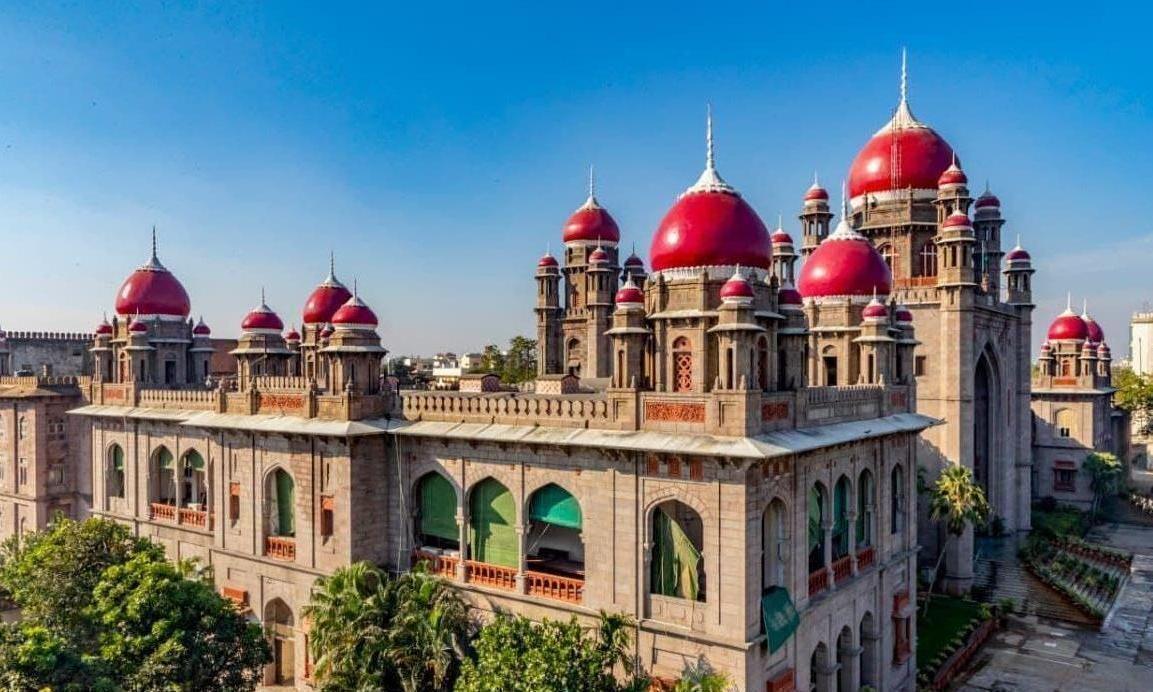
Hyderabad: Justice E.V. Venugopal of the Telangana High Court directed the police to consider grant of permission for a religious procession by devotees of Sri Shyam Baba. The order was passed in a writ petition filed by Poonam Chand Sharma. It was contended that Shree Shyam Baba Nishan Yatra was proposed to commence from Lal Darwaza and culminate at the Shree Shyam Baba Temple, Kacheguda, on February 27 with devotees carrying flags and singing bhajans. The petitioner pointed out that the yatra is an annual religious procession observed on Phalguna Ekadashi, involving around 50–70 participants. During the hearing, the state opposed the plea, citing prior violations linked to similar processions and referring to a criminal case registered in 2025 that was pending adjudication. Counsel representing state argued that freedoms under Article 25 of the Constitution were subject to public order and safety considerations. The judge directed the police to meticulously examine the application of petitioner and directed the officials to ascertain whether any criminal cases exist against the petitioner, evaluate whether similar events in the past resulted in disturbances to law and order, convene a meeting with the petitioner and relevant stakeholders, and pass a reasoned order expeditiously in accordance with constitutional mandates.
PIL on dialysis issues in govt hospitals
The PIL panel of the Telangana High Court took on file a letter by advocate Rapolu Bhaskar, complaining about the lack of equipment and facilities at dialysis centres functioning in government hospitals. He stated in his letter that Telangana had 102 dialysis centres maintained by the government through three private companies in PPP (Public Private Partnership) method and the government was paying Rs 1,950 per single use of dialyser to the companies. During the last few months, patients who underwent dialysis in government hospital had suffered from new diseases and some of them had died, Bhaskar alleged. According to the petitioner the process of hot disinfection to clean the equipment was not being performed in some of the dialysis centres, apart from other shortcomings. The staff were using single dialysers for dialysis for two or three times and selling the remaining dialysers privately with the support of Aarogyasri authorities and patients who pay amounts were being treated first. The panel comprising Chief Justice Aparesh Kumar Singh and Justice G.M. Mohiuddin accordingly ordered notice.
Candidate defeated in recount loses plea
Justice N.V. Shravan Kumar of the Telangana High Court junked a writ plea of a candidate from Ward No. 8 of Gadwal municipality who had challenged the recount of votes conducted during the recent municipal elections. The petition, filed by B. Jayamma, alleged that the returning officer initially declared the result in her favour but subsequently ordered a recount without any written request, recorded reasons, or prior notice. The petitioner contended that the recount ultimately altered the outcome by a margin of one vote and that such action violated the statutory election rules and the settled principles governing secrecy of the ballot. During the proceedings, senior counsel G. Vidya Sagar, appearing for the State Election Commission, opposed the writ petition, contending that the challenge was not maintainable. He argued that disputes relating to counting, recounting, and declaration of election results fell within the framework of election law and could only be decided in an election petition. He stated that the allegations raised by the petitioner involved disputed questions of fact, which could not be adjudicated in writ jurisdiction. The judge declined to entertain the writ petition, reiterating the settled legal position that writ jurisdiction under Article 226 is ordinarily not invoked in election-related disputes.
HC told Waqf Board not paying counsel
Justice Anil Kumar of the Telangana High Court voiced concerns over the failure of the part of the Waqf Board in not only producing relevant documents when called upon but also not paying their own counsel the fee due. The judge was dealing with a plea filed by The Suleman Tekdi Qabrastan managing committee, Bhainsa, Adilabad district, challenging inactions of the respondents to protect a graveyard. The petitioner sought construction of a compound wall to protect the Waqf Institution. On December 31, the court directed standing counsel for the respondent to file photographs with regard to construction of compound wall in the schedule property. On February 9, the court found that no photograph was filed.
On query it was submitted that expenses for taking photographs and filing of photographs had to be paid from the pocket of standing counsel, that the Waqf Board had not been paying any expenses for quite some time, including professional charges. The court then observed that “Professionals are to be paid fees/ remuneration within a reasonable time. There cannot be two thoughts on it.” This is sorry state of affairs, the judge said. The court said that it could not go on adjourning matters for compliance of directions issued and since Waqf Board was a statutory authority and fell within the meaning of Article 12 of the Constitution of India. It is directed to the CEO, Waqf Board, to look into the matter. Even this order was not complied with. The judge then as a last opportunity directed the CEO to file photographs with regard to construction of compound wall in the schedule property and posted the matter to March 2.
Disclaimer : This story is auto aggregated by a computer programme and has not been created or edited by DOWNTHENEWS. Publisher: deccanchronicle.com