
Nischal Jain left his successful Sequoia-backed dev-tool startup, DoWhile AI, to launch Outlier Humans, a screen-less voice-hardware company. Leveraging his expertise in codebase context-understanding, he aims to utilize LLMs to finally deliver truly natural, intent-aware conversational AI.

Published: February 11, 2026 5:19 PM IST
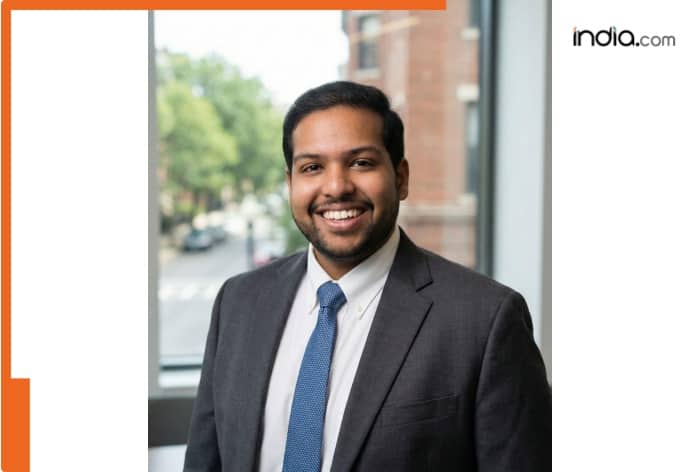
The first company that Nischal Jain founded with the support of Sequoia reached 3,000+ active developer repositories. He went off to join voice AI hardware, when the technology to make conversational AI actually happen had finally come of age. His arguments are antithetical, but not insane.
Nischal Jain often receives a polite form of the question why when he tells people that he had left a working AI infrastructure company to create consumer hardware.
The voice computing segment has been waiting to have its time. Amazon spent billions in Alexa, and voice became a valid interface in millions of households. Humane and Rabbit stretched the limits of the AI-first hardware design, creating enormous consumer hype. Every generation of products, however, crashed on the same wall: the underlying AI was not advanced enough to have a truly natural conversation. Until now.
“That’s exactly why the timing is right,” Jain said. “The early players proved the demand exists people want voice-first computing. What’s changed is that LLMs finally make it possible to deliver on that promise. Everyone who came before started with hardware and bolted AI on top. We’re starting with AI and figuring out what hardware it needs.”

Jain, 24, is co-founder and CTO of Outlier Humans, a startup backed by $1 million from South Park Commons. The premise sounds backwards in an era of AI wrappers and API integrations: they’re building physical products where AI isn’t a feature bolted on—it’s the entire interface. No screen. No app. Just voice.
The bet is bigger because Jain already knows what traction looks like. His previous company, DoWhile AI, was part of Sequoia Surge’s ninth cohort (now PeakXV Partners) and raised $2.5 million to help enterprises understand and act on large codebases using AI. They hit 3,000+ active orgs and landed multiple enterprise customers. He walked away anyway.
Why?
From code intelligence to voice: the thread that connects
Jain graduated from IIT Roorkee with a degree in electrical engineering, during what he calls “the pre-GPT dark ages.” His interests back then included voice systems, browser automation, developer tooling – and AI looked like side quests, not the main plot. Turns out the side quests were the main plot.
DoWhile AI launched in late 2022, tackling a problem that barely existed in public discourse: helping developers navigate sprawling codebases without drowning in documentation. The company built AI systems that could understand code context, answer questions about unfamiliar repositories, and suggest relevant functions across large organizations.
“We were doing ‘AI for developers’ before that was a category,” Jain said. “We built sophisticated context understanding how to take massive amounts of information and surface exactly what someone needed, in natural language, without them having to know where to look.”
The company grew rapidly, reaching 3,000+ active orgs and closing enterprise deals with organizations managing millions of lines of code. But as Jain watched users interact with the system, a pattern emerged that pointed toward something bigger.
“The most magical moments weren’t when someone found the right function,” he said. “It was when they could just ask a question -in plain English – and the system understood what they actually meant. That’s when I realized: we’d solved context understanding for code. The same problem exists everywhere humans interact with AI. And the hardest version of that problem? Voice.”
Building for voice-first
That insight led to Outlier Humans, co-founded with Naman Jain in 2025. South Park Commons, a community that tends to back founders chasing hard problems over quick wins, put in $1 million. The company is building what it calls “AI-native” consumer hardware: devices where voice isn’t added to an existing interface but is the entire interface.
“The problem with screen-less voice interfaces isn’t speech recognition,” he said. “It’s context. When someone says ‘remind me about that thing,’ a screen can show you options. Without one, you have to actually understand what ‘that thing’ means. You need memory. You need inference about intent. You need to handle ambiguity without frustrating the user.”
The work at DoWhile proved directly relevant. Understanding context in large codebases where a single word can mean different things in different files is structurally similar to understanding context in conversation, where meaning depends on history, tone, and unstated assumptions.
“At DoWhile, we built systems that could understand ‘this function’ when a developer was looking at a file with fifty functions,” Jain said. “That’s the same problem as understanding ‘that meeting’ when someone has twelve meetings on their calendar. The technical foundation transfers directly.”
The timing matters. Large language models have solved many of the problems that made previous voice assistants feel limited. The gap between what consumers expected and what technology could deliver has finally closed. Building hardware that leverages these capabilities requires a different approach than what the first wave of voice products attempted.
“Alexa pioneered voice computing for millions of homes, but it was built for a pre-LLM world,” Jain said. “It was essentially a voice-controlled command line. We’re building for a world where the AI can actually think and that world just arrived.”
Also Read:
Topics
Disclaimer : This story is auto aggregated by a computer programme and has not been created or edited by DOWNTHENEWS. Publisher: india.com


