
As a child in Puerto Rico, I wanted nothing more than to be somewhere and someone else. I subscribed to “American” beauty standards and followed YouTube hair and makeup tutorials from white influencers. But that changed when I was forced to leave in the aftermath of Hurricane María. Suddenly, I was in the United States, where people constantly asked where I was from and what I was because I didn’t fit their idea of what a “Latina” should look like; I barely wore makeup, my hair wasn’t long nor luscious, and my nails were perpetually bare. My Latinidad became something I had to spell out for those around me.
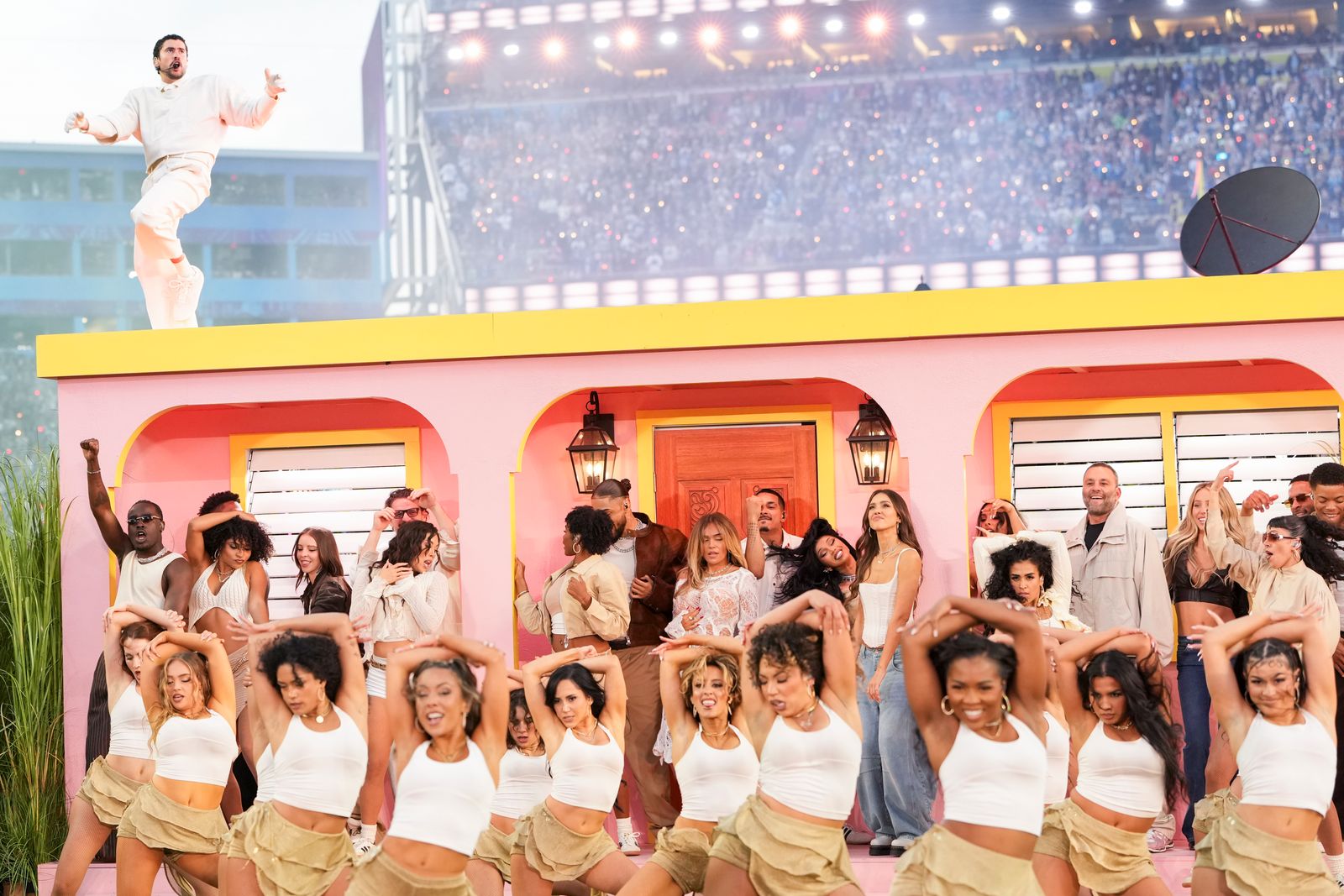
But contrary to the stereotypical depiction of Latine beauty in media, we don’t have one defining look—something Bad Bunny showcased beautifully during his Super Bowl Halftime performance last night. In reality, Puertorriqueñidad encases a variety of stories, styles, shades, and textures, which were displayed through every narrative tool possible, including the varied characters, scenery, and fashion choices of the production. The makeup and hair styling, though, immediately stood out to me—specifically because there wasn’t one standout look. It seamlessly destroyed the “Latina beauty” stereotype while celebrating its reality. It’s not a singular experience or appearance; it’s a mosaic of differences united by culture.
Photo: Getty Images
The Halftime Show production featured hundreds of background performers, and each of their looks were so different but so achingly familiar to me. In the short span of 14 minutes, I saw curls of many types, cornrows, slickbacks, intricate updos, laid-back blowouts, and everything between. That familiar variety was the exact goal for the performance’s hairstyle designers. “For Benito’s performance, the vision was rooted in storytelling and authenticity,” Brian Steven Banks, the lead hairstylist for the background dancers, tells Allure. “Each group represented a different emotional world within the performance, and the hairstyling helped define that language. “The execution was about honoring identity, culture, and emotion through texture and shapes. Letting the hair support the story rather than overpower it,” he said.
The makeup followed a similar narrative, showcasing different aspects of Puerto Rican culture from scene to scene. During “Die With a Smile,” Lady Gaga, though not Puerto Rican herself, wore what I saw as a remix of the traditional “glam Latin entertainer” trope with red nails and lips to match the Flor de Maga (the national flower of Puerto Rico) on her light blue dress. Then, during the “NuevaYol” section, María Antonia “Toñita” Cay—owner of the Caribbean Social Club in Brooklyn, a home-away-from-home to New York’s Puerto Rican diaspora—made a cameo wearing her signature makeup look of blue eye shadow paired with a bright lip.
Disclaimer : This story is auto aggregated by a computer programme and has not been created or edited by DOWNTHENEWS. Publisher: www.allure.com









