
To borrow from Bobby Jones, there are two types of golf: golf for the very rich and golf for the rest of us. And they are not at all the same.
Lately, they seem to be diverging even further.
A pandemic-era participation boom has fueled an explosion of development at high-end private clubs and destination resorts.
On one level, that’s undeniably good news. The more golf being built — especially golf that is thoughtfully designed and responsibly run — the better for the game.
But the surge at the top also casts a spotlight on a more complicated reality in the middle of the market.
Municipal golf, in many places, is enjoying a renaissance. Tee sheets are packed. Long-neglected courses have been buoyed by smart restorations. The demand is there. Elsewhere, though, the squeeze is being felt.
As Jay Karen, CEO of the National Golf Course Owners Association, has noted, privately operated daily-fee courses — particularly in urban markets where land values and labor costs are high — face the stiffest headwinds. They lack the subsidy of municipal backing and the financial cushion of exclusive clubs. They live and die by the tee sheet.
So what does that mean for the future of accessible, high-quality public golf?
That question came up on a recent episode of the Destination Golf podcast featuring architect Jay Blasi.
Blasi cut his teeth working under Robert Trent Jones Jr. and played a pivotal role in the design of Chambers Bay before launching his own firm. He’s been busy lately. In the San Francisco Bay Area — his adopted home — he has led two of the region’s most intriguing public-access projects.
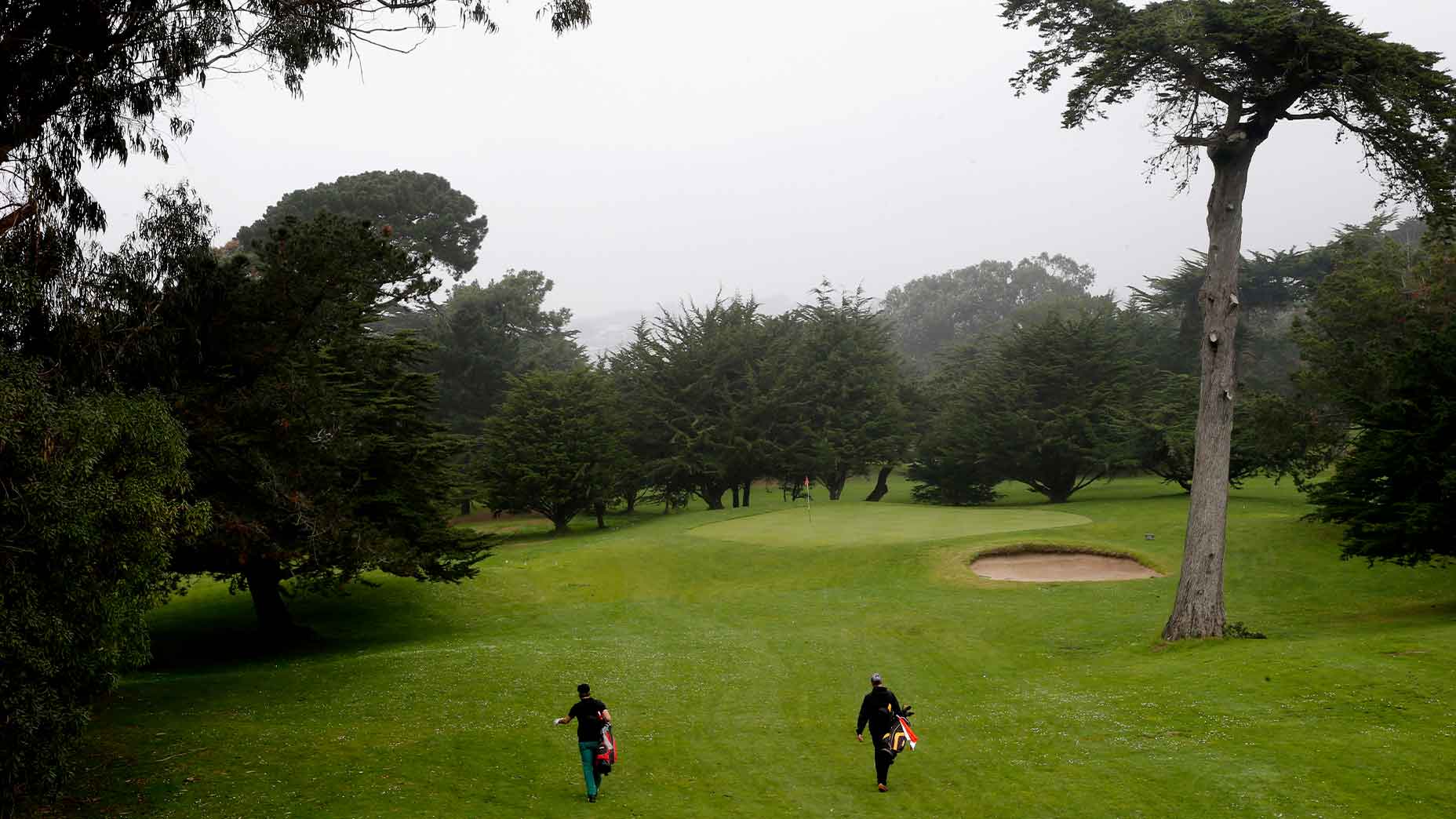
One is the Golden Gate Park Golf Course, better known now as the revamped Golden Gate Par 3, an artful, compact municipal layout tucked into San Francisco’s signature green space. The other is Poppy Ridge Golf Course, which Blasi reimagined for the Northern California Golf Association.
Poppy Ridge is an unusual case. Owned by the NCGA, the course benefited from an owner willing and able to fund a comprehensive redesign as part of a broader overhaul. The result is refreshed daily-fee facility that has kept prices relatively low. But as Blasi acknowledges, it’s not a model you see every day.
The Golden Gate Par 3 project, though, may offer a more transferable blueprint.
That renovation was executed in partnership with the San Francisco chapter of The First Tee, which raised private funds to finance the redo without tapping city coffers. Public land. Philanthropic capital. Community mission.
“It gives a clue of what might work,” Blasi said.
Blasi often cites an analogy shared by Bo Links, co-founder of the San Francisco Public Golf Alliance: Think of public golf the way universities operate. Colleges don’t run solely on tuition revenue. They depend heavily on donations from alumni and benefactors.
There’s no shortage of parallel examples in the game.
In Augusta, The Patch at Augusta Municipal is being remade with support from Augusta National Golf Club. In Philadelphia, Cobbs Creek Golf Course is undergoing a sweeping revival backed by private philanthropy. Ditto Normandie Golf Club in St. Louis. The list goes on.
None of this suggests that every public course can — or should — rely on benefactors. Nor does it ignore the economic realities facing operators caught between rising costs and price-sensitive players.
But Blasi’s larger point is that the game’s future may hinge less on choosing between “elite” and “everyday” golf, and more on finding ways for the two to reinforce each other.
“The game of golf has been very good to a lot of people,” Blasi said. “Equipment companies. Fortune 500 companies. There’s probably some affiliation with golf in some shape or form.”
To hear more from Blasi on his life in golf, along with his reflections on the state of the game, you can listen to the entire episode here.
Disclaimer : This story is auto aggregated by a computer programme and has not been created or edited by DOWNTHENEWS. Publisher: golf.com



