Coordinated Israeli and American strikes hit a military compound in Tehran on Saturday, killing dozens of senior regime figures including Iran’s supreme leader, Ali al-Khamenei.
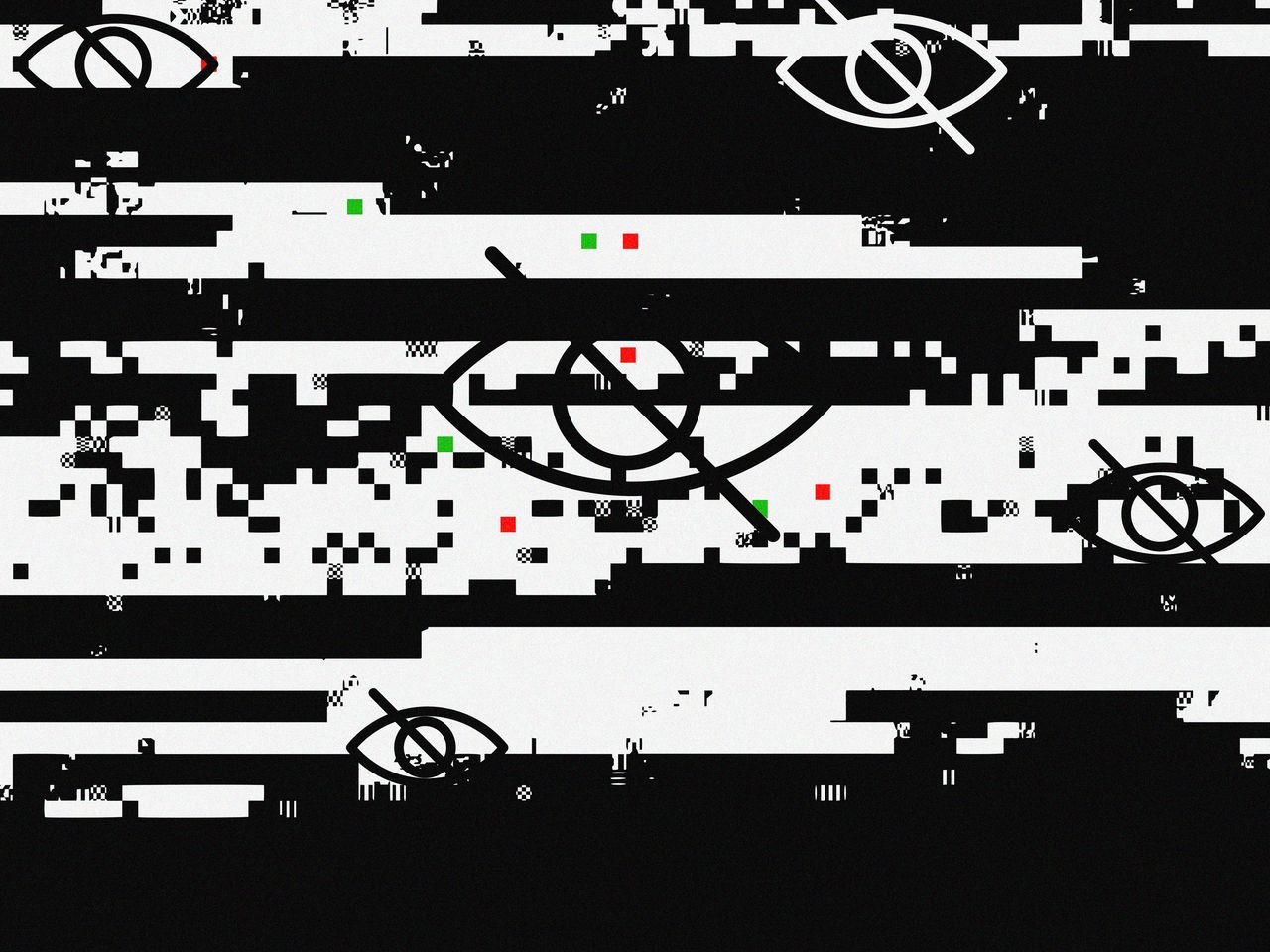
Within hours, the government imposed a near-total internet blackout, cutting the country off from the outside world. Mostafa Zadeh, a Tehran-based international journalist, tells WIRED Middle East that he was not surprised when “the United States struck, nor when his phone’s network died and fixed internet lines followed.”
“It’s very similar to the state’s response to the January security crackdown, and even the bouts of unrest that came before,” Zadeh says. The government has routinely cut internet access during crises, typically citing security issues as the cause.
“The Iranian government’s primary concern is preventing communication between Israeli intelligence operatives and any contacts inside the country,” he explains. “But the policy’s heaviest burden falls on journalists and local media workers who lose access to their most basic tools.”
Journalists, activists, and ordinary citizens trying to document what is happening on the ground face the choice of finding a way around the restrictions—risking arrest—or staying silent.
“Journalists pay the heaviest price,” Zadeh says. “The right of information is always the first casualty when the government [prioritizes] its security objectives.”
Repeated Blackouts
During the protests that broke out after the death of Mahsa Amini in September 2022, authorities repeatedly throttled or partially severed connections in an effort to disrupt communication and coordination networks. Eyewitnesses said the disruption unfolding now bears striking similarities to the shutdown four years earlier, when families were suddenly unable to reach loved ones, protesters were cut off from one another, and the world was blind to events inside the country.
During the shutdown this February, Zadeh was somewhat prepared, having arranged a five-day trip to Turkey so he could continue working. But he was not so lucky during the shutdown before that, amid the 12-day war between Iran and Israel in 2025. The American newspaper he secretly reported for stopped hearing from him, and his editor feared the worst.
This time, although he had access to a Starlink connection, Zadeh chose not to use it. “The risk of Iranian intelligence detecting the satellite signal and tracing it back was too great,” he says. “An arrest on those grounds could bring charges of treason or espionage.”
Many of his colleagues, Zadeh says, made the same decision. Others, however, remained defiant.
Sweeping legal changes introduced in late 2025 saw Iran significantly tighten its espionage laws. Under the revised provisions, anyone accused of spying, particularly for Israel or the United States, now faces the death penalty and the confiscation of their property.
Reporting Under Siege
The strategies of Iranian journalists and activists include encrypted messaging apps like Signal and Threema, international phone calls, SMS, and citizen-shot videos smuggled out of the country in encrypted form.
Erfan Khorshidi runs a human rights organization from outside Iran but leads a large team inside Tehran. Ahead of the January protests, his group smuggled Starlink terminals to dissidents. His team, for the first time ever, could transmit reports, video, and photos in something close to real time.
“It’s the only means that allows rights organizations to relay accurate and reliable information to the outside world,” Khorshidi says. “Before Starlink, internet blackouts left massive gaps in the documentation of human rights violations.”
To bypass some of these gaps, media organizations and rights groups working in Iran rely on high-resolution imagery from commercial providers such as Maxar Technologies and Planet Labs, supplemented by medium-resolution data from the European Space Agency’s Copernicus program.
Baqir Salehi, an Iranian journalist working with a European news outlet, says satellite imagery is now key to his newsroom’s reporting, although it has its limits. By comparing before and after images of specific locations, reporters can spot damaged buildings, vehicles, and debris—but not identify individuals or verify casualty numbers.
“That distinction,” he says, “is a line I refuse to cross. I always note the margin of error, and never publish numerical casualty estimates based on satellite imagery alone.”
Instead, he uses the images to establish the scale and extent of destruction, then corroborates with testimony and additional evidence.
Another method includes using teams outside the blackout zone to continuously record official channels and then dissect the footage frame by frame, searching for any visible markers, such as a street sign or a background ridgeline. These visual fragments, once extracted, can be geolocated and cross-referenced with satellite imagery to confirm the location and approximate timing of military events.
Footage can then be sent into the affected areas, where, according to Salehi, team members keep original copies of every file and generate cryptographic hashes for each file immediately upon receipt. This helps prove the material has not been altered between capture and publication.
“Video is compressed or replaced with still frames, and files are sent in small segments to be reassembled outside the country,” he says. “When that isn’t possible, sources send short encrypted messages with only key details.”
With national connectivity reduced to roughly 4 percent of ordinary levels—and to conserve precious data—Salehi says his newsroom has pared all that comes through down to the bare essentials.
The Price of Staying Connected
This method demands enormous daily effort. Coordinating dozens of informal correspondents, verifying accounts, and ensuring the speed and accuracy of information transfer is a full-time operation layered on top of his actual reporting.
Khorshidi’s operation has been met with far more scrutiny. His team must relocate Starlink devices continuously throughout the day, never operating from the same location for long to avoid detection by Iranian intelligence. His teams move between cities to find stable satellite connections, a practice that exposes them to checkpoints and surveillance at a time when the Basij paramilitary force has flooded the streets—and the price of getting caught may be death.
According to Amnesty International, Iran executed more than 1,000 people in 2025, more than twice as many as in 2024, and the highest annual total in over a decade. The country’s judicial authorities have carried out at least 15 executions of individuals accused of spying for Israel since the outbreak of hostilities with Tel Aviv in June 2025.
“My biggest concern today is that a team member might be arrested while traveling from Tehran to another city to use Starlink devices,” Khorshidi says. “But it’s what we can do to maintain the flow of information.”
This story originally appeared on WIRED Middle East.
Disclaimer : This story is auto aggregated by a computer programme and has not been created or edited by DOWNTHENEWS. Publisher: wired.com