Formula 1 is flying high in the United States, with three races in the country now taking place every year and a second American team set to join the grid this year in Cadillac. But this hasn’t always been the case, and the series has come a long way in America over the past 10 years.
First American team in 40 years
Romain Grosjean, Haas F1 Team VF-16
Photo by: Haas F1 Team
Start-up Formula 1 team Haas joined F1 in 2016 and entered its first grand prix at the season-opener in Australia. The fledgling outfit was backed by American entrepreneur Gene Haas and fielded drivers Romain Grosjean and Esteban Gutierrez in its first season – with the former scoring points for the team in its first two races.
The team took a novel approach to its F1 entry, buying as many parts as it could from engine supplier Ferrari, so that it could focus on the business of going racing. In its first season, the team scored 29 points to finish eighth – ahead of Renault, Sauber and Manor.
Only one US race on the calendar
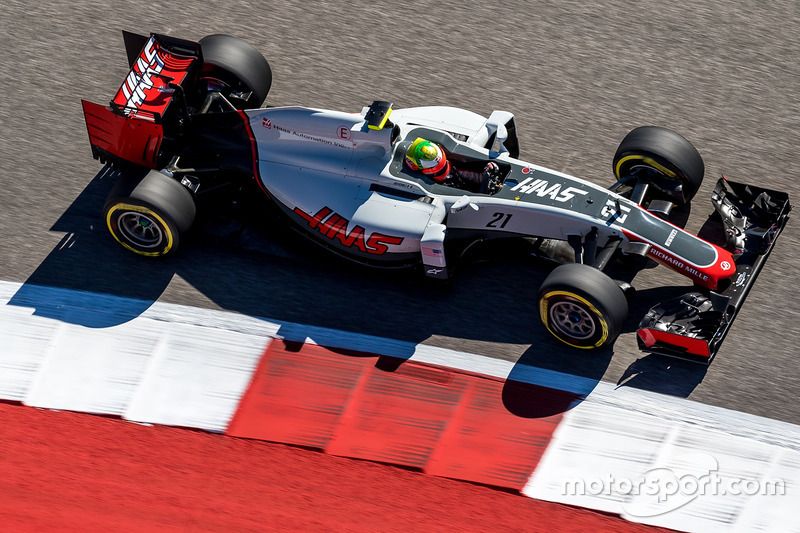
Esteban Gutierrez, Haas F1 Team VF-16
Photo by: XPB Images
America’s sole F1 team had a sole home grand prix to race when it entered the series. F1 made its return to the US after a five-year break in 2012 with a new event at the Circuit of the Americas in Austin, Texas.
The event was offered an initial 10-year contract to host the US GP on the brand-new circuit, which was completed just a handful of weeks before the inaugural 2012 race. On its debut at the track in 2016, the Haas team had a tough time with its drivers qualifying 14th and 17th. In the race, Grosjean fought his way to 10th, while a braking issue forced Gutierrez out of the race.
Liberty Media buys F1
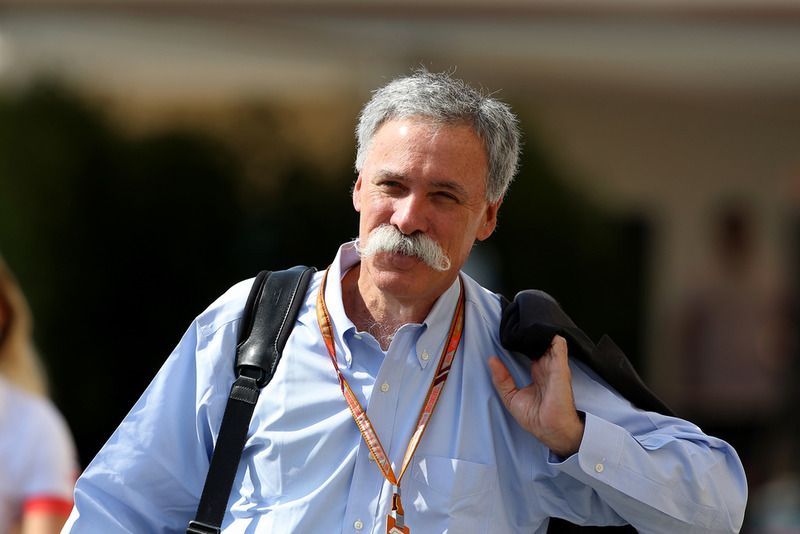
Chase Carey, Chief Executive Officer and Executive Chairman of the Formula One Group
A year after Haas’ entry into the series, global media giant Liberty completed its acquisition of Formula 1. The deal comprised of $3.05billion in cash, as well as approximately 56 million newly issued shares of Liberty Media and an additional debt instrument that could be exchanged for further shares.
Following its buyout, Liberty made no secret of its desire to target America as a key growth market for F1 with former chairman and CEO of F1 Chase Carey acknowledging that the series had “huge potential with multiple untapped opportunities”.
F1 returns to ESPN
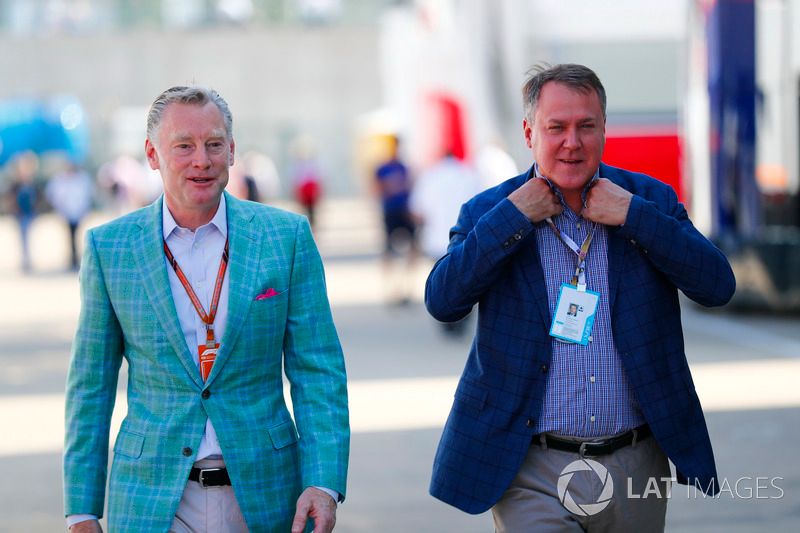
Sean Bratches, Managing Director of Commercial Operations, Formula One Group, with Burke Magnus, Executive Vice President, Programming and Scheduling, ESPN
Photo by: Sam Bloxham / Motorsport Images
One of the first moves that Liberty made in order to target these “untapped” markets was to bring F1 back onto screens across the US. It did this with a multi-year deal with sports broadcaster ESPN, which broadcasted every race live in the US from the 2018 season-opener in Australia.
The deal marked a return to ESPN for F1, which was last broadcast by the network back in 1997. When it was announced, Sean Bratches, managing director of commercial operations at Formula 1, said: “The US market is a very important growth opportunity for Formula 1 and we are looking forward to working with ESPN to ignite the growing fan interest.”
The Drive to Survive effect

Drive to Survive Season 6
Photo by: Netflix
One of the major drivers of F1’s rising popularity in recent years has been hit Netflix documentary series Drive to Survive. The show debuted in 2019 with a dramatic look back over the 2018 season and quickly won over fans with its look into some of the lesser-seen stories of F1.
It has since spawned a further six seasons, with its eighth set to premiere later this week. Last year, the show’s seventh season raked in more than 10 million views in its first six months on the streaming platform.
Record US Grand Prix attendance
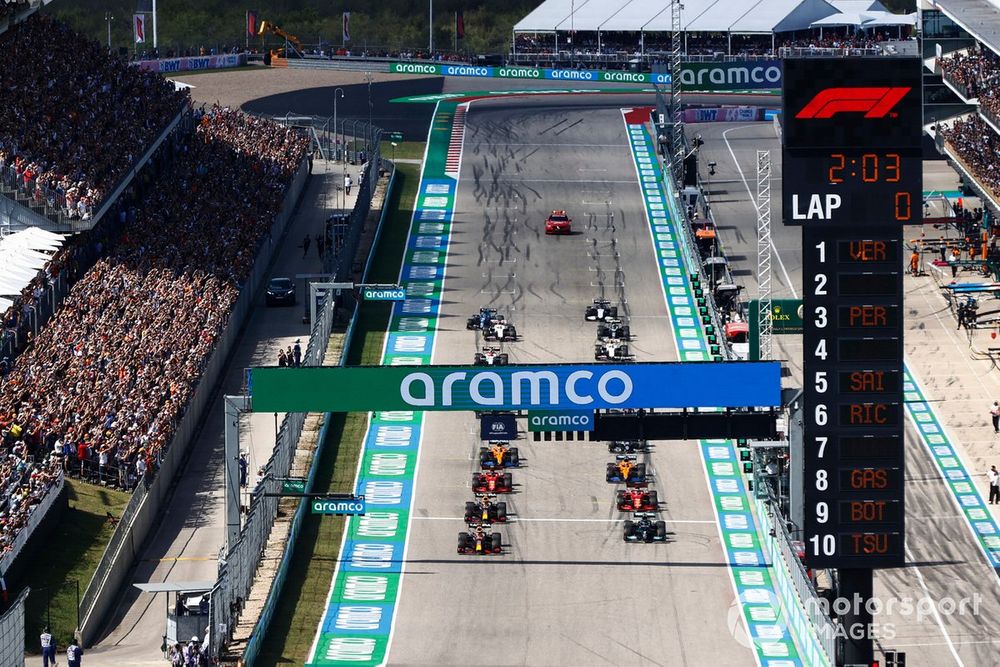
Max Verstappen, Red Bull Racing RB16B, and Lewis Hamilton, Mercedes W12, prepare to lead the field away at the start
Photo by: Andy Hone / Motorsport Images
With an American team to cheer for, a platform on which to watch F1 races live, and a fly on the wall documentary that uncovered the secrets of the series, F1’s popularity was gaining traction in America. This helped the US GP to record ticket sales for its 2021 event, which was the first race back at the venue following the COVID-19 pandemic.
Over the course of the weekend, the US GP welcomed more than 380,000 fans through its gates – a sizeable increase on the estimated 250,000 fans who attended the inaugural race at the Texas circuit. In the years since, attendance rates have grown further as the track’s capacity increased, and the 2024 event welcomed more than 400,000 spectators over the weekend.
A second grand prix is added
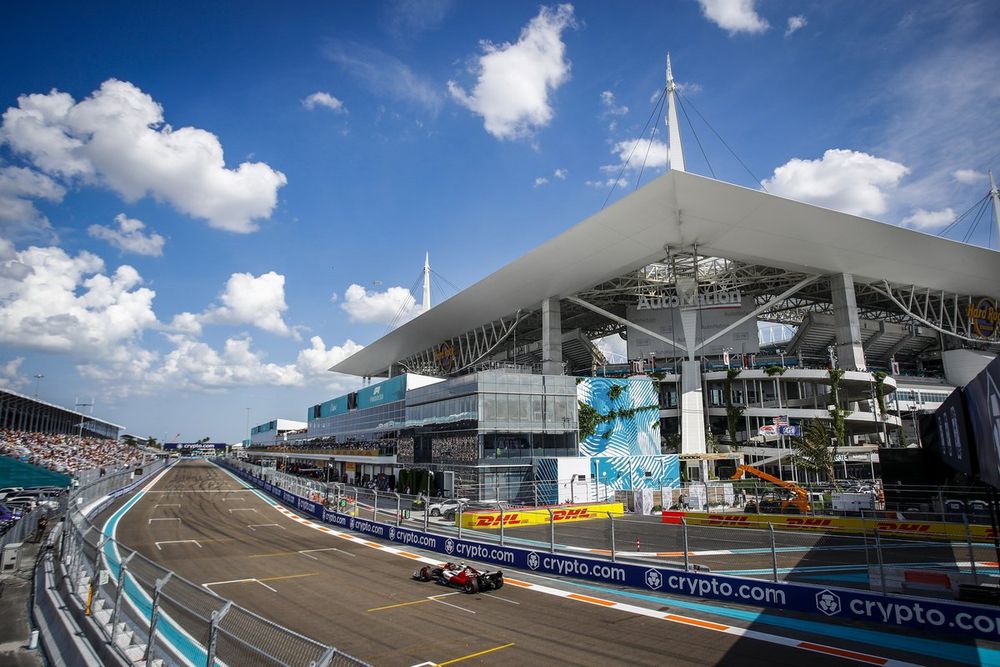
Zhou Guanyu, Alfa Romeo C42
Photo by: Alfa Romeo
As the popularity of the US Grand Prix continued to rise and interest from across America grew, Formula 1 endeavoured to add a second event to is roster of US races. The new event was officially announced in April 2021 when it was revealed that the Miami Grand Prix would join the calendar from 2022.
The second US race takes place on a track designed around the Hard Rock Stadium in Miami, which is home to NFL team the Miami Dolphins. As well as a tight 5.4km track that incorporates 19 turns, the track is also home to a fake marina that captured the imagination of fans on its debut in May 2022.
America gets a new F1 driver
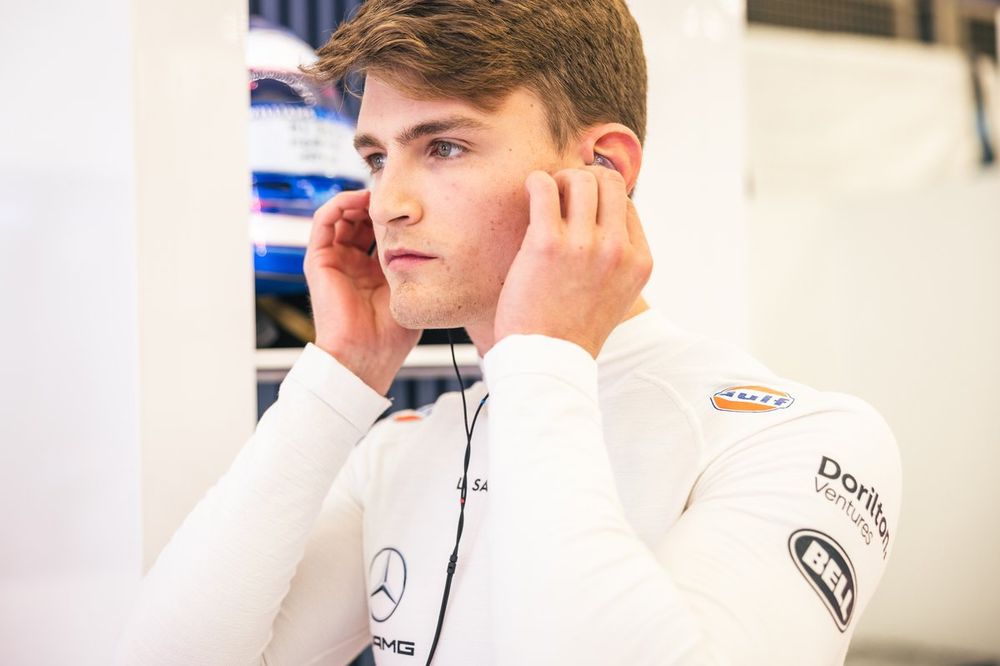
Logan Sargeant, Williams Racing
Photo by: Williams
In 2023, Formula 1 added an American driver to the grid for the first time since Scott Speed raced for Toro Rosso in 2007. The new name in the paddock was Logan Sargeant, who made his F1 race debut with Williams at the 2023 Bahrain Grand Prix.
The American had a rough ride in his one-and-a-half-year stint with the Williams team, picking up just a single point over his tenure with the team. That point came courtesy of a 10th-place finish at the US Grand Prix in 2023, but he was dropped by the team less than a year later in favour of young racer Franco Colapinto.
Formula 1 returns to Las Vegas

Yuki Tsunoda, AlphaTauri AT04
Photo by: Andrew Ferraro / Motorsport Images
Before losing his F1 seat, Sargeant did at least get to race in Formula 1’s third grand prix in the United States, the Las Vegas GP. The race in Sin City packed in a sight-seeing trip of Las Vegas in its layout, including a loop around the Sphere and a run down the Strip – on which cars reached speeds of up to 229mph.
The first race in 2023 was won by Max Verstappen for Red Bull, and he has subsequently won a second race at the track and holds the race lap record of a 1m33.365s around the 6.2km track.
Miami GP sets US TV record
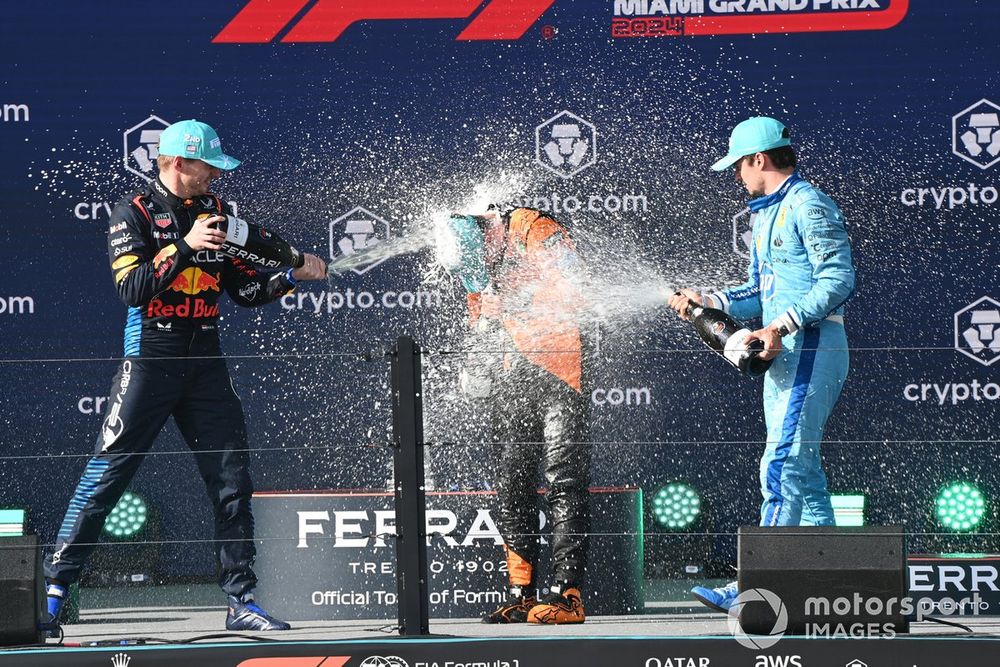
Max Verstappen, Red Bull Racing, 2nd position, Lando Norris, McLaren F1 Team, 1st position, Charles Leclerc, Scuderia Ferrari, 3rd position, celebrate on the podium with Champagne
Photo by: Mark Sutton / Motorsport Images
The growing number of fans attending races in the US was mirrored by the growing number of fans watching the races from home. As ESPN’s coverage of F1 in the US continued, it recorded growing viewership year-on-year and averaged around 1.3million views for each grand prix over the course of the 2025 season.
However, the peak of its F1 coverage came in 2024 when ESPN recorded a record-breaking audience for the Miami Grand Prix. Over race day, the broadcaster clocked a peak of 3.1million viewers – which easily surpassed the previous record of 2.6million viewers for the 2023 Miami Grand Prix.
Cadillac’s F1 entry approved
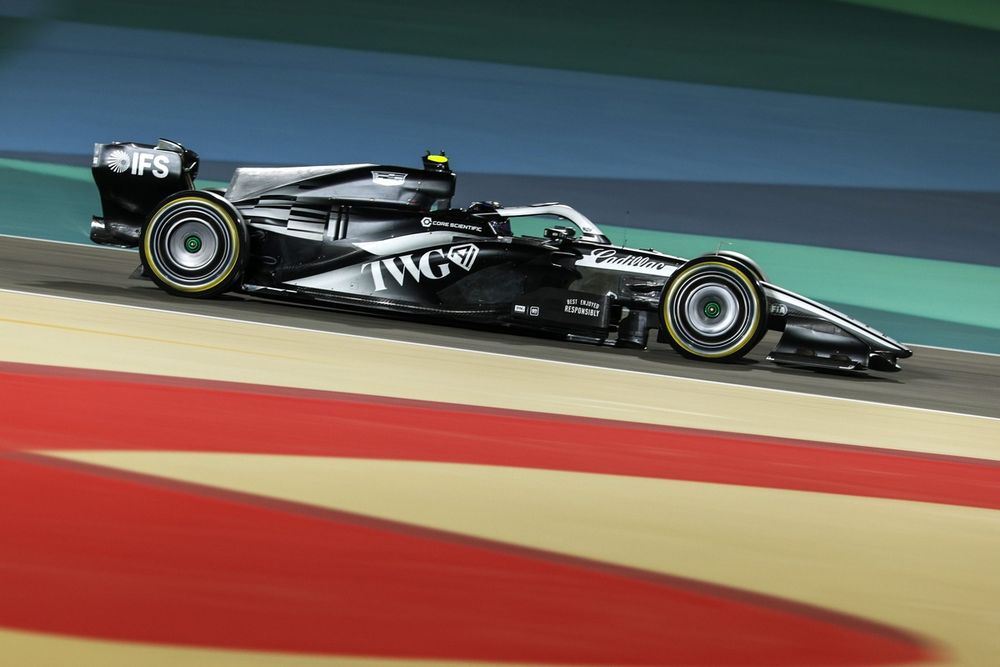
Valtteri Bottas, Cadillac Racing
Photo by: Steven Tee / LAT Images via Getty Images
Formula 1 has had 10 teams on the grid since the demise of the Manor team at the end of the 2016 season. However, it was finally confirmed that this would swell to 11 in March 2025 when Cadillac’s entry into F1 was confirmed. The team has ambitions to become a full-factory outfit, and has partnered with TWG Motorsports to build its F1 entry.
The squad makes its debut in 2026 and will initially run with Ferrari power units while it develops its own engine programme. In the drivers’ seat this year will be veteran racers Sergio Perez and Valtteri Bottas – both making a return to F1 after a year away.
Extensions announced
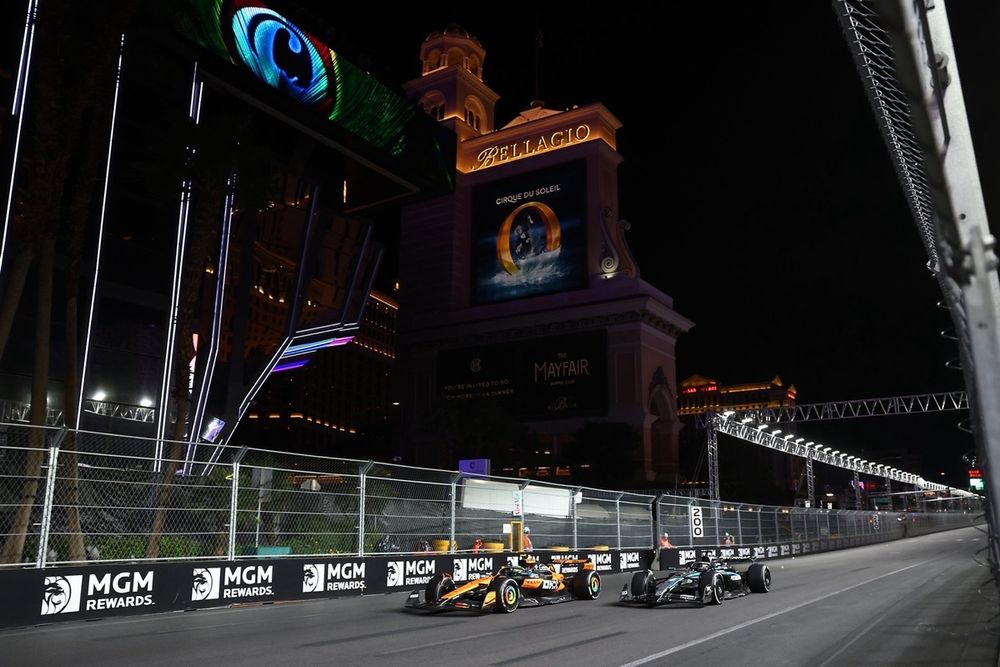
Lando Norris, McLaren, George Russell, Mercedes
Photo by: Zak Mauger / LAT Images via Getty Images
With three US races on the calendar, F1 sought stability over the course of 2025 and announced contract extensions with Miami, Austin and Las Vegas over the course of the year.
Miami’s place on the calendar is secure until at least 2041 after it signed a 10-year extension to its deal with F1. This was soon followed by an extension of Las Vegas’ terms, which will see the race take place on the streets of Sin City until 2027. Finally, F1 agreed a new deal with the Circuit of the Americas that sees the Texas track host the US GP until the 2034 season.
Apple takes over F1 broadcast

Tim Cook and Eddy Cue at the World Premiere of F1 The Movie
Photo by: Getty Images
The future of F1 in America will rely on solid broadcasting of the series for viewers stateside. And after eight seasons on ESPN the championship will move to Apple TV from the 2026 season.
The new US broadcast deal was announced last year and will see Apple pay around $150million to broadcast F1 in the US each year. Apple’s coverage of F1 will be included in its Apple TV subscription programme in the US, and will include live coverage of all on-track sessions over the course of the season, as well as all content produced by the championship’s in-house channel F1 TV.
We want your opinion!
What would you like to see on Motorsport.com?
– The Motorsport.com Team
Disclaimer : This story is auto aggregated by a computer programme and has not been created or edited by DOWNTHENEWS. Publisher: motorsport.com