Drivers have already felt the shock at the petrol pumps. Now, with higher prices expected across the economy, many people in Germany appear to be changing how they shop even before prices actually rise.
For people in Germany, the most visible economic impact of the US and Israeli attack on Iran so far has been at the petrol station. Fuel prices rose sharply within days of the conflict beginning, prompting political action and widespread public anxiety.
While the consequences of the war are being felt most devastatingly in Iran itself, across the wider Middle East and in the Global South, they are also being felt in Europe.
In Germany these effects are not existential, but they are still beginning to have a tangible impact on everyday life.
Following the sharp rise in petrol prices, company bosses are now warning that consumer goods will follow – and there are early signs that shoppers aren’t inclined to wait for the government to take action before changing their habits.
Which prices are expected to rise?
Beyond fuel, companies are now signalling that higher costs are likely to feed into consumer prices more broadly.
Rapidly growing numbers of German companies are planning to raise prices, according to a survey published by the IFO economic institute on Monday.
In particular, industry, construction and consumer‑facing services such as restaurants and shops all report growing pressures on costs.
READ ALSO: How the war in Iran is affecting Germany’s property market
Klaus Wohlrabe, who oversaw the survey at IFO, attributed the rise to the significant increase in prices for crude oil, gas and electricity since the start of the war in Iran.
Large consumer‑goods companies are also preparing customers for higher prices. Henkel, which makes everyday products such as Persil detergent and Schwarzkopf shampoo, has said price increases are likely if costs continue to rise.
CEO Carsten Knobel told Handelsblatt that waiting too long to raise prices would only increase pressure on the company, as higher energy and logistics costs are already being passed on by suppliers.
Transport costs are another pressure point. The Association of German Transport Companies (VDV) has warned that rising diesel prices are pushing local public transport operators to the brink.
VDV public transport director Alexander Möller told the German Press Agency that companies were facing additional monthly costs in the six‑figure range and could not absorb them indefinitely.
At the same time, regional bus operators – particularly in rural areas – are warning that routes could be cut or companies could even close without more political support.
How are consumers in Germany reacting?
Consumer confidence in the country has fallen sharply – according to research by the Nuremberg Institute for Market Decisions (NIM) and GfK – with six in ten respondents expecting energy prices to remain permanently high as a result of the war.
READ ALSO: Energy crisis may force Germany to run coal plants longer
But what makes the current situation unusual is that behaviour appears to be shifting even before most consumer‑goods prices have visibly risen.
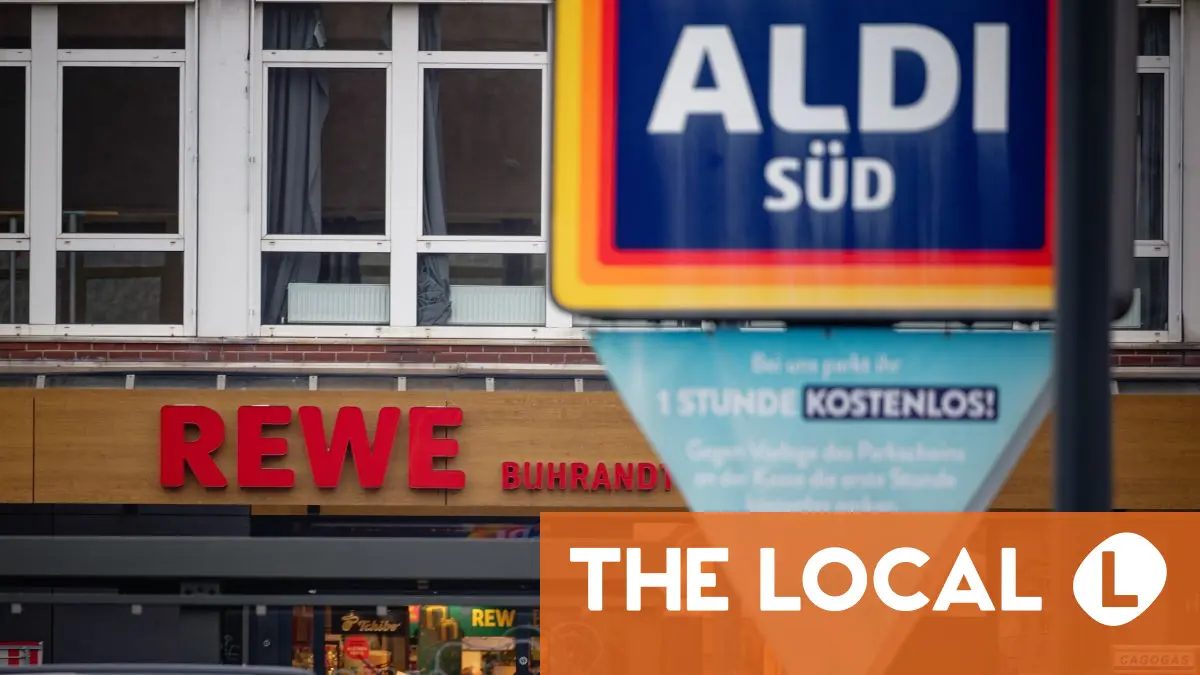
Recent data analysis by Accurat, which studies anonymised mobile phone location data with user consent, shows a rapid shift towards Aldi discount supermarkets in the weeks after the war began. Compared with the week before the conflict, Aldi Nord increased its share of store visits by around 0.7 percentage points, while Aldi Süd gained a full percentage point within just a few weeks.
At the same time, full‑range supermarkets such as Rewe and Edeka lost customers
These changes may sound marginal, but in a German food retail market worth roughly €200 billion a year, a one‑percentage‑point shift in market share translates into around €2 billion in annual sales.
Accurat expert Maarten Vander Beken described the shift as highly unusual and not seasonal.
What is the government doing?
A task force made up of CDU/CSU and SPD representatives has been set up to assess the economic impact of the war, including food prices and consumer goods.
The task force last met on March 27th, but reportedly did not manage any concrete measures, instead agreeing on further “review mandates”.
Proposals such as tax cuts, higher commuter allowances or cheaper public transport tickets remain under discussion, but – beyond limiting the number of times petrol prices can be raised each day – no clear decisions have yet been taken.
READ ALSO: US and Israel unlikely to achieve ‘regime change’ in Iran, Merz says
Disclaimer : This story is auto aggregated by a computer programme and has not been created or edited by DOWNTHENEWS. Publisher: thelocal.de