
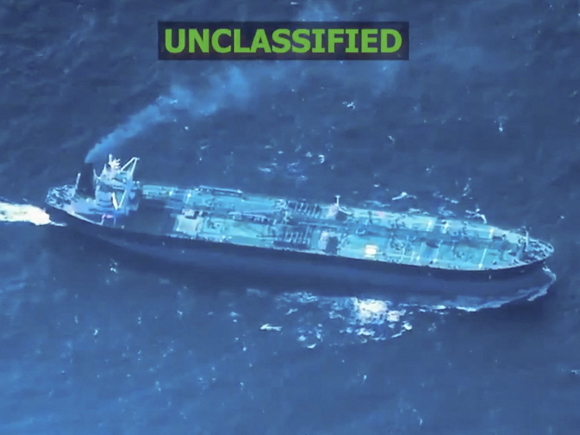
Yörük Işık has been watching shadow fleet tankers travel in and out of the Black Sea “almost without disruption” for years. The three weeks since the start of the Middle East war have been no different, with vessels in both the dark and legitimate trades regularly sailing through. “Every one hour and 20 minutes, a tanker passes,” he says.
If anything, the number of vessels has increased in the Bosphorus trade corridor following the easing of US sanctions, the Istanbul-based maritime consultant says. “I think more ships are showing up to take advantage of the Russian trade.”
Until a few weeks ago, the shadow fleet’s vessels were on the run. Enforcement action by the US and Europe had tightened as governments sought to pile pressure on Russia, Iran and Venezuela. Hundreds of ships were added to western blacklists and more than a dozen shadow vessels seized between December and February — a significant escalation on the previous year.
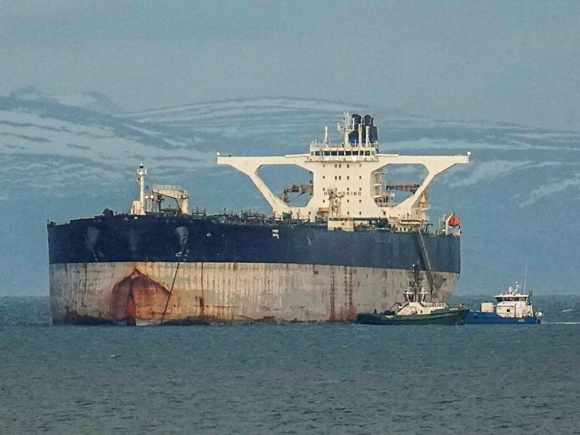
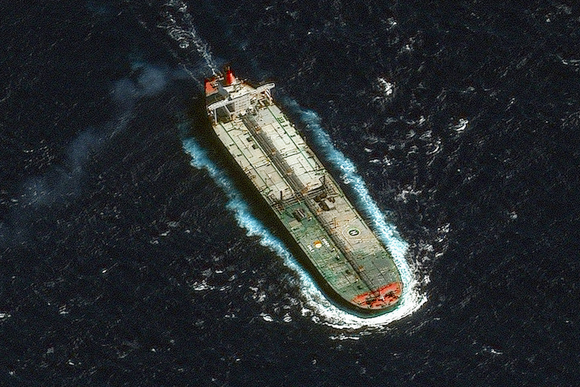
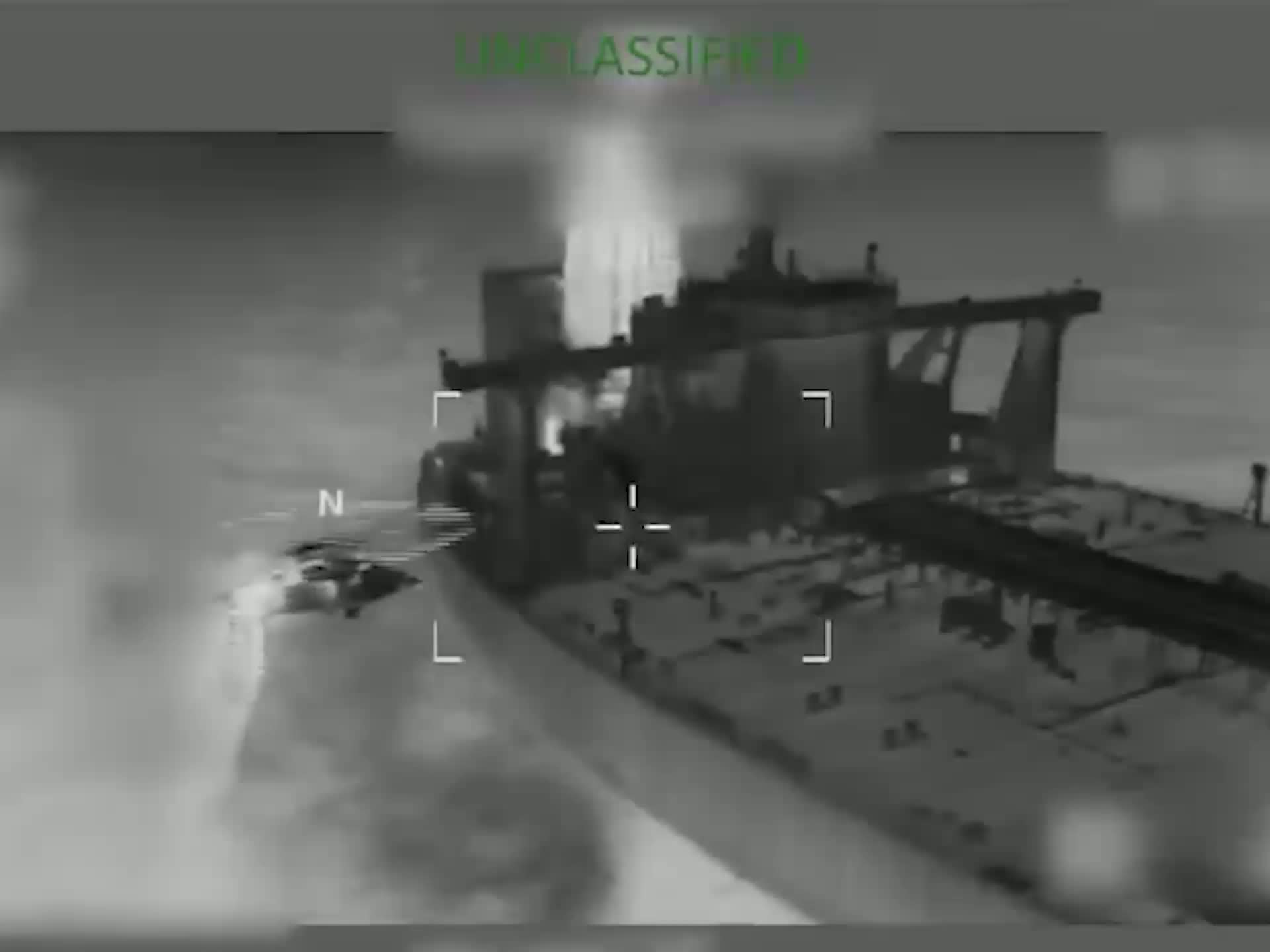
Your browser doesn’t support HTML5 video.
But the Iran war has given the hundreds of ageing ships that make up the fleet a new lease of life, as conventional shipping in and around the Strait of Hormuz has become largely trapped and the price of crude oil has spiralled upwards.
Concerns about further price rises led Washington to turn a blind eye to the illicit Iranian trade, temporarily lifting sanctions on the roughly $15bn worth of oil the country has at sea.
The Islamic republic has exported millions of barrels of oil since the end of last month, likely earning Tehran more than $140mn a day. At least 15 Iranian oil tankers have passed through the Strait since the war began on February 28 — most concealing their location for part of the transit. Satellite imagery has captured multiple vessels filling up at Kharg Island, the country’s main export terminal.
Iranian tankers mask their location while loading oil
@media screen and (min-width: 700px) { #case-study-kharg-island-loading { aspect-ratio: 1.628; } }
@media screen and (min-width: 980px) { #case-study-kharg-island-loading { aspect-ratio: 1.815; } }
@media screen and (min-width: 1180px) { #case-study-kharg-island-loading { aspect-ratio: 1.815; } }
Meanwhile, the Trump administration’s temporary loosening of US sanctions on Russian oil already at sea represents a major change in fortunes for Moscow.
Before March, Russia had been struggling with falling oil prices and the loss of most of its sales to India, largely due to pressure from Washington. But since the war began, Moscow has brought in as much as $150mn a day in extra budget revenues thanks to the rise in oil prices, with a greater windfall expected as its operators shift from China to shorter, more profitable routes to India.
The war also threatens to further erode the consensus between western powers on severing a crucial artery funding the war machines of Russia and Iran. Washington’s green-lighting of the purchase of Russian oil has alarmed European and Canadian leaders, who warn that it will reduce pressure on the Kremlin.
That the shadow fleet has capitalised on the chaos is testament to its stubborn resilience, experts say. “Even if conditions stabilise, these capabilities don’t disappear — they tend to persist and evolve,” says Claire Jungman, director of maritime risk at energy data provider Vortexa.
The illicit tanker network is “a structural feature of the market at this point”, she adds. “As long as there are barrels that need to move outside compliant channels, there will be operators willing to take on that risk — especially when freight rates and price dislocations increase the incentive.”
Lawlessness at sea
The shadow fleet — made up of hundreds of mostly decrepit ships with opaque ownership, suspect insurance and a history of deceptive practices — grew out of sanctions-busting tactics used by Iran, Venezuela and others in the 2010s to keep oil flowing.
But it expanded sharply after Russia’s full-scale invasion of Ukraine in 2022, when western sanctions and a price cap on Russian oil pushed Moscow to find alternative routes.
Shadow vessels have developed clandestine methods to disguise their activities. They “go dark” by switching off transponders that signal their position, fake locations, falsify documents and change names, flags and ownership. Ships in the fleet analysed by the FT go dark a quarter of the time — with those linked to Iran switching off their transponders in roughly 40 per cent of cases.
Around one in three vessels in the group have changed flags at least three times since December 2022. They also use ship-to-ship (STS) transfers to mask the origin of oil.
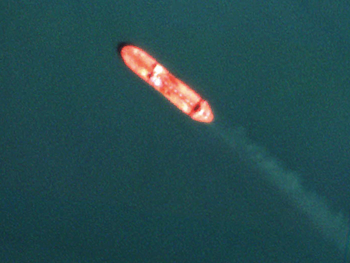
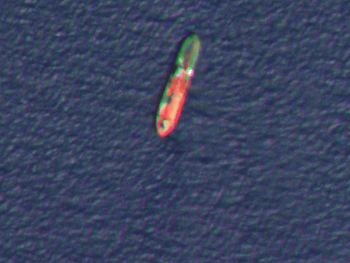
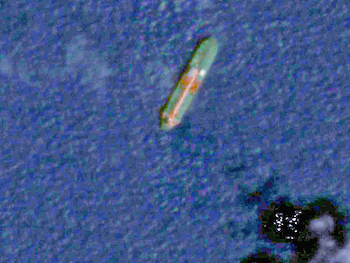
Satellite imagery has caught vessels being repainted at sea in an apparent effort to disguise their identity. The Panama-flagged Tasca changed its orange deck to green in January last year, days after being blacklisted by the US.
The Tasca changed colour while anchored off Malaysia
21 Dec. 2024
08 Jan. 2025
10 Feb. 2025
Before the Iran war, the shadow fleet accounted for almost a quarter of global crude oil exports, according to Kpler, a data and analytics company.
Western sanctions largely failed to choke off oil exports from Russia and Iran but have reshaped trade routes as traditional buyers, mainly from Europe, have been replaced by a narrower set of importers from Asia.
China and India have been key destinations for sanctions-hit oil
Million barrels
@media screen and (min-width: 700px) { #shadow-fleet-exports-loading { aspect-ratio: 2.188; } }
@media screen and (min-width: 980px) { #shadow-fleet-exports-loading { aspect-ratio: 2.513; } }
@media screen and (min-width: 1180px) { #shadow-fleet-exports-loading { aspect-ratio: 3.026; } }
India and China have absorbed the bulk of displaced Russian barrels, while most Iranian oil under sanctions ends up in China.
Window of opportunity
The shadow fleet’s skill in evading capture and its vessels’ lack of western insurance have seen the armada successfully adapt to the chaos in the Middle East, with its ships playing a key role in getting oil out of the Gulf.
While conventional vessels have seen insurance costs rocket, the fleet has continued its high-risk trade, using dark arts to deliver cargo to customers both before and after the easing of US sanctions.
A hub near the Riau Archipelago, around 150 miles east of Singapore and described as the “epicentre of maritime lawlessness” by Windward shipping analyst Michelle Wiese Bockmann, has seen vessels continue STS transfers in the last few weeks.
Satellite imagery analysed by the FT — from two days after the war started — shows at least eight STS transfers happening simultaneously within a 10km radius. Several Iranian crude oil tankers under sanctions have engaged in such transfers since the start of the conflict.
Vessels undertake STS transfers in a hotspot near Singapore
The US waiver on sanctions against the sale of Russian oil at sea has also led to some vessels linked to Moscow taking advantage of the reopening of the Indian market, says Anna Zhminko, a Vortexa analyst. Instead of heading to Russia’s eastern ports to deliver to China, they have been rerouting to western terminals to make a shorter journey to India.
“It’s a very opportunistic window when they can avoid these logistical hurdles and get the barrels, or earn more money faster, and in a more direct way,” she says, adding that higher Indian arrivals of Russian crude will probably continue as long as the waiver is in place.
This is a far cry from a few weeks ago, when western authorities had stepped up enforcement at a point when global oil markets could absorb disruptions without triggering a price shock. Growing lists of blacklisted vessels and associated entities, pressure on so-called flag states to clean up their registries and increased interceptions had the shadow fleet backed into a corner.
US seizures of Venezuelan vessels after the capture of the country’s president Nicolás Maduro in January emboldened European authorities, who increased their own interceptions of ships linked to Russia. The capture of the false-flagged Grinch by the French in the open waters of the western Mediterranean in late January signalled a more assertive posture.
US action “showed it could be done”, says Nigel Gould-Davies, senior fellow at the International Institute for Strategic Studies, a London think-tank.
The Grinch tanker was seized by French authorities and later released
@media screen and (min-width: 565px) { #the-grinch-loading { aspect-ratio: 1.104; } }
@media screen and (min-width: 680px) { #the-grinch-loading { aspect-ratio: 1.172; } }
While pressure on flag states initially meant the number of stateless vessels rose, some have now opted to openly fly the Russian flag. “We are seeing a systematic return to the Russian flag, to Russian jurisdiction,” says Işık, the maritime consultant.
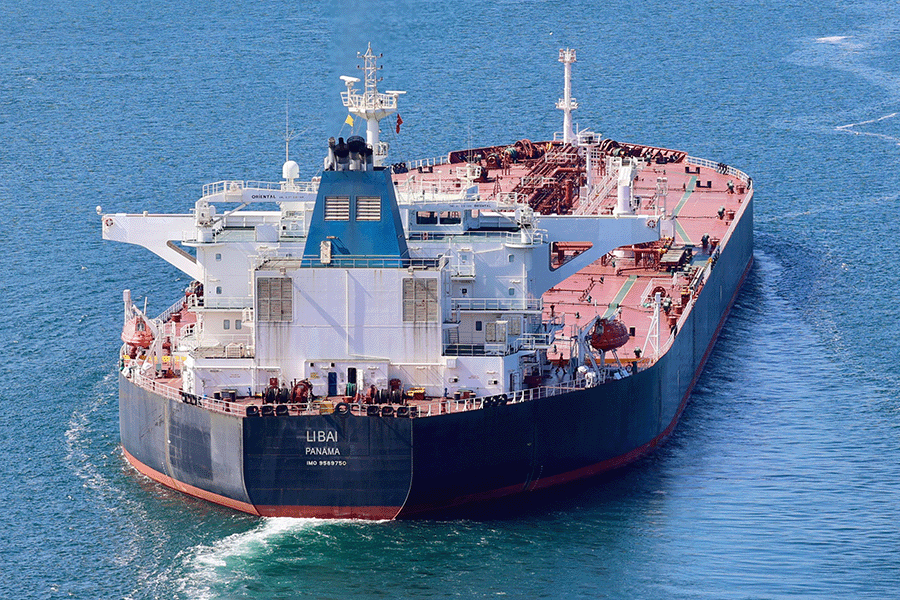
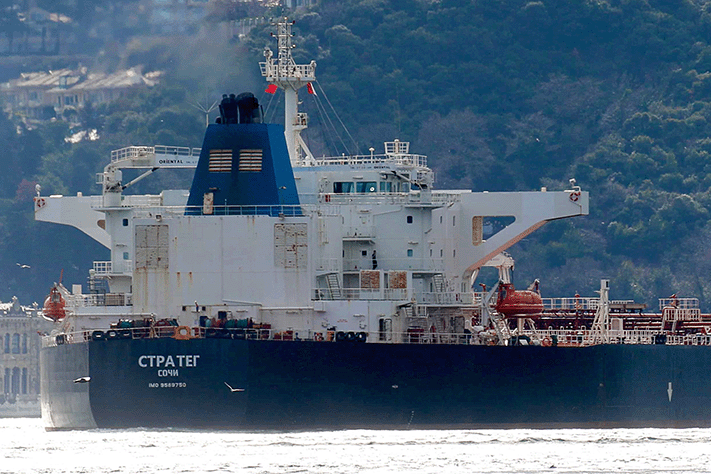
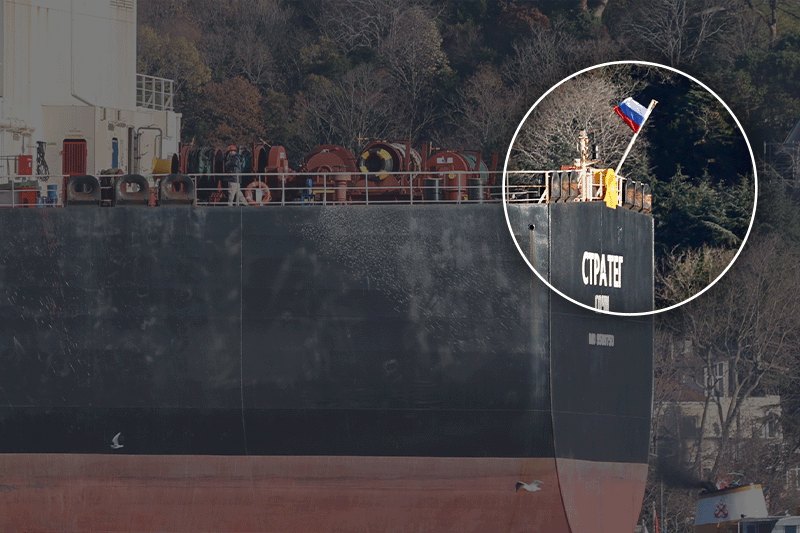
The Strateg is one of more than 30 vessels under sanction that have turned to Russia’s protection since December — and analysts believe more will do the same. The ship’s history is littered with flag and name changes typical of the cat-and-mouse game with authorities.
The story of the Strateg
December 2022
The Strateg, originally named Melodia and sailing under the Marshall Islands flag, is part of a fleet exporting crude oil from Russia
June 2023
The ship is renamed Li Bai and changes its flag to Panama
2024
It makes calls to Russian ports where oil consistently breaches the $60 price cap
January 2025
The vessel is placed under sanctions by the US
February 2025
Renamed Azuron and registered under a false Guyana flag
April 2025
Renamed Danshui and registered under a false Comoros flag
May 2025
Sanctions imposed by the EU
July 2025
Sanctions imposed by the UK
Registered under a false Benin flag
December 2025
The vessel, now in effect stateless, is reportedly sold to Russian buyers. Photographs show it entering the Bosphorus Strait with a freshly painted Cyrillic name, Strateg, and flying the Russian flag
February 2026
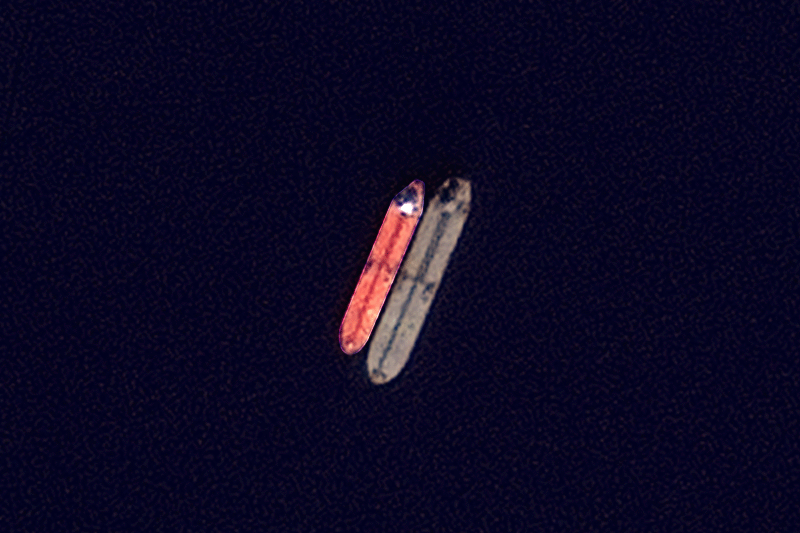
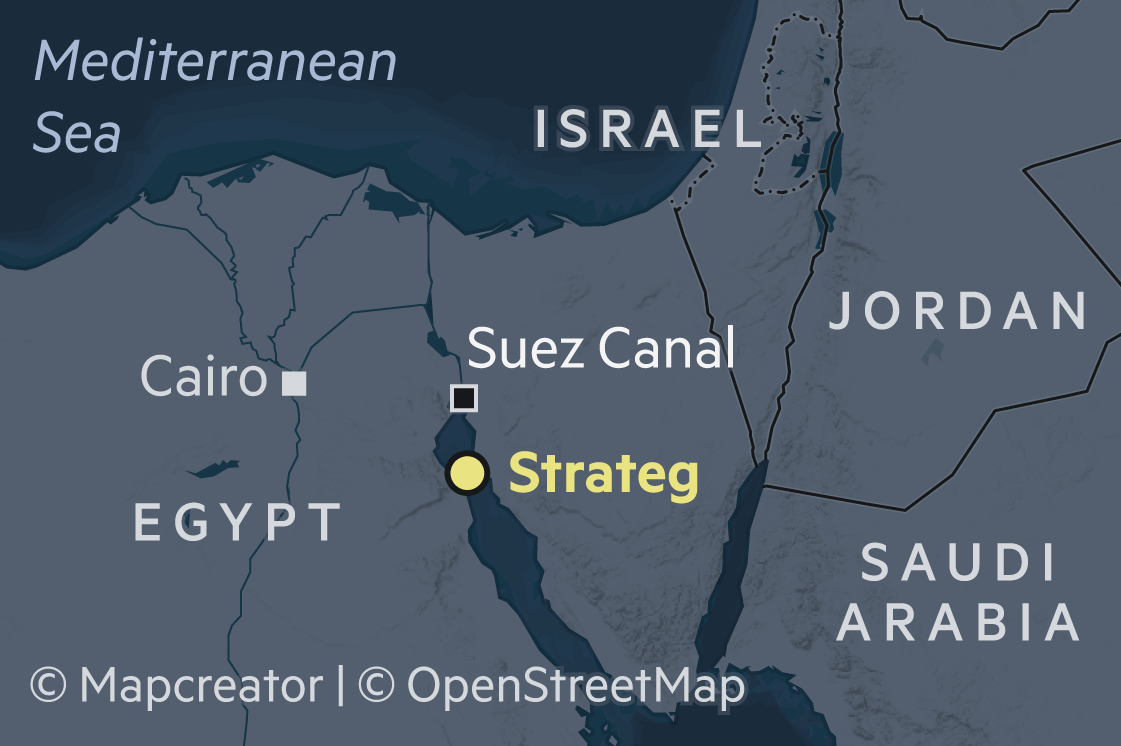
FT analysis of ship tracking data and satellite imagery analysis shows the Strateg engaging in ship-to-ship transfers with other vessels under sanctions near the Suez Canal
March 2026
The vessel is en route to deliver crude to the Vadinar refinery on India’s west coast, a facility backed by Russia’s state oil company
Despite the Russian reflagging of some vessels and the US’s moves to ease restrictions on oil at sea, sanctions imposed by the EU, UK and others remain in place. Such measures, together with these ships’ often opaque insurance and ownership, mean that the fleet remains in the shadows.
A transatlantic rift
Washington’s easing of sanctions on some Russian oil imports has alarmed European and Canadian leaders who warn it risks diluting pressure on Moscow, widening a transatlantic rift over the ghost fleet’s funding of Russia’s war in Ukraine.
Treasury secretary Scott Bessent described the US waiver as a temporary measure intended to help avoid supply shortages. But one former US Treasury official argued that Bessent did not “give a shit” about Russian sanctions and just wanted to “keep the president happy”. The former official described the loosening of restrictions on Moscow as “a gift to Vladimir Putin” that would make “only a marginal difference on global oil prices”.
The EU’s chief diplomat Kaja Kallas told reporters this month that Europe would not be changing its sanctions regime in response to the US. “If we want [the conflict in Ukraine] to end, Moscow must have less money for the war, not more,” she said.
Seizures of Russia-linked vessels by European nations have continued. Early on the second day of the Middle East conflict, the Ethera was seized by Belgium. Sweden intercepted a cargo vessel and a stateless tanker within days in early March, while on Friday the Deyna was seized off the coast of Algeria by the French with support from the UK. Nato hosted discussions between senior officials last week about how to further co-ordinate action against the fleet.
But by allowing shadow vessels to fly the Russian flag, the Kremlin has removed the stateless status of its ships — the legal justification for many of Europe’s recent interceptions.
This means that future interdiction could risk military escalation, especially if Moscow goes ahead with plans for armed naval patrols to protect its ships. “The legal loophole that had been discovered by the regulators in order to seize these vessels has been closed,” says Dimitris Ampatzidis, senior risk and compliance analyst at Kpler.
Rising prices caused by the energy squeeze have also increased Russia’s revenues and given Moscow a chance to tighten its grip on markets at the expense of Gulf states unable to export products. However, recent Ukrainian attacks on key Baltic Sea hubs have hit Russia’s export capacity and could affect Moscow’s windfall from higher oil prices.
Kęstutis Budrys, Lithuania’s foreign minister, told the FT the EU needed to “keep up the sanctions pressure regardless of what our G7 partners do” in order to “cut off that financial support Putin is getting”.
Russia’s oil and gas revenues drop to lowest level since 2020
Monthly revenues, bn roubles
@media screen and (min-width: 680px) { #shadow-fleet-russia-oil-revenues-loading { aspect-ratio: 1.813; } }
Meanwhile, since the war began on February 28, Iran has been loading about 1.5mn barrels a day on to tankers, broadly in line with its 2025 average. Iranian crude has accounted for three-quarters of the sharply reduced oil shipments exported from the Gulf since the war began, compared with roughly one-tenth in the year before the conflict, according to data from Kpler.
Ahead of the war, Iran had accelerated exports to nearly 4mn barrels a day in an effort to move crude out of the Gulf.
The US’s decision to ease sanctions on Iranian oil was part of its bid to bring energy prices under control. The move was a consequence of the war that few had foreseen and was widely criticised for its mixed signals. “You know you’re in for an interesting time when you have to remind your clients that terror financing is still illegal, despite what this administration says,” says David Tannenbaum, director at Blackstone Compliance Services, sanctions and money laundering advisers.
Yet the US waiver on Iranian oil will have minimal impact on global oil prices, analysts at Kpler predict, given the EU and the UK have not followed Washington’s lead, leaving the compliance environment largely unchanged. “Most market participants are likely to maintain a cautious approach when engaging with Iranian-linked cargoes,” says Kpler’s Ampatzidis. Other restrictions also remain on Iran, such as access to international financial systems.
Many expect Washington to remain tolerant of the shadow trade in the near term, given its new strategic importance. Tannenbaum expects the Russian waiver to be extended, even though he argues it may be harder to do the same for Iranian shipments.
The question is whether the high point of sanctions policy is now long gone and whether the ships carrying Russian and Iranian oil have weathered the worst of the storm that once engulfed them. The world’s hunger for oil has kept the shadow fleet in business and in many ways its role has been enhanced by the war in the Middle East. “The spice must flow,” says Tannenbaum.
Additional work by Dan Clark, Malcolm Moore, Jamie John, Verity Ratcliffe, Henry Foy, Jana Tauschinski and Polina Ivanova.
Shadow vessel images by: Yörük Işık; Graham Flett; Brian Shipman; Dursun Cam; Hannes van Rijn; Salvo Ilardo; Harvey Wilson; John O’Neill; Jackie Pritchard; Rick Voice; Martin Klingsick; Chas Betts; WalAndPl; Ulf Kornfeld; Steve J Henderson; Michael Warrick; Demosthenes Kyriakoulis; Howard Harrison; Rutger Hofma; Malte Kopfer; Christian Plagué; John Faggard; Martin Klingsick; Martijn Hendriks; Vladimir Tonic; David Ells; Hans Rosenkranz; David Gallichan; Frank Fidler; Reuters; MarineTraffic.
Vessel data from Kpler, the International Maritime Organization, Equasis, the International Group vessel checker, Open Sanctions,MarineTraffic and Datalastic. Information on the Hilda I and Noble Walker tankers provided by Vortexa. Satellite imagery by Planet Labs.
Disclaimer : This story is auto aggregated by a computer programme and has not been created or edited by DOWNTHENEWS. Publisher: ft.com






