
Daylight saving time is coming, and it’s my least favorite version of the dreaded time change.
Losing an hour ruins the sleep of everyone in my household. It was one thing when it was just a pair of irritated adults, but now we have a 3-year-old who doesn’t understand what daylight saving is or why he should go to bed earlier than he did the night before. Sure, we’re all going to love the brighter evenings, but why did they have to go away in the first place?
The best method to survive this madness is to start early. Scientists and brands I spoke to all gave me the same advice: Start a few days early by setting your alarm 15 to 20 minutes earlier to make the time change a transition rather than a harsh loss of an hour come Sunday morning.
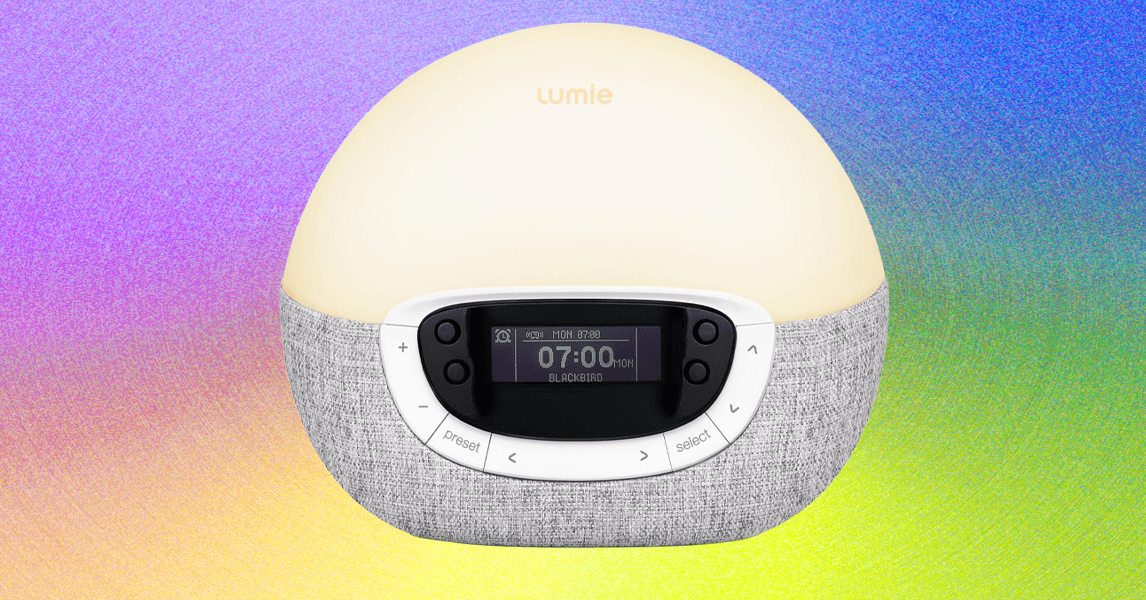
For both my child and me, it’s not just the audible alarm I’ll be changing but also our bedside sunrise alarm clocks. Light is one of the biggest things that can impact your circadian rhythm, and a noisy alarm has never cut it for me anyways. Here’s how a little extra light in the morning can hopefully make the entire transition easier for my family.
Starting Early
Waiting to deal with the time change is a recipe for serious discomfort. “Our bodies can’t shift a full hour in one day,” says Salk Institute scientist Emily Manoogian. “So if you can break it up over two to three days, it makes it a lot easier. This looks like shifting your food, light, and sleep times by a 20 to 30 minute advance for a couple of days before the DST shift.”
Manoogian says that both light and food synchronize your body clock, so these are good cues to change to help your body naturally adjust to the oncoming time change. She says that animal studies show that changing the time you eat breakfast and dinner in sync with the time change can help you to adjust much faster and return to normal life.
It will take a little more lifting to adjust your alarm each morning, but it’s better to do a little more work now than feel groggy and disoriented next week. Manoogian says that acute circadian disruptions like daylight savings shifts can result in several health issues, including insulin resistance, gut issues, anxiety, depression, and increased risky behaviors.
Just Add Light
Manoogian isn’t the only one who suggests starting earlier. Both Hatch and Lumie, makers of sunrise alarm clocks, gave me the same advice: Change your alarms a little earlier over a few days. They both also recommend using light to your advantage.
“Light is one of the most powerful signals for resetting your internal clock, which is why morning light exposure is especially helpful after the daylight saving transition,” says a Hatch representative.
While Lumie and Hatch both make great sunrise alarm clocks, they work differently. Hatch’s Restore 3 ($170) connects to Wi-Fi, so it can automatically update the time without you needing to change anything once daylight savings hits. You’ll also be able to easily adjust the time of your alarm in the Hatch app, letting you make quick adjustments as long as you’re within Bluetooth range of your Restore. The brand also introduced a Daylight Saving Assistant to use with kid devices like the Hatch Baby ($100), which can automatically shift a child’s schedule in small increments over several days.
Lumie, on the other hand, doesn’t connect to Wi-Fi or an app, so you need to manually change your alarms and the time on the clock. You’ll need to switch that each night yourself leading up to the time change, plus fully switching the time over Saturday night and bringing your alarm back to its original time. While it’s more work, Lumie’s alarm clocks like the Bodyclock Luxe 700FM ($259) and the Bodyclock Shine 300 ($169) are brighter than the Hatch, so it’s still a good investment.
The Models Worth Snagging
Looking for a new sunrise alarm ahead of Sunday? Here are the ones to get.
Disclaimer : This story is auto aggregated by a computer programme and has not been created or edited by DOWNTHENEWS. Publisher: wired.com



