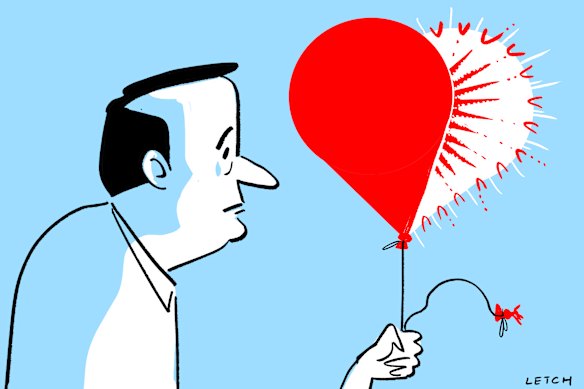
I’m in my 40s, I got divorced a few years ago and feel like I’m starting over financially. I’m struggling to move forward and build my life back. I feel like I’ve lost everything – not just money, but family, friends, the life I once knew. This isn’t where I thought I’d be at this point in my life. How do I start to move forward, so I can build a new life for myself?
I’m going to talk about this more from a mindset lens because what really determines how you move forward successfully isn’t just the financial moves, but how you process what’s happened.
Do you remember when you were a child, and the future looked full of endless possibilities? There was a magical sort of feeling when you thought of the future. You could be anything.
Hopefully, you enter adulthood with a healthy dose of optimism for your future. You start pursuing the things you couldn’t wait to do, once you finally have the freedom (and resources).
Sure, challenges come up. Hardships come up. But you didn’t expect it to be a walk in the park, so you soldier on, you keep trying, you keep your chin up, and try again. And it sort of works.
You achieve some stuff – you get a job and a partner, you save a bit of money, you travel – you start ticking off that list of things that subconsciously you believed adult life would look like.
What is the emotion you’re avoiding feeling, behind that lack of acceptance?
But somewhere along the way, something shocks you awake – and you notice: wait, this isn’t what I thought my life would look like. How did I end up here?
For some, it’s getting to an age and not having the partner or children they had longed for. For others, it’s finding that after years of hard work their career has still not ‘taken off’. For many, it’s triggered by a big event – a divorce, loss of job or business, a miscarriage, and so on.
At this point, there is an important step that people often miss that is key to helping them move on and rebuild, which is: grieving the loss of the life you thought you would have.
This is different to grieving the event itself. This isn’t: “I’m grieving the loss of my marriage”, it’s deeper than that. It’s: “I’m grieving the loss of the image I had in my mind of what I thought my life would look like.”
This might also mean grieving the loss of identity – the self-image we became attached to along the way: spouse, parent, home-owner etc – and what we’ve made those mean about who we are (e.g. successful, worthy, loved etc).
Often, it’s difficult to truly move on when we haven’t fully accepted the gap between the image of what we thought our life would look like – and what our life actually is.
I see this in particular in circumstances that are traumatic – divorce, yes, but also bankruptcy, being scammed out of money, big financial losses etc.
Either the emotional experience is still very alive, and you’re still living in the emotions of it (i.e. emotionally fighting what happened – anger, bitterness, hurt etc); or you’re trying to ‘move on’ without having processed the emotions of it (i.e. not wanting to think about it, or suppressing/bypassing the painful emotions).
Either way – you haven’t arrived at one of the key stages that can help you move on: acceptance. Acceptance isn’t giving up or accepting defeat. It doesn’t negate anyone’s wrongdoing. It doesn’t mean the future can’t be different.
It just means: not fighting reality as it is right now. It means not resisting what happened, or what is, or what cannot be changed.
Acceptance can be a pretty peaceful place to arrive at. You are no longer caught in the emotional turmoil of it. Nor are you avoiding what happened. You can look at the rubble with almost a bit of calm. That is the doorway to – where to from here?
Without having arrived here, the unprocessed emotions can disrupt your ability to move on effectively. For example, someone who lost money investing may appear to have ‘moved on’ because they don’t want to talk about what happened out of embarrassment, but the disappointment, hurt, shock etc may continue to affect their decision-making unconsciously.
So, if I had to give you a practical exercise – I’d ask you: what have you still not accepted about what happened or your life as it is right now? What is the emotion you’re avoiding feeling, behind that lack of acceptance? Can you give yourself permission to feel it, without needing to fix it, avoid it, or move on from it within a specific time-frame?
Paridhi Jain is founder of SkilledSmart, which helps adults learn to manage, save and invest money through financial education courses and classes.
- Advice given in this article is general in nature and not intended to influence readers’ decisions about investing or financial products. They should always seek their own professional advice that takes into account their own personal circumstances before making any financial decisions.
Expert tips on how to save, invest and make the most of your money delivered to your inbox every Sunday. Sign up for our Real Money newsletter.
 Paridhi Jain is the founder of financial education platform, SkilledSmart, which has helped hundreds of adults become financially confident by teaching them practical strategies to manage, save and invest their money.
From our partners
Disclaimer : This story is auto aggregated by a computer programme and has not been created or edited by DOWNTHENEWS. Publisher: www.smh.com.au