
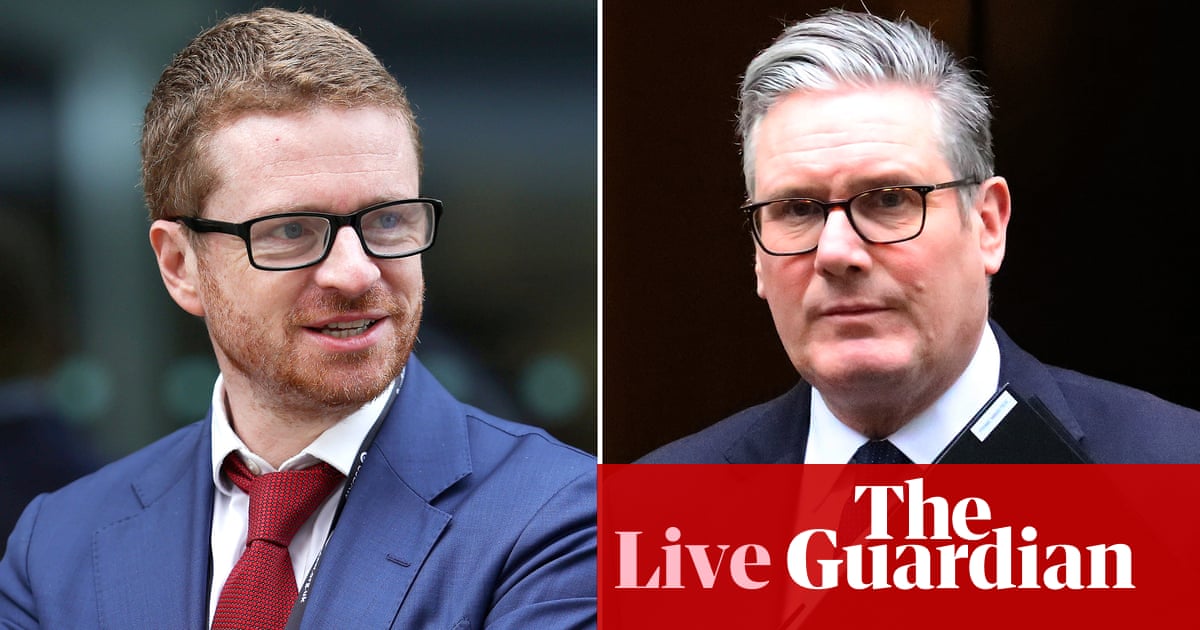
“Is it over?” That was the question that Labour MPs have been asking themselves and each other. But the meaning has shifted over the last 24 hours.
After last Wednesday afternoon’s chaos in the Commons over the release of the Peter Mandelson documents, MPs widely believed it was the final throes of Keir Starmer’s leadership.
But what looked like the start of a coup – when the Scottish Labour leader, Anas Sarwar, called for Starmer to resign – seemingly turned out to be a damp squib.
When the prime minister really puts up a fight, people often see a different side to him. MPs who had been briefing darkly for weeks about his future said they were genuinely persuaded to give him another chance by the fighting speech he gave on Monday evening to MPs and peers.
As one MP put it: “We started off with a sincere apology, it was like a Scottish Presbyterian-style gathering full of repentance. By the end the MPs were like the Southern Baptists singing hallelujah.”
So now the “Is it over?” takes on a new meaning: is the peril over for Keir Starmer? As one softly-spoken cabinet minister said as they hurried out of the Commons on Monday evening: “No.”
Leadership change is a genie that is hard to put back in the bottle. Douglas Ross, the Scottish Tory leader, called for Boris Johnson to resign in 2022 and it had little impact. But Johnson did eventually have to go a few months later.
You only have to look at the numbers. A speech in private at a meeting of the parliamentary Labour party (PLP) is a good start, but it does not change Labour’s predicament.
The party is polling at historic lows, well behind Reform. In some polls it is flirting with fourth behind the Greens and the Conservatives.
Starmer is the most unpopular prime minister on record, no matter how bizarre that sounds given recent history. That polling depth is achieved because his own natural supporters have lost faith in him over the past 18 months. Combined with his natural sceptics, it means the floor is much lower.
There is a byelection due in Gorton and Denton on 26 February, where the party could conceivably come third, after a decision partly of Starmer’s own doing: the exclusion of Andy Burnham from the ballot paper.
More exchanges between Mandelson and ministers are likely to be released, which could unleash new embarrassment and cast the net of blame even wider. And then there are the May elections, with the expected loss of the Welsh Senedd, defeat again in Scotland – with a mutinous Scottish leader – and the loss of councils across London to Greens and independents.
There is still a chance that Starmer can survive those moments of peril, even the record unpopularity. Labour could even win Gorton; campaigners on the ground say that the canvass returns are not as desperate as feared.
Expectation management has done a good job of preparing MPs for the very worst possible scenario in May. And the release of the Mandelson texts may spare the prime minister from personal blushes, as their relationship was never that close.
If there is some luck, which has been scant ever since Starmer won the election, he could survive those known threats. There is still the possible of an unknown one, like the Chris Pincher groping scandal that unseated Johnson after he survived the denunciation of Ross and the investigation into Partygate. The PLP is still a tinderbox, even if Monday night’s speech poured some cold water on it.
But what many of the most thoughtful members of the cabinet and the PLP want to see is Starmer seize the moment of his greatest peril for a wider reset, to see “Keir unleashed” – if the leash was Morgan McSweeney – and embrace a far more progressive politics and an economic reset. He has won back some goodwill, but how he uses it will define the next phase of his leadership – and whether that is the final phase.
Disclaimer : This story is auto aggregated by a computer programme and has not been created or edited by DOWNTHENEWS. Publisher: theguardian.com



