
Alex Palou’s quest to become a five-time IndyCar champion begins this weekend in the streets of St. Petersburg. 2026 will feature brand new street races in Arlington, Markham and Washington D.C., a return to the Phoenix oval, and some very interesting names in new places — like David Malukas joining Penske and Will Power partnering with Andretti. There’s even a Schumacher on the grid as Mick embarks on his rookie season with RLL.
Rule book updates
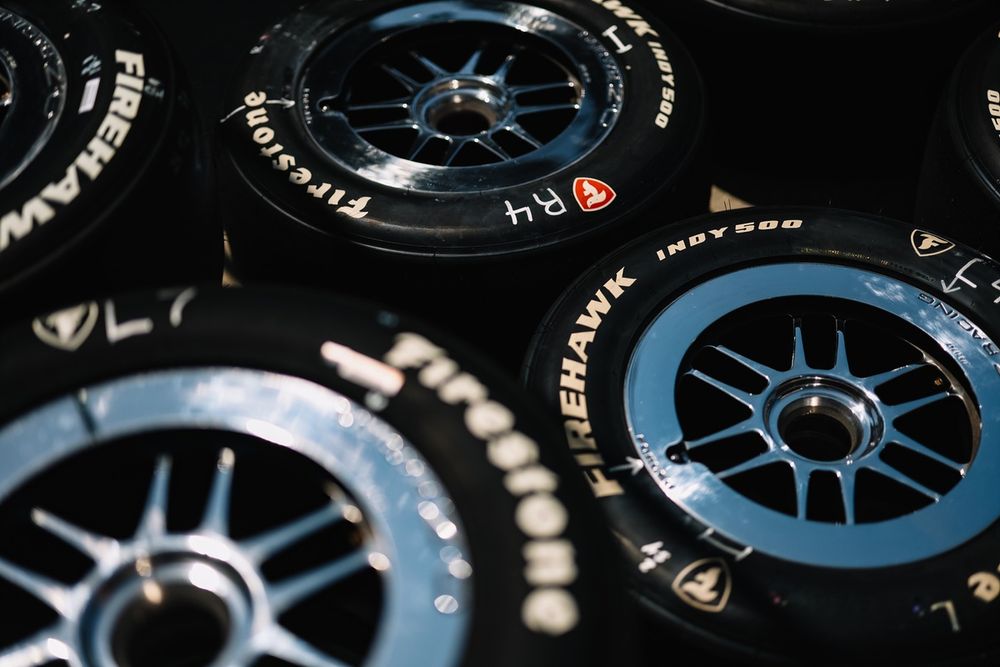
Firestone tires
Photo by: Penske Entertainment
In the pre-season competition release, IndyCar officials noted a few procedural changes and updates ahead of the upcoming season. Among them is a change in tire usage requirements for all street courses, with one set of primary tires (hard) and two sets of alternate tires (soft) now required. Previously, drivers just needed to use one set of each compound. The rule around two green-flag laps on each set remains unchanged.
“IndyCar is always looking into ways to improve the quality of what is already exceptional on-track action,” said IndyCar Senior Vice President, Competition and Operations Mark Sibla. “This street circuit update will challenge drivers and strategists alike and provide an avenue for even more memorable wheel-to-wheel action at our fan-favored street events in 2026.”
For practice on street courses, Practice #2 will now mirror the ‘group’ format of Practice #1, where the field is split by odd and even numbered pit boxes. All cars will receive an initial 40-minute practice segment before the start of two 12-minute group segments, per the release. Additionally, warmup sessions will now be 30 minutes, instead of 25.
Qualifying groups will be determined by qualifying groups from the previous race, or last year’s final points standings for the season-opener.
IndyCar is also late-race procedures for 2026, and so the lap windows — in which cars that are a lap down to the leader and moved to the rear of the field before restarts – will be expanded at almost all races.
Keeping cars on the ground at the Indy 500

Scott McLaughlin, Team Penske
Photo by: Penske Entertainment
On the technical side, series officials are mandating the use of superspeedway tire ramp flaps for all sessions around this year’s Indianapolis 500. The goal is to keep cars on the ground when they spin, working against the lift that causes airborne crashes.
Last year, there were multiple airborne crashes during the Month of May. Scott McLaughlin, Kyffin Simpson, and Colton Herta all went airborne during crashes at IMS last year.
“Dallara is a tremendous partner and have joined us to closely examine spins that have occurred over the last few years at IMS,” said IndyCar Director of Aerodynamic Development Engineering, Tino Belli. “This update to the rear tire ramps has proven in computational fluid dynamics testing to decrease, by nearly 9 percent, the likelihood of a car at speed ‘lifting’ after a 180-degree spin. We are always evaluating safety and, from a car perspective, believe this is an effectual development for a superspeedway.”
We want your opinion!
What would you like to see on Motorsport.com?
– The Motorsport.com Team
Disclaimer : This story is auto aggregated by a computer programme and has not been created or edited by DOWNTHENEWS. Publisher: motorsport.com



