
Aomori, Apr 07 (News On Japan) –
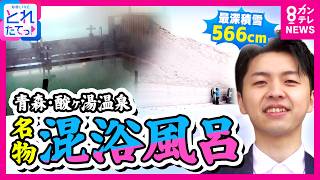
Deep winter conditions persist into April at Sukayu Onsen in Aomori Prefecture, with 8-meter snow walls still standing, while the facility’s main attraction, the expansive wooden bathhouse known as the “Hiba Sennin-buro,” a rare mixed-gender bathing area, continues to draw visitors.
[embedded content]
Yokoyama, a staff member at Sukayu Onsen, gained recognition as a regular on-the-ground reporter after connecting to the program seven times via smartphone to relay conditions from one of Japan’s heaviest snowfall regions, where snow depths this season peaked at 566 centimeters.
Despite the arrival of spring, the area remained blanketed in thick snow, with towering walls forming the so-called “snow corridor,” reaching heights of up to eight meters along mountain roads that reopened on April 1st. The striking contrast of blue skies against the white walls has made the route a popular attraction for visitors.
Sukayu Onsen, located in a mountainous area of Aomori, has a history spanning more than 300 years, dating back to the early Edo period, and is known for its traditional therapeutic bathing culture, where guests stay for extended periods to improve their health.
The facility’s main attraction is the expansive wooden bathhouse known as the “Hiba Sennin-buro,” a rare mixed-gender bathing area with no supporting pillars and a floor space equivalent to roughly 160 tatami mats, offering an open and immersive experience reminiscent of bathing in nature.
The hot spring features multiple sources, including a distinctive bath where water bubbles up directly from beneath the floor, warming the body from the core and retaining heat over time. The strongly acidic waters are said to have therapeutic benefits, and visitors are advised to gently pat themselves dry rather than rinse off after bathing.
Guests can also enjoy seasonal cuisine prepared with local ingredients, including fresh seafood such as tuna and flounder from Aomori, alongside specialty dishes like rich chicken broth hot pot introduced this season.
Yokoyama, who previously worked in customer service at a related hotel, said interaction with guests helped develop the communication skills that have made the live reports engaging, noting that some visitors now recognize and speak to him after seeing his broadcasts.
Although visitor numbers typically decline after winter, occupancy remains steady at around 60 to 70 percent, with many guests continuing to visit for the lingering snow scenery, which is expected to remain into the Golden Week holidays.
Yokoyama also warned that while the surrounding area is generally safe, visitors should remain cautious when venturing into mountain paths due to the presence of wildlife, including bears.
As the snow season gradually transitions toward spring, Sukayu Onsen continues to draw attention for its unique combination of extreme winter landscapes, historic bathing culture, and the personality of a staff member who has become an unlikely media figure through his dedication to sharing the region’s conditions.
Source: KTV NEWS
Disclaimer : This story is auto aggregated by a computer programme and has not been created or edited by DOWNTHENEWS. Publisher: newsonjapan.com









