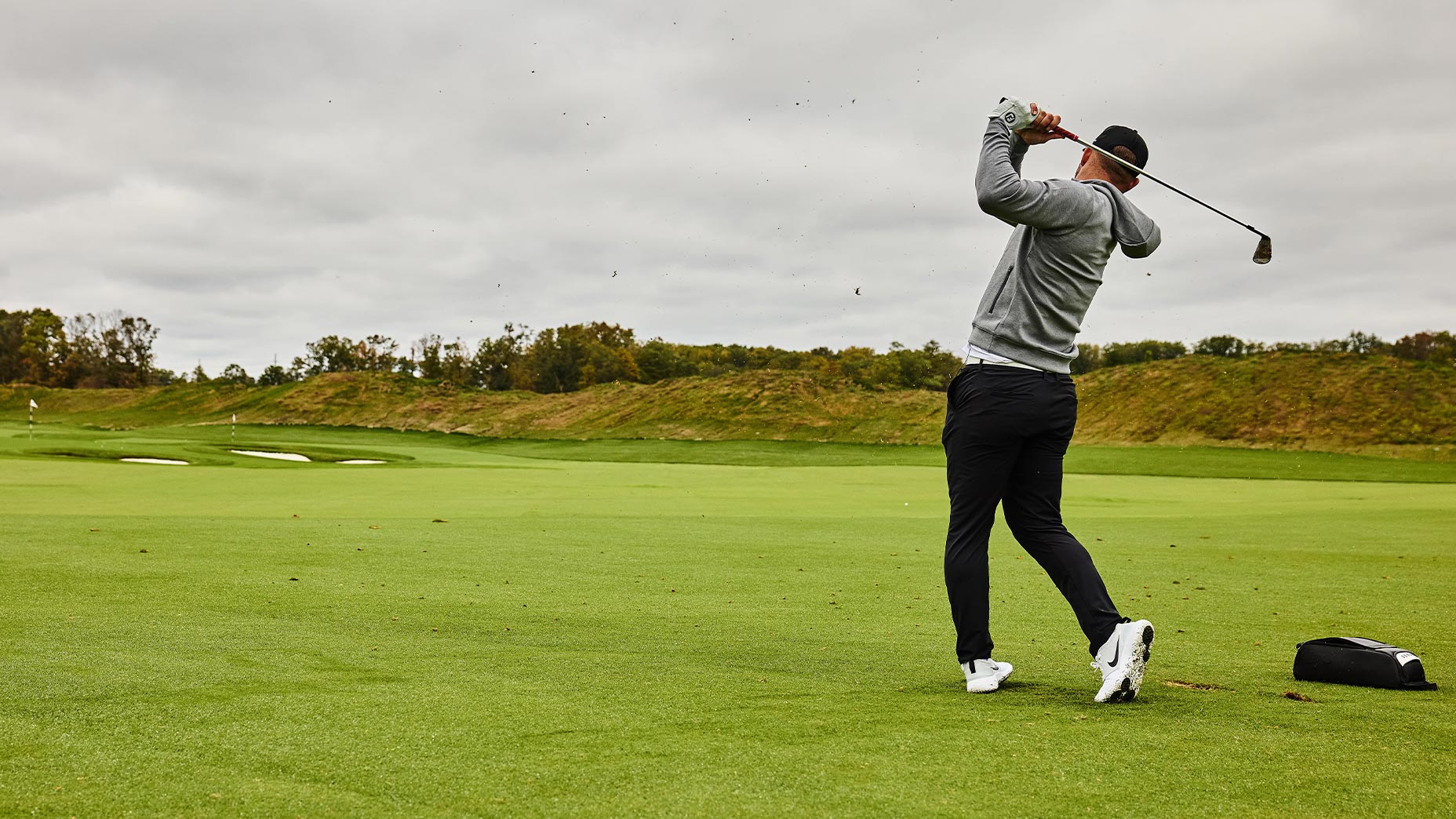
“I’m a big family guy, and that’s what this place is really about for me,” he says.
Ed Newton for GOLF
Mike Trout remembers the funniest moment in the course-building process at Trout National. It happened on the day of Tiger Woods’ first site visit.
Woods’ arrival had been highly anticipated by the Trout National crew, in part because they were keen to test his course knowledge. Before Woods’ appearance, John Ruga devised a test. One fairway on the 7,455-yard, par-72 Woods-designed course was particularly deceiving: it looked perfectly flat relative to the tee box, but, according to geological mapping data, it was nearly seven feet below the teeing area. As Woods approached the fairway, Ruga lobbed his question.
“‘How far below the tee box do you think we are right here?’” Ruga recalls. “Tiger said, ‘One foot.’”
Ruga was disappointed. He suggested to Woods that he’d gotten the answer wrong; that they were actually seven feet below the teeing area. Woods laughed.
“Yeah, I know,” he said. “I’m six-foot-one, and right now the tee box is one foot over my head.”
The Trout National crew had no further questions. Interestingly, Woods — who, with his team at TGR Design, has authored nearly a dozen courses — did. When Trout and company hired the Big Cat, they trusted he would know how to turn a plot of sandy soil in the same ecological pinelands as World No. 1-ranked Pine Valley into a stellar layout. They never expected Woods to rely on them for advice. But when Trout and Woods approached one area of the course still in flux, that’s precisely what happened.
“I mean, what do you want to do?” Woods asked Trout. “It’s your golf course.”
Trout quickly turned red. It took a few more days before he returned to Woods’ TGR Design team with a plan.
“How am I supposed to tell Tiger Woods something about golf?” he asked later, with a grin.
Ed Newton for GOLF
Perhaps the best example of what Trout National means personally has little to do with sand or slope. It belongs to the one person Trout can’t see when he goes home to Millville: Aaron Cox.
Cox was one of Trout’s closest friends, a fellow Millville ballplayer with big-league dreams whose sister Jessica married Trout in 2017, turning the old pals into brothers-in-law. The fun had just begun in the summer of 2018 — Trout was tearing up the bigs and Cox was charting his way through the Angels’ farm system — when it ended suddenly and tragically. Cox took his own life on August 15 of that year, 10 days after his 24th birthday, and tore a hole in the Millville community that still lingers.
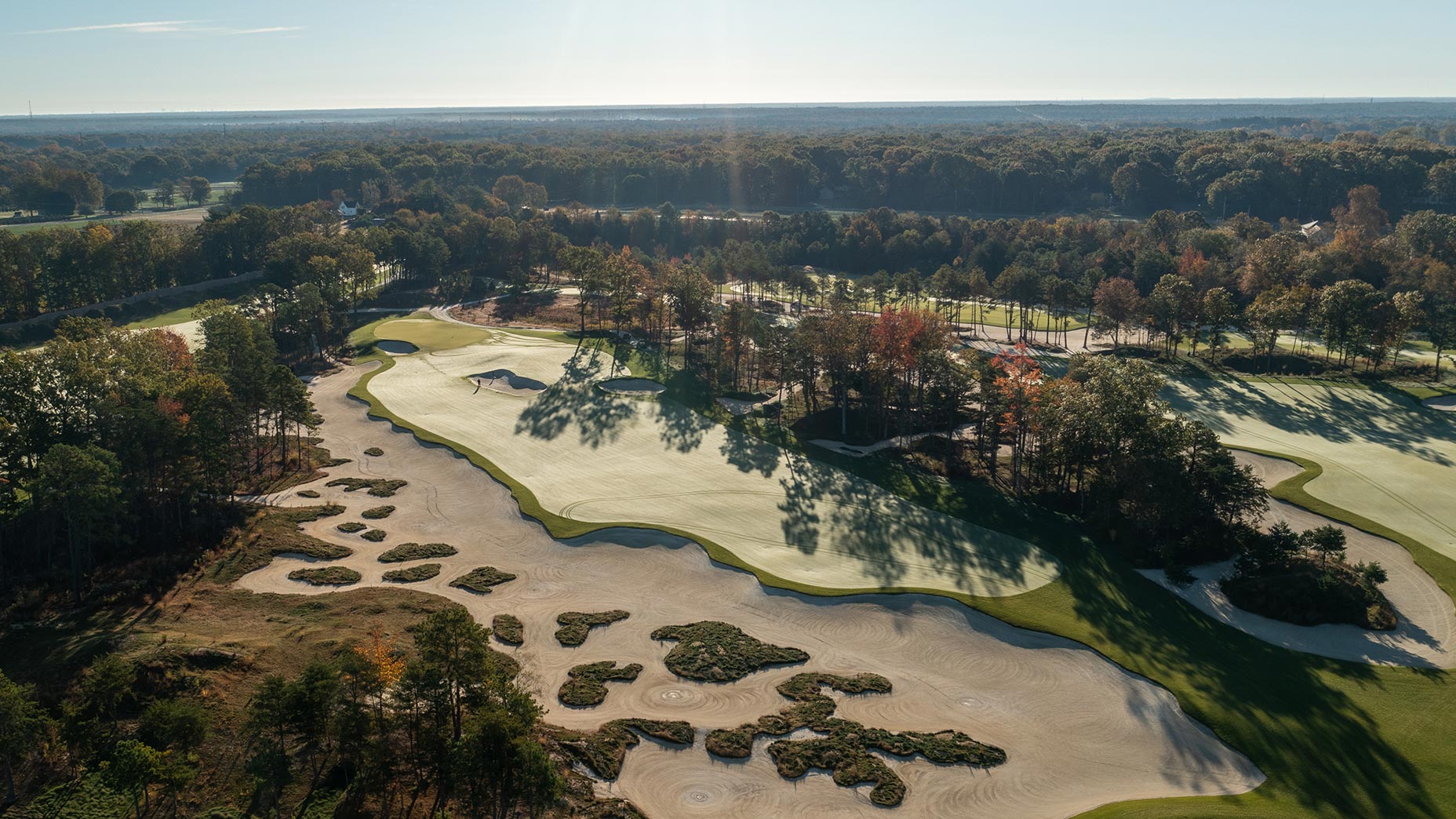
As the vision for Trout National evolved from a sporty side project to an emotional refuge for the Trout family, it became clear that Aaron’s memory needed to be central to the place. During visits, the Trouts frequently found themselves orbiting the finest stretch on the course: The middle five holes, situated in the heart of the sand mine. After some conversation, they decided the five-hole turn had earned a name: Aaron’s Loop.
“He was the life of the party, really upbeat, funny,” Trout says. “He had this gravitational pull to him, and when we started building, we realized this area of the course had the same energy. People just wanted to congregate there.”
Though he’s loath to talk about it, Trout quietly dedicated a considerable portion of his time and money toward suicide prevention since Aaron’s death. In some small way, Aaron’s Loop is an extension of those efforts.
“The hope isn’t just to honor him,” Tyler Trout says. “It’s to give us a place to talk about him and to talk about mental health. It sounds silly, but hopefully we can do a little bit of good.”
And a little good for the soul.
“Every time we play that loop, we know he’s watching over us,” Mike says. “And he would be right here, right next to us, if he were with us today.”
Getty Images
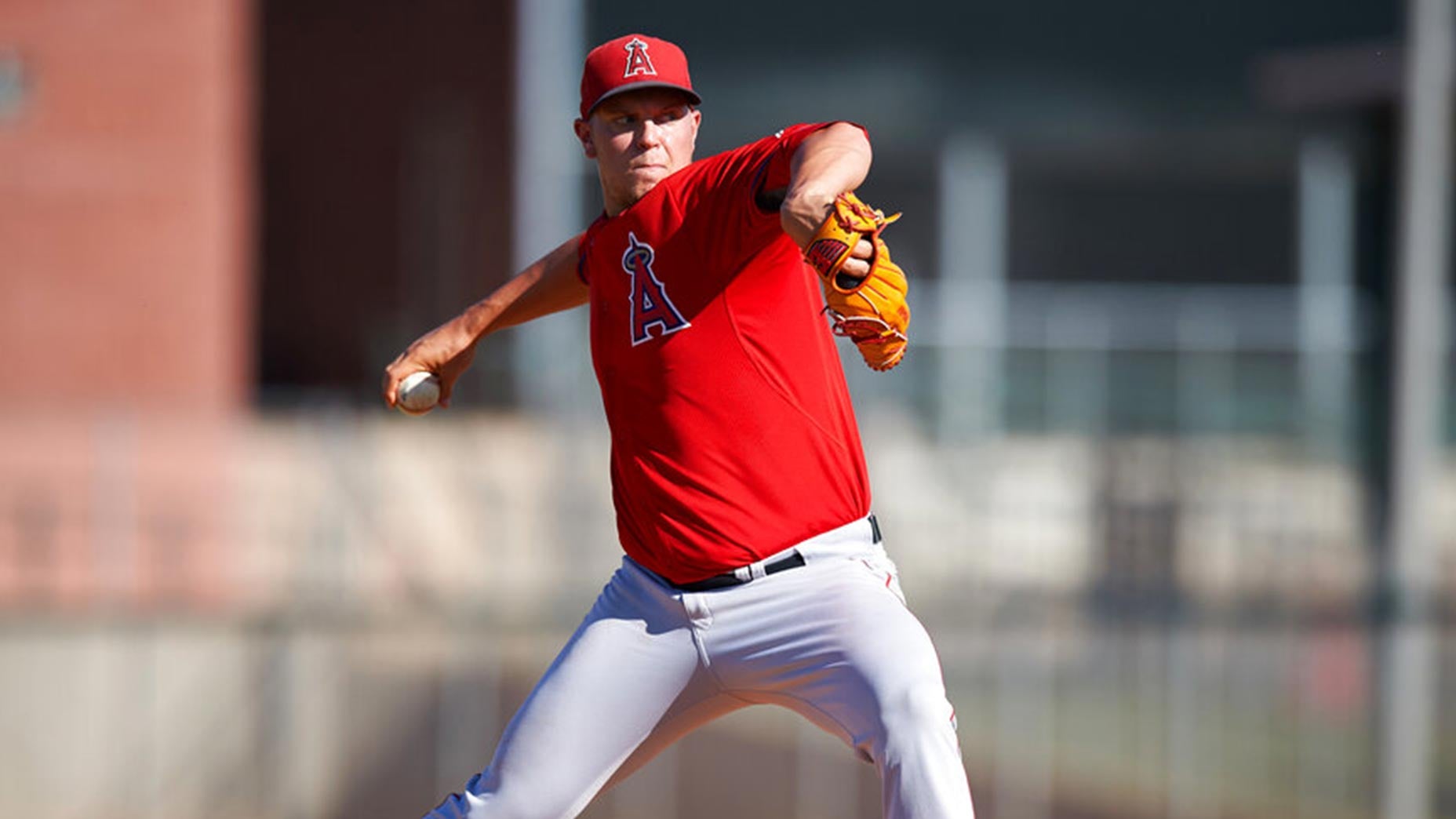
For as long as Mike Trout has been “Mike Trout,” the topic of legacy has proved elusive. His resume speaks for itself: 10-plus all-star game selections, three AL MVPs, a higher WAR through his age-24 season than any player in baseball history (besting even the early career stardom of Mickey Mantle, Mel Ott and Ted Williams), one of two players in MLB history (along with Barry Bonds) to be a finalist in five straight MVP races. Unquestionably, he’s riding a one-way ticket to Cooperstown.
But Trout is uneasy with the idea of being remembered for something. Even as injuries have slowed his play in recent years, he’s kept his attention trained on the present.
“You know,” he says a little gruffly when asked how golf fits into his retirement plans, “I’ve still got five-plus years of baseball ahead of me.”
After a second or two, he relents: “I guess, post-baseball, I see myself on a golf course. And building this one has been a cool opportunity. My family, my wife, my kids all love golf. I thought it’d be a great thing to do for all of us.”
Trout’s talent has long defied easy definitions. He’s too versatile to be remembered as a home-run king (404 bombs to date), too imposing to be remembered as a small-ball player, too powerful to be remembered as a base stealer (214 and counting). In 2012, then-President Obama captured Trout’s dimensions well by comparing him to a forthcoming piece of agricultural legislation.
“It’s like Mike Trout,” he said about the farm bill. “Somebody who’s got a lot of tools and multitasks.”
But on the golf course, Trout can’t hide from his true self. His competitive streak? Aggressive — with some high heat thrown in Tyler’s direction. (“Oh, I smoke his ass on the golf course, he’ll tell you that.”) His inner fire? White-hot, with a particular distaste for mediocrity. (“I loved watching Tiger because he absolutely destroyed people. That’s what made me enjoy golf on TV.”) His mental makeup? A risk-taker with off-the-charts self-confidence. (“Closest to the pin?” he asks before knocking an 80-foot, triple-breaking lag-putt to about six inches. “A hundred bucks. You can leave it in my locker.”)
This is the ethos of excellence underpinning the entirety of Trout National, visible everywhere from the practice range to the course record (which, at the time of this writing, still belongs to Trout). The place will open to member play in April.
“From the time I was drafted, I’ve worked hard to put South Jersey on the map,” Trout says. “With all the accomplishments I’ve gotten through baseball, and with what I hope is one of the top golf courses in the world, I’m just trying to bring the noise to South Jersey.”
In the end, this is the Mike Trout you ought to witness in the flesh — the one-in-a-million talent who never got too big for his hometown. But that’s assuming you can find him. Even as the sun breaks through on a cloudy late afternoon in the offseason, casting his new golf course in a golden glow, Trout isn’t interested in a victory lap — and definitely not in the lingering needs of a reporter. His focus has turned to far more urgent things.
Like getting home for dinner.
You can reach the author at james.colgan@golf.com.
Ed Newton for GOLF
Disclaimer : This story is auto aggregated by a computer programme and has not been created or edited by DOWNTHENEWS. Publisher: golf.com