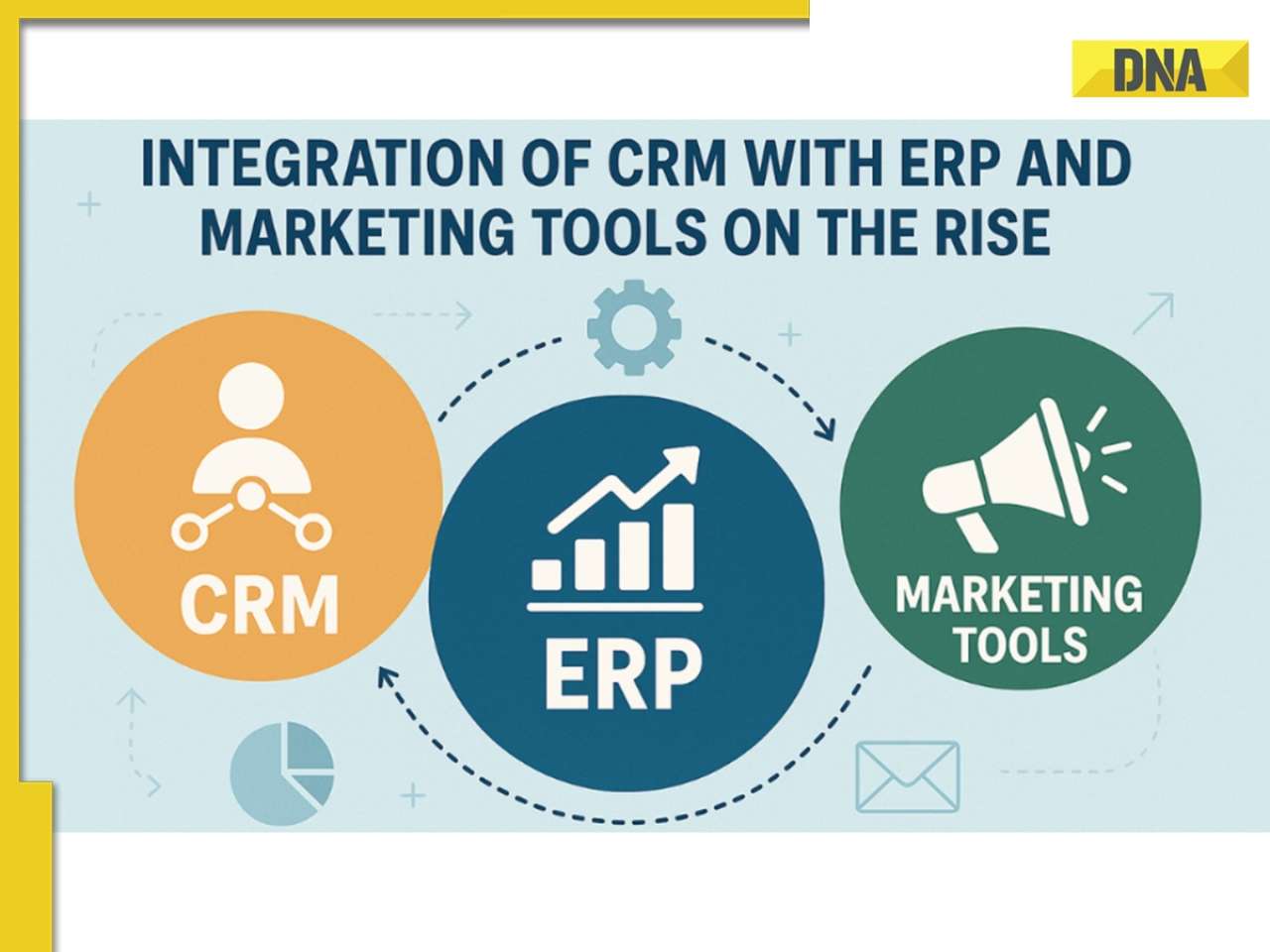
Integrating CRM with ERP and marketing tools creates a unified data flow, eliminating silos to improve profitability and operational efficiency.
Teams work hard based on the available information though each of them views a different portion of the customer journey. Sales is concerned with new developments, pattern of payments in relation to finance checks, marketing research campaign responses, and support responds to the daily questions. Their tools get too much details, but the general picture remains fragmented since the information is never complete.
This is the reason why understanding the real nature of CRM meaning has gained significance among companies that desire such fragments to work synergistically rather than to be in a contest to get attention.
Customer Relationship Management, abbreviated as CRM, assists teams to store customer information, record interactions, follow ups, and sales that continue being done.
Once a CRM software is integrated with Enterprise resource planning as well as marketing platforms, the information that used to reside in different systems begins to run in one direction. This provides the companies with a better and more accurate picture of the flow of their work across departments.
Reason why businesses are shifting towards integrated systems
It is best to begin with the question of why it is that integration is a good idea.
This is the same case with most companies. Information is captured but does not pass over between teams. All the departments are left to work with partial information.
Integration currently assists firms to eliminate such barriers. In case CRM is linked to both ERP and marketing tools:
- Teams are updated automatically without their request.
- There are reports which reflect real activity as opposed to delayed inputs.
- Customers receive regular communication.
- Monotonous manual typing decreases. Manual entries are done away with through automatic data updates.
In basic terms, integrated systems provide firms with one version of truth.
Role of ERP in CRM Integration
ERP manages the internal workflow of an organization that maintains its operations. It logs the stock quantities, inventory location, the procurement requests, billing procedures, and the assistance of planning.
The linkage between ERP and CRM is a reflection of customer behavior within these internal processes without having to be updated manually. The following is what transpired at a practical level:
- Real-time product information: Sales teams are able to verify stock data in real time, prior to confirmation of quantities of goods or delivery schedules.
- Quick order processing: A closed deal in the CRM builds the necessary documents within the ERP and provides inventory updates on a real-time basis.
- Better financial transparency: Finance departments can see customer sales, credit utilization and payment activities directly and this allows them to project cash flow and authorizations.
Both systems are in sync, hence teams do not depend on it being scattered and individual follow ups. They use the same working data and this saves time wastage and all departments operate with the same knowledge of the workload.
CRM with ERP and Marketing Tools Advantages
Integration is justified when you learn how cross functional teams perfect their pricing, stock planning, targeting, and follow ups after CRM, ERP, and marketing tools begin their operations on the basis of the same information.
Greater management of customer profitability.
Leaders no longer look at customers exclusively in terms of revenue when systems are connected. They start realising the amount of effort required on each account. Purchase history, service time, discounts, frequency of delivery and campaign response make a one picture. This aids companies to determine the accounts/SKUs that deliver credible value and those that would require more resources than the output. Through this realization, pricing, service promises and retention plans are more considerate and long term.
Quick reaction to fluctuating demand.
Integration provides the teams with a clear understanding of the desires of customers and the possibilities of the company to provide at that time. CRM data is the interest levels, ERP demonstrates stock preparedness, and marketing displays the current engagements. Whenever such signals coincide, the decisions are made quicker. The teams are able to serve increasing demand promptly and avoid stock push in case the interest declines.
Capacity and workload planning can be improved.
Knowing the conversion of leads, the flow of orders within the system, and the effect of campaigns on the customer traffic will provide managers with a trustworthy account of the workload of the team. Companies are no longer that responsive to spikes because they can schedule the staff, work out the delivery patterns, and plan operational activities in advance.
Increased managed handovers of customers.
The situation of losing context between teams in terms of customer experience is detrimental. This can be avoided through integration which presents all departments with the same customer timeline. Sales is informed on whether an issue is being dealt with by the support. Finance will inform when a customer is in the middle of negotiation. Marketing has the knowledge when not to present an offer.
Clear vision of the effect of marketing in revenue.
The moment campaign activity is recorded in the CRM, teams can be able to track the impact of each interaction on sales. They are able to determine which messages are being translated quicker, which promotions get repeat orders and which touchpoints enable customers to remain longer. This provides the organisation with a factual perspective of the role played by marketing in generating revenues.
Common Problems With Integration And What Companies Can Do About It.
|
Problem |
What to Do |
|
Teams working separately |
First agree how info should move between teams. Then connect systems. |
|
Tools don’t talk to each other |
Use tools that already connect easily. Don’t force it. |
|
Nobody owns the process |
Decide who is responsible. Keep it clear. |
|
Teams feel they’ll lose control |
Show them less manual work, fewer follow-ups. |
The Growing Role of Automation in Integration
Once systems are connected and data starts moving between them, teams usually realise that a lot of work is still being done manually. People are checking things, updating records, sending reminders. Even though the data already exists somewhere, it still needs someone to act on it.
This does not appear immediately. In the beginning everything seems fine. People manage the work. Tasks get completed. Later the same checks start coming back. Updates are done again. Things don’t break, but it needs effort every time.
Automation usually comes up around this stage. Not as a full plan. More as a discussion. Something that could reduce a few of these repeated steps. The systems already hold the information. The work around it is still manual.
Cloud and Mobility Has Made Integration Even More Accessible
Cloud and mobile access are used with CRM software and ERP in daily work now. Teams open these systems more often than before and not always from the same place. Sometimes it is from the office, sometimes not.
This did not change suddenly. It happened slowly while people were already working. At first, nothing felt different. Work continued in the same way. CRM software and ERP were used as usual. Later, access became more flexible. People started opening the systems whenever they needed to check something. There was no clear decision behind it. It just started happening.
Even now, it is not always consistent. Some tasks are done on mobile, some are not. CRM software and ERP are still the same systems, but how people access them keeps changing slightly. Work continues around this without much thought given to it.
Disclaimer:
This article is from the Brand Desk. User discretion is advised.
Disclaimer : This story is auto aggregated by a computer programme and has not been created or edited by DOWNTHENEWS. Publisher: dnaindia.com