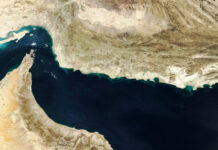
In a development closely watched by global markets, Iran has said vessels linked to India will be allowed to pass through the strategically critical Strait of Hormuz, but not without conditions.
The announcement, attributed to Iranian Foreign Minister Abbas Araghchi and shared via the Consulate General of Iran in Mumbai, signals a calibrated easing of restrictions amid ongoing geopolitical tensions in the region, reported Moneycontrol.
Conditional Green Signal for ‘Friendly Nations’
According to Iranian authorities, vessels belonging to “friendly nations”, including India, China, Russia, Iraq and Pakistan, may be permitted to transit through the Strait.
However, this is not a blanket clearance. The passage is contingent on ships being classified as “non-hostile” and adhering to specific security protocols laid down by Iran.
What ‘Non-Hostile’ Really Means
Iran’s mission to the United Nations in New York clarified that only vessels that do not support actions against Iran will be allowed safe passage. In addition, such movement will require prior coordination with Iranian authorities.
Separately, Iran’s Defence Council underscored that all transit through the Strait will now be subject to strict coordination requirements, indicating tighter oversight of maritime activity in the region.
For shipping companies, this introduces an added layer of compliance and operational planning, particularly for routes that depend on predictable transit timelines.
UN Raises Alarm Over Supply Chain Disruptions
The evolving situation has drawn concern from the United Nations.
UN Secretary-General António Guterres warned that disruptions in the Strait of Hormuz are already affecting global supply chains. In a post on X, he said the situation is “choking the movement of oil, gas and fertiliser at a critical moment in the global planting season.”
He also highlighted the humanitarian fallout, noting that civilians across the region are facing serious consequences. Guterres called for an immediate end to hostilities, urging the United States and Israel to halt military actions, while asking Iran to stop attacks on neighbouring countries not directly involved in the conflict.
Why the Strait of Hormuz Matters
The Strait of Hormuz remains one of the world’s most vital energy corridors, handling a substantial share of global oil and gas shipments. Any disruption in this narrow passage has immediate implications for energy prices, shipping costs and broader market sentiment.
For India, which depends heavily on imported energy, the assurance of passage offers some relief. It helps ease immediate concerns around supply continuity, especially for crude shipments routed through the Gulf.
Relief, But With Uncertainty
While the conditional clearance provides a measure of comfort, the requirement for prior coordination and the “non-hostile” classification introduces uncertainty for global shippers and insurers.
Operational risks, including delays, compliance challenges and higher insurance costs, could persist even with the easing of restrictions.
In effect, while the Strait is not entirely closed, it is no longer business as usual, and that distinction could continue to shape global energy and trade flows in the weeks ahead.
Related Video
BREAKING NOW: Indore fire tragedy as EV short circuit triggers deadly explosions
Disclaimer : This story is auto aggregated by a computer programme and has not been created or edited by DOWNTHENEWS. Publisher: abplive.com