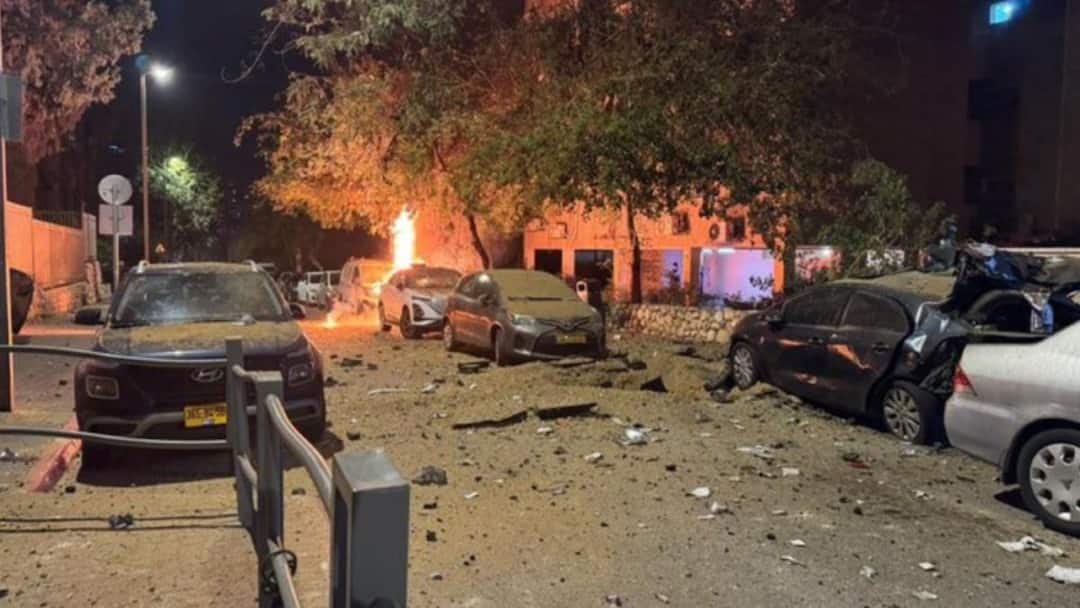
Iran has fired cluster missiles towards central Israel in what it described as retaliation for the killing of senior security official Ali Larijani, according to media reports, as the conflict involving Iran, Israel and the United States moves into its third week. The overnight strike reportedly involved missiles carrying multiple warheads designed to evade air defence systems, killing two people near Tel Aviv and injuring several others, while also causing damage to civilian infrastructure, including a railway station, reports said.
Cluster Missile Strike
According to reports, the attack took place late on Tuesday night, with missiles striking the Ramat Gan area close to Tel Aviv. Israeli media said a man and woman in their seventies were killed after they were unable to reach a protected room in time despite air raid warnings.
Falling debris and shrapnel also injured several people and caused significant damage to nearby buildings. Local reports said parts of a train station in Tel Aviv were affected during the strike.
Iran’s Islamic Revolutionary Guard Corps said the attack was carried out in revenge for the killing of Ali Larijani and his associates, who were killed in recent Israeli air strikes. Tehran has accused Israel of deliberately targeting senior security figures as part of the ongoing confrontation.
Iranian authorities are expected to hold funerals for Larijani as well as Gholamreza Soleimani, the head of the Basij paramilitary force, who was also reported killed in the strikes.
Tensions Enter Third Week
The latest exchange comes as the conflict involving Iran and Israel, with the United States backing Israel, continues to intensify, according to reports. The use of cluster-style munitions has raised fresh concern as such weapons release multiple smaller warheads, making them harder to intercept with defence systems.
The latest strikes underline the growing risk of a wider regional conflict as both sides continue to exchange attacks, with no immediate sign of de-escalation, reports added.
Related Video
LPG Crisis Hits Jaipur: Factories & Households Struggle as Cylinders Remain Scarce
Disclaimer : This story is auto aggregated by a computer programme and has not been created or edited by DOWNTHENEWS. Publisher: abplive.com