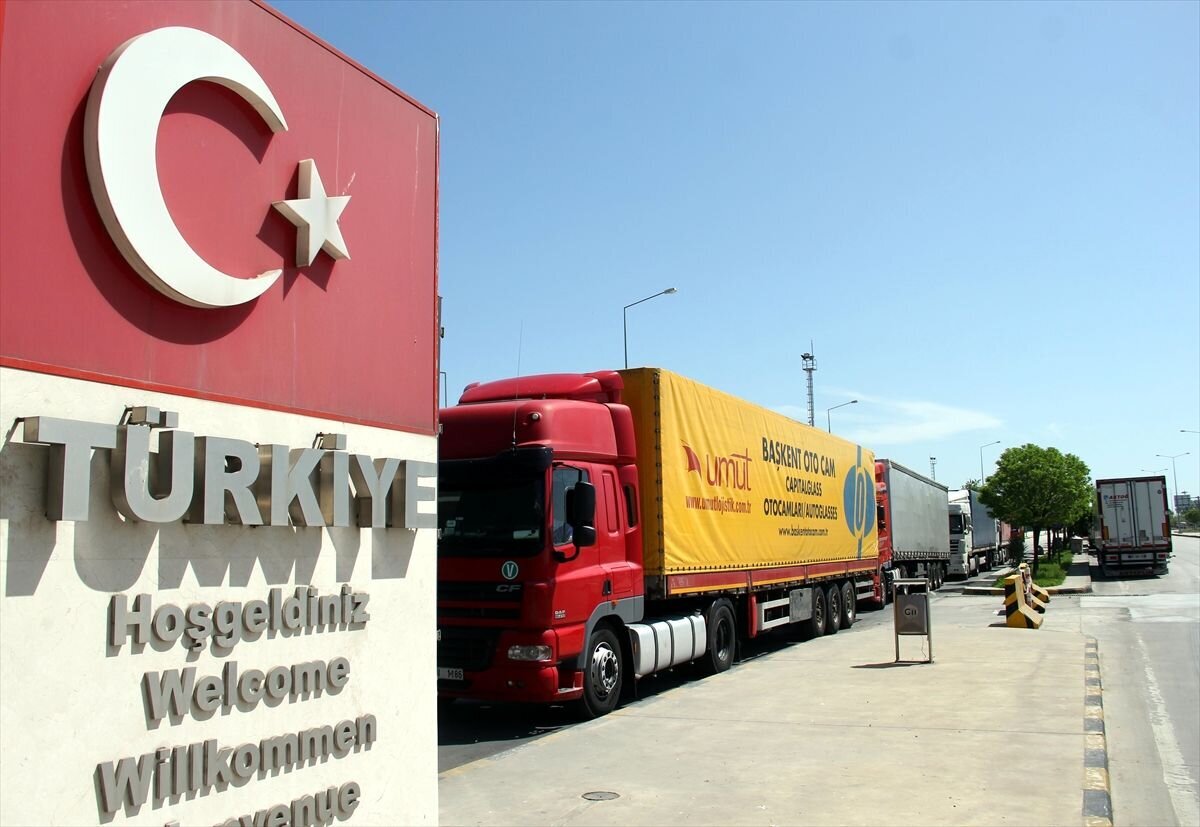
TEHRAN- The Turkish Statistical Institute announced that the value of this country’s imports from Iran in the first ten months of 2025 increased by four percent compared to the same period last year, reaching $2.035 billion.
However, Turkey’s exports to Iran from January to October 2025 amounted to $2.53 billion, representing a four-percent decrease compared to the same period last year.
Trade between Turkey and Iran in the first ten months of the current year reached $4.565 billion.
The trade between the two countries during this period did not show a significant change compared to the same period last year. In the ten months of 2024, the trade volume between the two countries was reported to be $4.585 billion.
On December 6, a Tehran Chamber of Commerce, Industries, Mines and Agriculture (TCCIMA) delegation, visiting the Plast Eurasia 2025 exhibition in Istanbul, met with a group of board members and managers of the Istanbul Chamber of Commerce.
In this meeting, both sides, referring to the longstanding friendly, cultural, and economic relations between Iran and Turkey, emphasized strengthening connections through the exchange of trade delegations, participation in exhibitions, and joint investment.
Munur Ustun, a member of the executive board of the Istanbul Chamber of Commerce, referring to the memorandum of understanding signed between the two chambers last year, described the presence of Iranian companies in Turkey and specialized exhibitions as valuable and stated: “The current volume of trade between the two countries falls short of the existing potential.”
He then addressed the impact of global economic developments and the constraints caused by sanctions, and emphasizing the need to facilitate the foreign trade environment and create a secure path for private sector cooperation, said that direct meetings between merchants are an important step to compensate for shortcomings.
Addressing the meeting, Hervik Yarijaniyan, head of the TCCIMA Industry and Mining Committee, stated that with over 47,000 members, this chamber has extensive capacity for cooperation with Turkish economic actors, adding: “The social, political, and cultural relations between the two countries are at a high level, but the level of trade exchange does not correspond with these realities. Therefore, through the exchange of trade delegations, participation in exhibitions, and joint investment, cooperation between the two countries can be strengthened.”
He also invited the Istanbul Chamber of Commerce to travel to Tehran as a trade delegation to further expand the grounds for joint cooperation.
Subsequently, Hesameddin Hallaj, deputy for international affairs and trade development at the TCCIMA, referring to the continuous dispatch of trade delegations in recent years and the active presence of the Tehran Chamber at Plast Eurasia 2025, said: “Face-to-face dialogues between Iranian and Turkish actors can lead to the development of economic relations.”
He also announced the continuation of cooperation between the two chambers based on last year’s memorandum of understanding and expressed hope that the Tehran Chamber would soon host a delegation of Turkish merchants.
During this meeting, Kamran Davari-Nikou, Consul General of Iran in Istanbul, referring to the increase in the trade between the two countries to $19.4 billion, said the diversity of Iran’s export goods to Turkey has increased from 700 items in previous years to 1,383 items.
Referring to the presence of 45 Iranian companies at the Plast Eurasia exhibition and several dispatched trade delegations, he described this trend as a sign of the high potential for economic cooperation between Iran and Turkey.
Uzcan Tokul, Deputy Secretary General of the Istanbul Chamber of Commerce, in his remarks, deemed the current trade volume between Iran and Turkey insufficient and stated that the Istanbul Chamber would seriously continue its policy of receiving and supporting Iranian trade delegations.
At the end of this meeting, it was also decided that the Tehran Chamber of Commerce would prepare the groundwork for a trade delegation from the Istanbul Chamber of Commerce to travel to Tehran through official correspondence.
The TCCIMA delegation, visiting the Plast Eurasia 2025 exhibition, also met with senior officials of the Istanbul Chamber of Industry, proposing strategic partnerships between Iranian and Turkish private-sector companies, particularly in technology-driven sectors.
During the joint session, both sides highlighted the long-standing commercial ties between Iran and Turkey and agreed to strengthen industrial cooperation through B2B meetings and reciprocal expert delegations.
Mehmet Akif Meral, director of international and EU affairs at the Istanbul Chamber of Industry, introduced the body as an institution with 23,000 members established in 1923. He described past cooperation with Iran as positive, citing a 2013 business mission to Tehran and multiple meetings in recent years on technology, energy and industry.
He said the chamber maintains extensive links with Europe and neighboring markets and actively participates in global exhibitions, including major events in Chicago and the Netherlands.
Meral outlined measures taken in response to U.S. tariff shifts, noting that the chamber supports Turkish manufacturers through market advisory services, specialized training and e-commerce development programs. He added that 40 percent of Turkey’s exports go to Europe, where the chamber plays a central role in maintaining industrial ties.
Hervik Yarijaniyan, head of the TCCIMA Industry and Mining Committee, said current trade levels fall short of the two countries’ long-standing economic links. He called for closer coordination between the Tehran Chamber and the Istanbul Chamber of Industry and invited a Turkish industrial delegation to visit Tehran.
Hesameddin Hallaj, deputy for international affairs and trade development at the TCCIMA, pointed to Iran’s renewed industrial momentum after difficult economic years. He said the current environment is suitable for joint ventures and shared manufacturing projects.
Highlighting the zero-tariff and reduced-tariff opportunities available to Iran under its free-trade framework with the Eurasian Economic Union, he encouraged Iranian and Turkish businesses to pursue co-export strategies in plastics and polymers, textiles and apparel, pharmaceuticals, agriculture and food products.
Meral noted that Iranian companies hold competitive strengths in several technology domains and can form strategic alliances with Turkish producers. He said shifting global supply chains and rising logistics costs have made Turkey an attractive base for regional industrial cooperation. He cited broad collaboration potential in electrical equipment, parts manufacturing, machinery, home appliances, electronics, fisheries and caviar.
He added that at the upcoming Moscow exhibition, where Turkey will field 200 booths, the chamber can help connect Turkish companies with Iranian partners.
Plast Eurasia 2025, one of the region’s leading plastic-industry exhibitions, hosted participants from dozens of countries in Istanbul.
The Tehran Chamber of Commerce operated a dedicated pavilion and held multiple meetings to showcase Iran’s industrial capacities and expand bilateral business links.
In late November, Iran’s minister of industry, mining, and trade, during a meeting with the minister of trade of turkey, emphasized the need to remove obstacles to the development of Tehran-Ankara economic cooperation and announced a $2 billion increase in the value of trade exchanges next year, reaching a total of $10 billion in trade between the two countries.
Seyed Mohammad Atabak, the minister of industry, mining, and trade of Iran, who traveled to Turkey to attend the meeting of ECO trade ministers, met with Omar Bulat, the minister of trade of Turkey, on November 26, and discussed trade relations between Iran and Turkey.
He described Turkey as one of the most important trade partners of Iran and stressed the need to increase trade between the two countries.
Atabak said: “Trade between Turkey and Iran has the potential for a significant leap, and we hope to achieve this major goal by resolving some minor obstacles.”
Omar Bulat, the minister of trade of Turkey, also pointed to the five percent increase in the value of trade between Turkey and Iran in the current year and added: “We have now reached an $8 billion in trade between the two countries, and for the next year, we have set a target of $10 billion.”
He stated that based on the historical background and neighborly relations of the two countries, Turkey is ready to develop trade relations with Iran.
In this meeting, the minister of industry, mining, and trade of Iran and the minister of trade of Turkey reviewed some bilateral trade issues and reached understandings in this regard.
In early October, senior Iranian and Turkish trade officials held talks in Tehran on ways to deepen economic ties, with Iran’s Chamber of Commerce calling for tariff reforms to unlock the two countries’ trade potential.
Hamed Asgari, deputy for international affairs at the Iran Chamber of Commerce, Industries, Mines and Agriculture (ICCIMA), told Turkish commercial attachés that the current level of trade is “not satisfactory” and urged a revision of tariff policies to strengthen bilateral economic relations.
He said Iran and Turkey have the capacity to expand trade to between $15 billion and $20 billion annually, but tariff barriers and restrictions have prevented Iranian goods from reaching their full potential in the Turkish market. Products such as cement and clinker were cited as key examples.
Asgari emphasized Iran’s comparative advantages in energy and competitive goods and called for faster, less bureaucratic cooperation between Iranian and Turkish firms, especially in sectors such as steel and petrochemicals. He also stressed the need to leverage the Turkish embassy’s support to facilitate tariff reform and boost bilateral exchanges.
The Turkish delegation, including commercial attachés Bilge Dinmez and Orhan, underlined the importance of removing trade barriers and clearing up commercial misunderstandings. They described Turkey as Iran’s “gateway to Europe” and highlighted extensive ties, including a large Iranian community in Turkey.
They noted that preferential tariff negotiations between the two countries will resume soon and pointed to recent meetings of the joint commission and customs authorities.
Asgari said ICCIMA, as an advisor to the government, is committed to working with the Turkish embassy’s economic section to address private sector concerns.
He promised follow-up meetings between business communities from both countries to craft practical solutions and advance cooperation, particularly in strategic industries such as steel.
The session concluded with plans to hold regular technical and expert meetings between ICCIMA and the Turkish embassy to drive trade development. Dinmez was introduced as the new commercial attaché at Turkey’s embassy in Tehran.
As previously announced by Abolfazl Akbarpour, the deputy head of the Islamic Republic of Iran Customs Administration (IRICA) for planning and international affairs, Iran exported non-oil commodities valued at $6.8 billion to Turkey in the past Iranian calendar year, which ended on March 20, 2025.
Akbarpour said that Turkey was Iran’s fourth top export destination in the previous year.
Exporting commodities valued at $12.4 billion to Iran, Turkey was Iran’s third top source of import in that year, the official added.
MA
Disclaimer : This story is auto aggregated by a computer programme and has not been created or edited by DOWNTHENEWS. Publisher: tehrantimes.com