
Iran’s internet shutdown, which began shortly after the first US-Israel strikes in late February, is now the longest national-scale blackout since the Arab spring, monitors have said.
Iranian authorities cut all access to the internet on 28 February, the day the war began, after an earlier shutdown in January during nationwide protests. This current blackout has lasted more than 38 days.
Its severity means many in Iran, beyond their own experiences, are receiving limited information about the war compared with others in the region. “When I speak with people inside Iran, they often are not aware of the full scale of the destruction and other developments,” said Amir Rashidi, director of Miaan Group, an Iran-focused human rights organisation.
“Their only sources are Iranian state television and one satellite channel. They do not have access to major news sources, and both of these outlets report the news according to their own agendas. As a result, Iranians are unaware of many details, or even of the news itself.”
Doug Madory, director of internet analysis at Kentik, said while there have been longer outages at a sub-national level in Myanmar and in areas of Ukraine and Gaza during ongoing conflicts, this has been the longest and most severe nation-scale blackout since the Arab spring, when Libya lost internet connectivity for nearly six months.
Sudan shut down its internet for 37 days in 2019.
“The fact that the Iranian government continues to block internet access suggests that the structures of the regime have not changed very much,” said Madory.
At present, most Iranians can only access the National Information Network (Nin), a domestic network under development for the past 16 years. Completely separate from the global internet, the Nin offers parallel services, such as search engines, an Iranian version of Netflix and messaging apps.
It is also government-monitored and its platforms, including messaging apps, have been shown to hand over information on their users to Iranian authorities.
A report from Miaan Group found “severe censorship is being imposed on domestic search engines and all local platforms.”
In particular, on Gerdoo, Iran’s domestic version of Google, searches for keywords such as “war” or “ceasefire” yield no results: “As if no war exists either in Iran or anywhere else in the world,” wrote the report.
In another Iranian domestic search engine, searching for “war” returns results about Iran’s decisive victory.
Rashidi said: “Domestic platforms distribute information under very heavy censorship and control, in a deliberate effort to shape public opinion.”
There are few options for Iranians who want to circumvent the shutdown and they are expensive. Some Iranians are travelling overland, crossing the border to Turkey, to connect online.
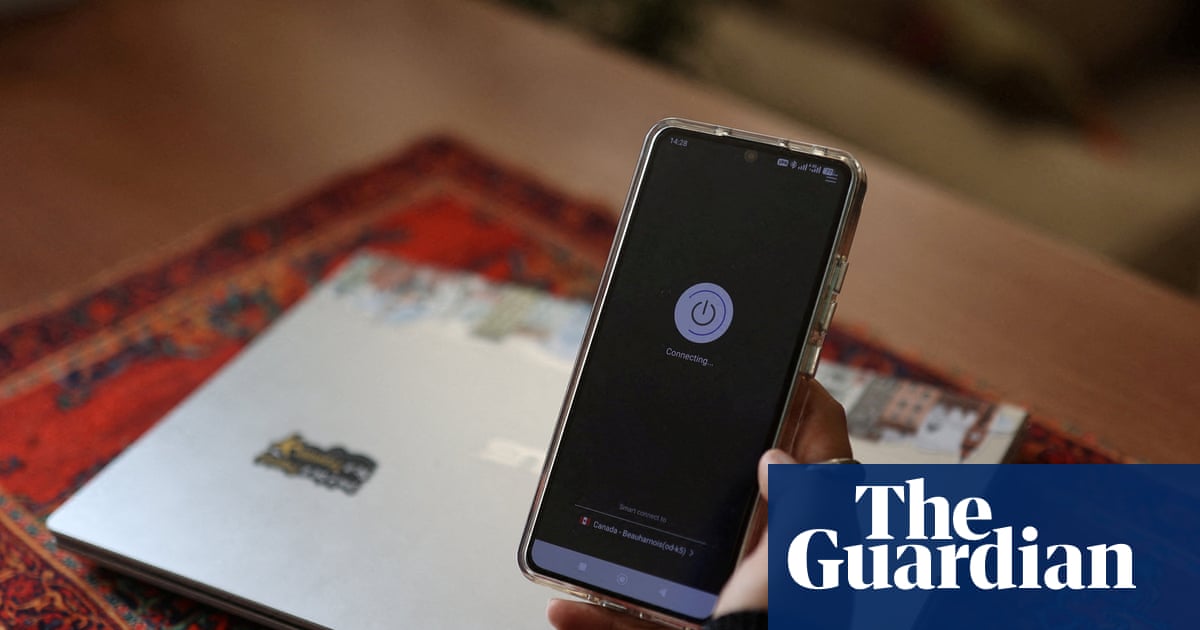
Otherwise, internet access – either through a VPN or through a special Sim – is being sold on the hidden market for between $6 and $24 a gigabyte, 5 to 20 times higher than the global average.
This has turned internet access into a “luxury commodity” available to only a few, said the report from Miaan Group.
Despite the human cost, Miaan Group suggests this blackout is likely to continue for some time as Iran continues to promote the national network. Many services on this network, however, are faulty – or do not work at all.
“Given the Iranian government’s new policies, there is no clear prospect of internet connectivity being restored.”
Disclaimer : This story is auto aggregated by a computer programme and has not been created or edited by DOWNTHENEWS. Publisher: theguardian.com





