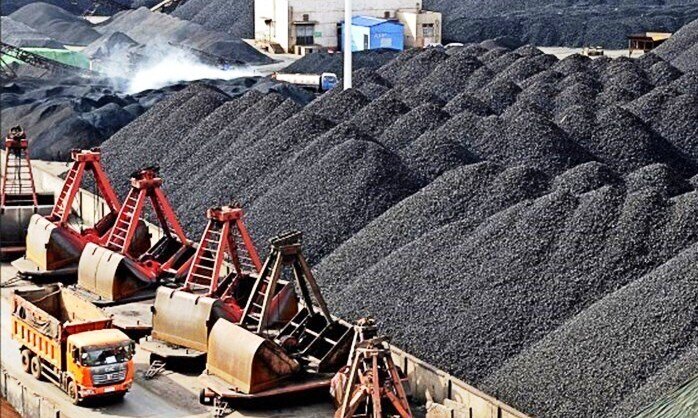
TEHRAN – Production of iron ore concentrate by Iran’s major mining companies rose nine percent in the first nine months of the current Iranian year (ending December 21, 2025), while lump iron ore output surged 44 percent, according to new data released by Iranian Mines and Mining Industries Development and Renovation Organization (IMIDRO).
IMIDRO reported that 10 leading producers — including Gol Gohar Mining and Industrial Company, Chadormalu Mining and Industrial Company, and Goharzamin Iron Ore Company — collectively produced 4.55 million tons of iron ore concentrate in the ninth month (Azar), up 14 percent from 3.99 million tons in the same month last year.
Cumulative concentrate output from the beginning of Farvardin through the end of Azar reached 40.27 million tons, compared with 36.90 million tons in the corresponding period a year earlier.
Lump iron ore production recorded even stronger growth. Output during the nine-month period climbed to 1.595 million tons, up from 1.11 million tons a year earlier — a 44 percent increase.
Shipments of lump iron ore rose 17 percent year-on-year to 1.31 million tons. Meanwhile, concentrate shipments increased 16 percent over the same period, reaching 14.73 million tons compared with 12.68 million tons last year.
The upward trend in both production and shipments reflects strengthened operational capacity and improved performance among Iran’s major mining firms, supporting the country’s steel value chain and export potential.
Iran ranks among the world’s top 15 mineral-rich countries, holding substantial iron ore reserves estimated at 3.8 billion metric tons by the US Geological Survey. Production has grown significantly, reaching approximately 100 million tons annually by 2021. Recent data shows continued momentum, with 13.69 million tons produced in the first quarter of the current Iranian year alone, marking 15 percent year-on-year growth.
The sector is central to Iran’s strategy of moving from raw material sales to higher-value manufactured goods. New plants with capacities of 2 million tons per year continue to be developed in provinces like Kerman and Yazd to meet growing domestic and export demand. This expansion supports the steel industry, reduces reliance on crude oil exports, and creates employment, with a single new plant generating up to 750 direct and indirect jobs.
Iron ore concentrate is a high-grade product derived from raw iron ore through a series of processing steps. While raw iron ore can contain as little as 20-30 percent iron mixed with waste rock and other minerals, the concentrate is upgraded to a much higher purity, typically containing over 60 percent iron.
The goal of creating concentrate is to increase the ore’s iron content and remove impurities. This makes it far more efficient for transport and for use in steelmaking. Shipping concentrate instead of raw ore reduces costs because less useless material is being moved. Furthermore, modern steel furnaces require this high-grade, consistent input to operate effectively.
The process of creating iron ore concentrate, often called “beneficiation,” involves several key stages: Crushing and Grinding: The raw ore is first crushed and then ground into a fine powder.
Separation: The iron particles are separated from the waste rock (gangue). This is most commonly done using magnetic separation, as iron is magnetic. Other methods include flotation or gravity separation, depending on the ore type. Concentrating: The result is a fine, powdery substance with a high iron concentration. This is the final product: iron ore concentrate.
Iron ore concentrate is not typically used directly in a blast furnace. Instead, it is a key intermediary product. It is usually shipped to a pelletizing plant, where it is rolled into small balls (pellets) and hardened. These iron ore pellets are then fed into direct reduction furnaces or blast furnaces to produce steel.
EF/MA
Disclaimer : This story is auto aggregated by a computer programme and has not been created or edited by DOWNTHENEWS. Publisher: tehrantimes.com