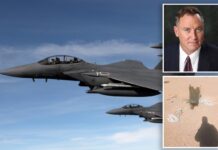
Donald Trump, other senior US officials and their cheerleaders appear to be embracing attacks – and threats of attacks – on Iranian civilian infrastructure, which legal experts say appears to constitute serious war crimes under international law.
In his rambling national address on Wednesday, the US president warned that if Iran did not reach an unspecified deal with him, US forces would “hit each and every one of their electric-generating plants” and “bring [Iran] back to the stone ages – where they belong”.
Following through on that threat a day later, Trump posted images of a strike on an the unfinished B1 bridge near Tehran, warning: “Much more to follow!”
Erika Guevara Rosas, Amnesty International’s senior director of research, advocacy, policy and campaigns said: “Intentionally attacking civilian infrastructure such as power plants is generally prohibited. .
“Even in the limited cases that they qualify as military targets, a party still cannot attack power plants if this may cause disproportionate harm to civilians.
“Given that such power plants are essential for meeting the basic needs and livelihoods of tens of millions of civilians, attacking them would be disproportionate and thus unlawful under international humanitarian law, and could amount to a war crime.”
That principle was underlined in 2024 when the international criminal court issued arrest warrants for the Russian politician and a former defence minister, Sergei Shoigu and the Russian general Valery Gerasimov, who were accused of directing widespread attacks on Ukraine’s power infrastructure and of causing excessive harm to civilians.
On Thursday, more than 100 US experts in international law from universities including Harvard, Yale, Stanford and the University of California, said the conduct of US forces and statements by senior US officials “raise serious concerns about violations of international human rights law and international humanitarian law, including potential war crimes”.
The letter, published on the website of the Just Security policy journal, highlighted Trump’s comment last month that the US may conduct strikes on Iran “just for fun”. It also cited comments by the defence secretary, Pete Hegseth, who told reporters the US did not fight with “stupid rules of engagement”.
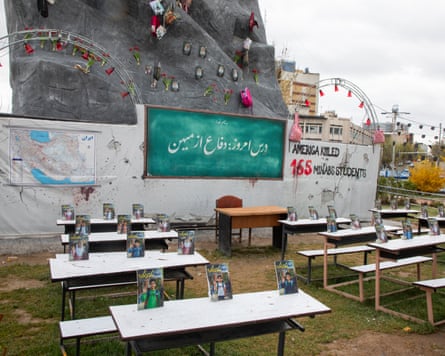
The experts said they were “seriously concerned about strikes that have hit schools, health facilities, and homes”, noting an attack on a school in Tehran on the first day of the war that killed more than 160 children and teachers.
The two issues of what constitutes a civilian object and the consideration of proportionality in striking civilian objects that a belligerent has identified as having a military function are among the knottier questions in international humanitarian law.
Under article 52 of the first additional protocol to the Geneva conventions of 1977, “civilian objects”, such as infrastructure, are defined not in themselves but by what they are not: military objectives whose destruction offers no definite military advantage.
At the heart of the question of what may –or may not – be attacked is the overarching principle of distinction between civilians and combatants. Rule 10 of the customary rules international humanitarian law – relating to both international and internal armed conflicts – explicitly states: “Civilian objects are protected against attack, unless and for such time as they are military objectives.”
That places a requirement on all parties: attackers must avoid targeting civilian objects and the party under attack must avoid “mingling” the military and civilians.
Codified in international law, the statute of the international criminal court also makes it explicit that it is a war crime intentionally to direct attacks against civilian objects if they “are not military objectives”.
Even when a civilian object is deemed to have become a military object, international law requires an attacking party to balance the harm to the civilian population.
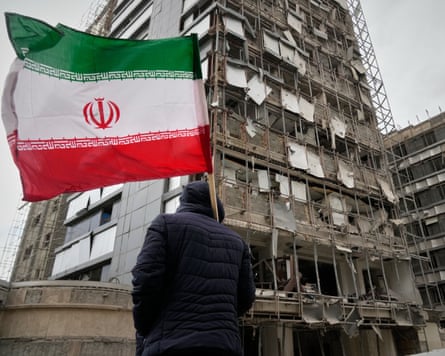
International law has become more explicit and precise over the issue of the protection of civilian objects since the second world war, but the US and western allies have launched questionable attacks on civilian infrastructure before, including against Iraq in the 1991 Gulf war snf on Serbian power plants.
The crippling of Iran’s power plants would be “devastating to the Iranian people”, cutting off electricity to hospitals, water supplies and other vital civilian needs, said Sarah Yager, the Washington director of Human Rights Watch.
“The US military has protocols designed to constrain that kind of harm to the civilian population, but when the president speaks this way, it risks signalling that those constraints are optional, and that is what makes this moment so dangerous,” she said.
International law permits attacks on energy plants and other ostensibly civilian targets only if determined that they primarily support military activity. But Trump’s statements indicate otherwise, said Tom Dannenbaum, a professor at Stanford Law School.
“The reference to the stone age indicates that objects would be targeted seemingly because they contribute to the viability of a modern society in Iran, which is completely unrelated to the question of contribution to military action –the necessary condition for targeting in war,” he said.
Attacks on civilian objects by both Iran, the US and Israel have prompted a pointed response from the president of the international committee, Mirjana Spoljaric, who said war crimes may be being committed.
“War on essential infrastructure is war on civilians … Deliberate attacks on essential services and civilian infrastructure can amount to war crimes. We are seeing energy, fuel, water and healthcare infrastructure damaged and destroyed.
“This disturbing trend is not limited to the Middle East or the last three weeks; it has been pervasive in conflicts across regions.”
Disclaimer : This story is auto aggregated by a computer programme and has not been created or edited by DOWNTHENEWS. Publisher: theguardian.com