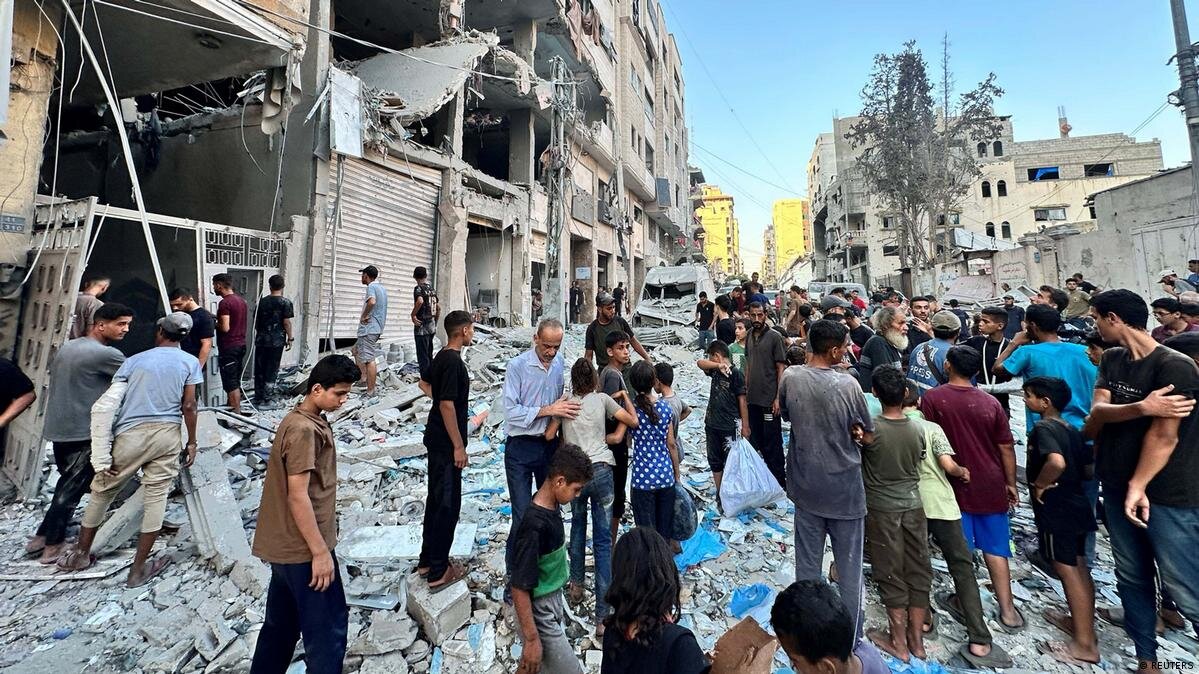
TEHRAN – In continued violations of the truce agreement in the Gaza Strip, Israeli occupation forces (IOF) carry out new strikes east of Gaza City and Khan Younis.
Local authorities reported multiple attacks across the territory and the death of a civil defense officer. Reporters in Gaza said the IOF is still demolishing what remains of civilian homes beyond the so-called “yellow line” in the enclave.
IOF artillery also struck areas east of Khan Younis in southern Gaza, while airstrikes targeted eastern Khan Younis, parts of Gaza City, and the al-Bureij refugee camp. According to reports, Gaza City’s Shejaiya neighborhood has been completely destroyed after more than two years of a genocidal campaign.
The Zionist regime’s ongoing aggression in Gaza appears designed to divert both domestic and international attention from the most turbulent political and security crises it has faced in decades. Rather than projecting strength, the Israeli regime is revealing deep fractures that it can no longer conceal.
Since an American truce took effect on October 10, 2025, the Israeli occupation regime has repeatedly violated the agreement with ground, air, and naval attacks across the Strip, resulting in hundreds of casualties.
The regime’s premier and wanted war criminal at the ICC, Benjamin Netanyahu, now confronts a tangled web of political and security challenges that together amount to a full strategic breakdown.
Internal divisions have widened, military deterrence has eroded, public trust in the leadership has sharply declined, and the regime finds itself increasingly isolated under rising international pressure. Taken together, these developments expose just how fragile the political and security foundations of the Zionist regime have become.
This instability did not begin with the current genocide in Gaza; rather, it intensified after Netanyahu formed his extremist coalition government in 2022.
The situation then escalated dramatically on October 7, 2023, with the al-Aqsa Flood operation, an event that marked a decisive turning point for the regime both at home and abroad.
The occupation regime’s confused political and military reaction throughout the genocidal assault on Gaza has only deepened its internal crisis.
Today, Netanyahu’s leadership is presiding over a moment of profound instability, characterized by an inability to manage internal political dynamics or maintain coherent foreign relations.
This represents a historic rupture for a regime that for decades relied on three core pillars: overwhelming military superiority, unwavering international backing, and stable internal cohesion. All three pillars are now eroding simultaneously.
International outrage, public mobilization, and sustained pressure from global civil society have further amplified the regime’s sense of vulnerability, an environment it has proven unable to navigate.
Netanyahu’s only perceived path forward has been to persist with the aggression in Gaza and stoke broader regional tensions in an attempt to redirect domestic anger and attention.
Yet this strategy has already failed on the world stage. Human rights organizations, UN agencies, and global movements continue to denounce the Zionist regime for its ongoing genocide, its suffocating blockade, and the catastrophic humanitarian consequences imposed on 2.4 million Palestinians in Gaza.
Disclaimer : This story is auto aggregated by a computer programme and has not been created or edited by DOWNTHENEWS. Publisher: tehrantimes.com