
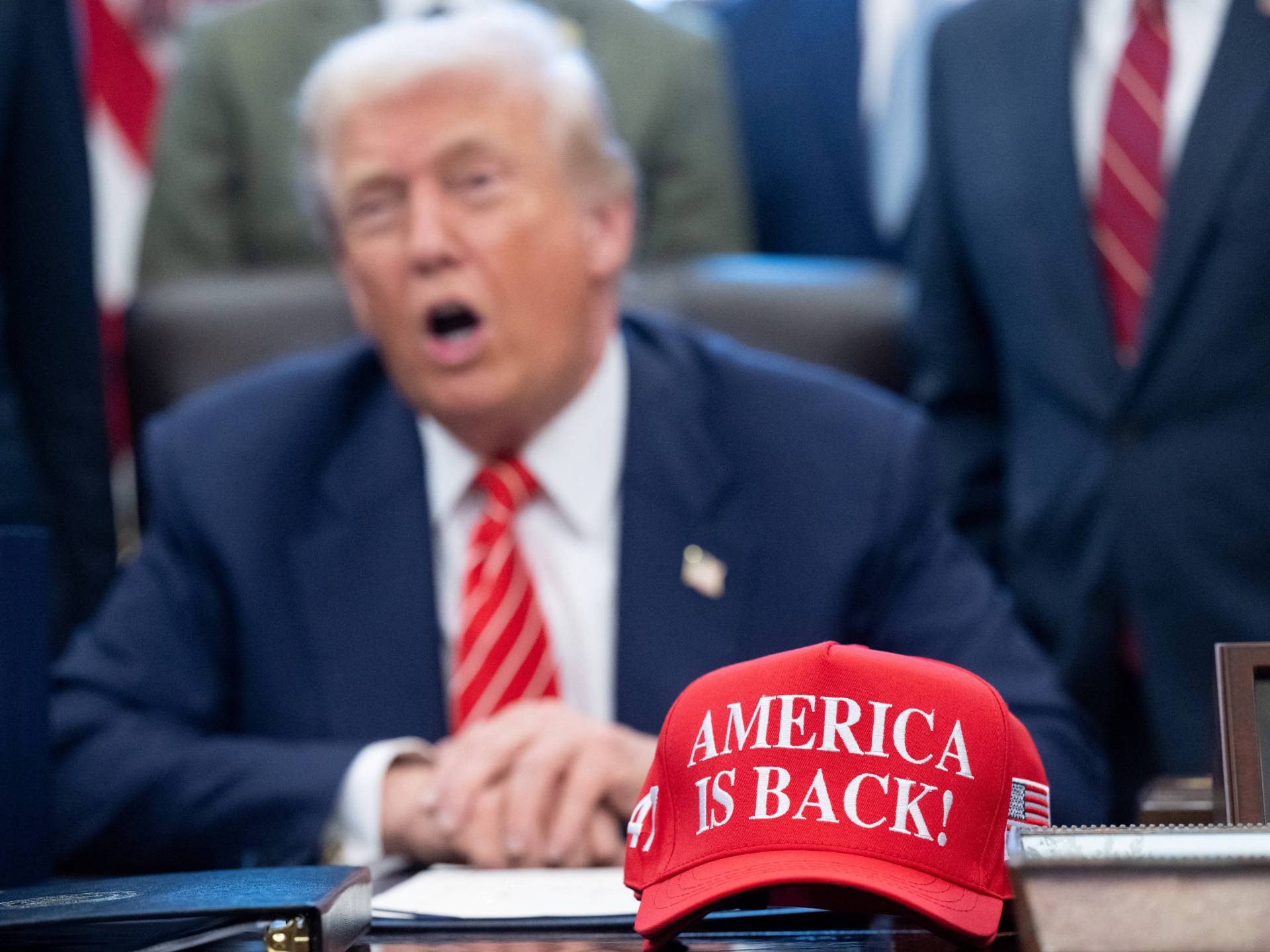
Under President Donald Trump’s leadership, the United States has, over the past year, consistently violated international norms and laws. The rollercoaster of tariff barriers, the sham negotiations between Russia and Ukraine, and the declaration of a false “ceasefire” with Israel, all while openly musing about turning Gaza into “oceanfront property”, would have been bad enough on their own.
But in just the past couple of months, the US has bombed Nigeria to “defend” Christians, invaded Venezuela and arrested its president, Nicolás Maduro, after months of blowing up Venezuelan boats in international waters, and openly threatened Iran, Greenland, and Mexico with military intervention.
Within the US, Trump’s ICE (Immigration and Customs Enforcement) has continued to carry out extralegal harm in the process of fulfilling his promise of mass deportations. Since the start of 2026, federal immigration officers have shot and killed at least three US citizens: 43-year-old Keith Porter Jr. in California, and 37-year-olds Renée Nicole Good and Alex Pretti in Minnesota. Both Good and Pretti were killed on camera, in incidents recorded from multiple angles, intensifying public outrage over the expanding use of lethal force by federal immigration agencies.
If this were almost any other country, like Iran, with its repressive and indiscriminate killing of thousands of protesters over the past month, the Western-led international community would already be calling for sanctions and embargoes against the US. But in light of US threats and actions at home and abroad, the world now needs to take a page from the late Rev. Dr. Martin Luther King Jr.’s leadership in the early years of the Civil Rights Movement. The world needs to boycott and divest from US corporations, US-made products, and US-led events.
Advertisement
Short of civil strife, civil war, or military action, there is no other way for the world to disrupt US aggression except through massive economic pressure. While on a considerably smaller scale, King and so many other Black people in the 1950s understood that hitting the wallets of those who had long benefited from Black labour and pain could be effective in the US. It was one of the few tools available in their struggle against the daily onslaught of violent racist segregation.
The 381-day Montgomery Bus Boycott in Alabama was a response to decades of segregated public transport, not simply to Rosa Parks refusing to give up a “whites-only” seat at the front of a bus on December 1, 1955. During the year-long protest, some 40,000 Black Montgomery residents either carpooled or walked to school, work, church, and elsewhere. Defending the boycott, King said, “We came to see that, in the long run, it is more honourable to walk in dignity than ride in humiliation.”
White Montgomery residents responded with mass arrests, threats, and other acts of intimidation, including the bombing of King’s home on January 30, 1956. A month after the US Supreme Court affirmed Browder v. Gayle, the decision outlawing segregation on public transportation, with the now-deceased activist Claudette Colvin among the plaintiffs, Montgomery formally ended its bus segregation policies on December 17, 1956, though white residents continued to harass, attack, and even lynch Black bus riders and civil rights activists for years afterwards. “Our aim has never been to put the bus company out of business, but rather to put justice in business,” King said.
Putting “justice in business” in the case of the US will require a global effort. The world should build on the Palestinian-led BDS (Boycott, Divestment, and Sanctions) movement against Israel and apply those lessons to the US. BDS was launched in July 2005 with the support of 170 Palestinian organisations as a nonviolent effort to apply economic and cultural pressure on Israel to end its apartheid rule over Gaza and the West Bank. BDS founders Omar Barghouti and the late Ingrid Jaradat Gassner drew inspiration from the global anti-apartheid boycotts, divestments, and sanctions against South Africa in the 1970s and 1980s.
BDS has three objectives in its two-decade-long push against Israeli oppression and systematic genocide: “ending [Israel’s] occupation and colonisation of all Arab lands and dismantling the Wall; recognising the fundamental rights of Arab-Palestinian citizens of Israel to full equality; and respecting, protecting, and promoting the rights of Palestinian refugees to return to their homes and properties, as stipulated in UN Resolution 194.”
Advertisement
It is true that powerful lobbies and other Western supporters of Zionism have labelled BDS “anti-Semitic”. But it is also true that those opposed to social justice will go to great lengths to discredit and destroy movements that challenge their power. Over the years, BDS has helped raise global awareness of the everyday, systemic destruction of Palestine and the lives of Palestinians living under Israel’s apartheid and occupation. The movement is also likely a key reason why the ongoing genocide in Gaza never garnered broad international support or sustained backing among ordinary Americans.
As for a global boycott movement against US oppression and aggression, some have already begun calling for a boycott of the 2026 FIFA Men’s World Cup this summer, with most scheduled matches set to take place in stadiums across the US. Social media posts urging people to cancel World Cup tickets and travel plans to the US, and to sanction its athletes and businesses, have gone viral in the aftermath of ICE agent Jonathan Ross’s gunning down of Renée Nicole Good on January 7. Given the increase in xenophobic, queerphobic, and racist civil strife and persecution at home and abroad, a backlash against US tourism now looms as the world approaches the June dates for the tournament’s matches.
But the stakes for the US and the world at this moment are high, and boycotting the globe’s largest sporting event, though significant, is hardly enough to pressure an increasingly belligerent and autocratic regime. Boycotting and divesting from US businesses that support the oppression of marginalised people, especially companies such as Google, Amazon, and Palantir, with their surveillance investments in Israel, would be one place to start. Disinvesting from US-based media monopolies, whether News Corp, The Washington Post, or Paramount Global, would go a long way towards loosening the stranglehold US monopolies exert over Western media. Boycotting the America250 celebrations scheduled for July, the 2028 Summer Olympics in Los Angeles, and annual US-based international cultural events such as Coachella and the Met Gala would also exert pressure.
Boycotting high-profile US supporters of oppression and militarism, whether Trump, Bari Weiss, or Elon Musk, would draw further attention. If the world wants the US to do better by its own people and to act as a better nation-state on the global stage, it must act collectively to boycott and divest from US influence.
It was not all that long ago that the old Soviet Union regularly labelled Americans as “capitalist pigs” or “imperialist pigs”. Such Cold War propaganda was accompanied by films portraying the once self-proclaimed “leader of the free world” as a society riven by racist civil strife and violent repression against those who challenged injustice.
Years after King gave his first public address galvanising the Montgomery Bus Boycott, where he described the “weapon of protest” as “the glory of America, with all of its faults”, he came to understand that much of what had been dismissed as Soviet propaganda was, in fact, bedrock reality. “The evils of capitalism are as real as the evils of militarism and racism. The problems of racial injustice and economic injustice cannot be solved without a radical redistribution of political and economic power,” King said in 1967. This is something the world needs to remind the US of in 2026.
Advertisement
The views expressed in this article are the author’s own and do not necessarily reflect Al Jazeera’s editorial stance.
Disclaimer : This story is auto aggregated by a computer programme and has not been created or edited by DOWNTHENEWS. Publisher: aljazeera.com



