
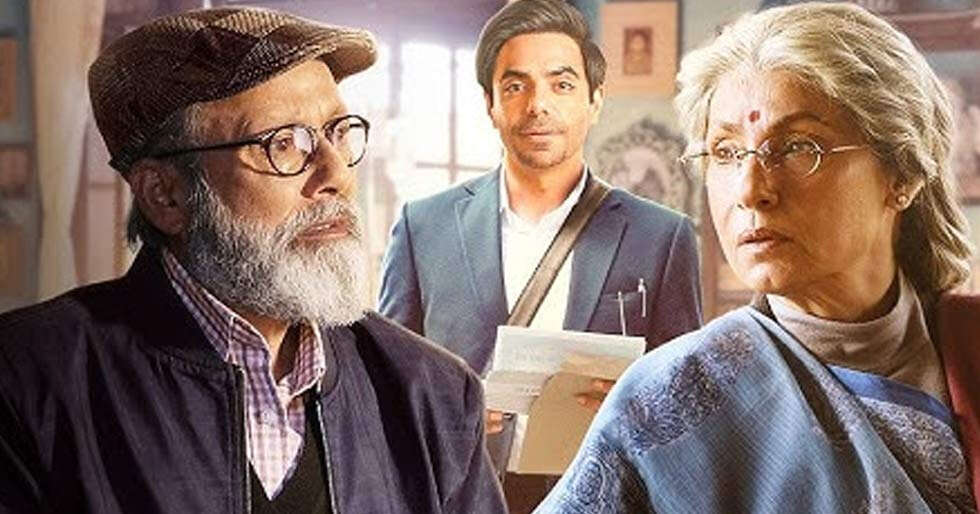
Jab Khuli Kitaab, directed by Saurabh Shukla, is a tender, wise and unexpectedly witty meditation on love in its twilight years. Adapted from Shukla’s own play of the same name, the film retains an intimate, almost theatrical texture, allowing silences and glances to speak as eloquently as dialogue. Yet it never feels stagey; instead, it unfolds like a lived-in memory, fragile and piercingly honest.
At the heart of the story are Gopal and Anusuya Nautiyal, married for fifty years. Their settled companionship is shaken when Anusuya, emerging from a prolonged coma and confronting her mortality, makes a long-buried confession. The revelation devastates Gopal, who begins to question whether their half-century together was built on illusion. Divorce, at this age and stage, becomes less a legal threat and more an emotional reckoning. What follows is not shrill melodrama but a nuanced exploration of ego, pride and the bruised male heart.
Pankaj Kapur delivers yet another masterclass. His Gopal is wounded, bewildered and quietly raging, a man who feels the ground shift beneath decades of certainty. Kapur charts his journey from indignation to introspection with extraordinary finesse. There are no theatrics, only a slow unravelling, a dawning realisation that love is not erased by a single truth. Watching him process betrayal, hurt and, eventually, acceptance is to witness acting of the highest order.
As a counterpoint, Dimple Kapadia is luminous. Her Anusuya is neither reckless nor naïve; she is a woman who believed honesty might cleanse her conscience, only to discover its cost. Kapadia imbues her with regret, resilience and quiet strength. In scene after scene, the veterans play off each other with effortless chemistry. It is a joy and perhaps a quiet rebuke to an industry that so rarely offers author-backed roles to actors of their calibre. Who says romance belongs only to the young? The tug and flow of love at seventy can be as potent as at twenty, and the film captures that with aching beauty.
Aparshakti Khurana, as the younger lawyer, injects a gentle generational perspective, questioning notions of pride and propriety that have calcified over time. Sameer Soni, Nauheed Cyrusi and Manasi Parekh lend able support, though one does wish the Nautiyal family’s dynamics had been explored more fully. By keeping the focus largely on its central pair, the film sacrifices a certain roundness that might have enriched its emotional canvas.
Visually, the cinematography complements the narrative’s intimacy. Warm interiors, lingering close-ups and soft natural light mirror the characters’ inner landscapes. The camera observes rather than intrudes, allowing moments to breathe.
As a director, Shukla proves himself more than competent; this is arguably his most mature work to date. One almost wishes he had ventured into such territory earlier in his career. There is restraint here, confidence and empathy. Watching the film, one hopes it marks a new creative chapter for him.
Ultimately, Jab Khuli Kitaab asks a simple yet profound question: when the book of a shared life is opened at its final chapters, do we slam it shut in anger or read on with grace? The film is currently streaming on Zee5.
Also Read: Exclusive: Saurabh Shukla Reveals Dimple Kapadia Wrote a Crucial Dialogue in Jab Khuli Kitaab
Disclaimer : This story is auto aggregated by a computer programme and has not been created or edited by DOWNTHENEWS. Publisher: filmfare.com



