Leni Forrester, 2, has Sanfilippo Syndrome, a rare genetic condition often described as childhood dementia – and popstar Jesy Nelson has called for action as her parents face a race against time to find a cure
Popstar Jesy Nelson has shared her heartbreaking encounter with a toddler whose world is being stolen by a rare form of childhood dementia.
The singer was left moved after meeting two-year-old Leni Forrester – a “divine” little girl whose infectious laughter masks the heartbreaking battle her family face. While Leni currently spends her days obsessed with her dollies and belting out Wheels on the Bus, she is fighting Sanfilippo Syndrome, a rare genetic disorder known as childhood dementia, that gradually robs children of the ability to walk, talk, and eat.
Jesy, who invited Leni and her mum Emily for a poignant photoshoot to raise awareness for rare conditions, has branded the family’s devotion “inspirational.” Now, her parents have told how they are locked in a race against time to access a life-saving treatment that is currently sitting on a shelf.
READ MORE: ‘Our little girl, 2, has dementia – we had no idea her eyebrows were a sign’
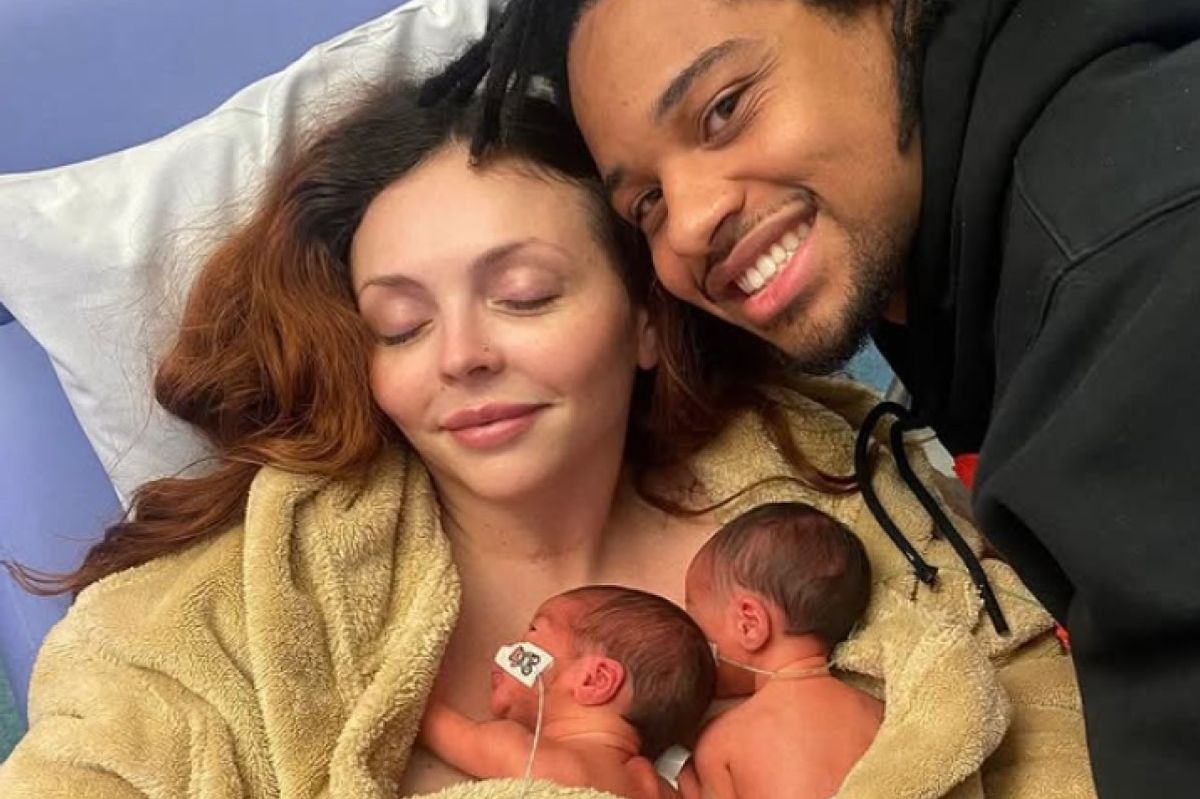
Jesy has experienced her own heartache of shock diagnoses, after her twins, were diagnosed with Spinal Muscular Atrophy (SMA).
Speaking to the Mirror about Emily and Gus’ fight to raise funds for Leni, Jesy said: “Meeting Leni and her mum, Emily, really stayed with me. Leni is such a beautiful, happy little girl, and you can just feel how loved she is. Spending time with them was incredibly emotional, because it’s so hard to understand how something like this can happen to such a young child.
“Emily is amazing so strong and so devoted but no parent should have to fight this hard just to get their child the treatment they need. It’s heartbreaking. If sharing Leni’s story can help raise awareness or make even the smallest difference, then it’s so important we all come together and support them. Children like Leni deserve every chance at life. I’m sending all my love to Leni and her family.”
Donate to Leni’s GoFundMe and help save her life at this link, you can also follow the family’s journey on TikTok here
Emily lavished praise on Jesy, who gave birth to twins Ocean Jade and Story Monroe Nelson-Foster prematurely last May with musician Zion Foster.
“She’s trying to pull everyone along with her and like shine a spotlight on the difficulties that everyone faces,” the mum said. “So she’s super inspirational but also just a really genuine, lovely person.”
Connecting with other families facing similar challenges at the photoshoot proved invaluable to Emily as she navigates the isolating battle for her daughter’s care. “Leni loved it,” Emily adds. “She’s such a little diva. She absolutely loved the cameras. It was a great day.”
For parents Emily, 33, and Gus, 35, Leni’s diagnosis came completely out of the blue, with the couple having no inkling that anything was amiss. They had no worries about her development until a routine genetic screening for Emily’s sister detected a rare gene.
Even then, a private medical test gave the family the “all-clear,” making them believe Leni was fine and prompting them to try for a second child. “We didn’t have any concerns at all about Leni,” her mum Emily tells the Mirror.
Emily and Gus, from Sevenoaks, Kent, have been a couple for 13 years, having met during their university days. When they welcomed their daughter Leni, they were blissfully unaware that just 15 months into her life, they would be hit with some earth-shattering news.
Emily’s sister was identified as a carrier of the NAGLU gene during IVF screening, meaning there was a 50% chance Emily could be too.
The likelihood of their child being affected remained incredibly slim – Gus would also need to be a carrier – but the pair decided “as a precaution” to undergo testing. Although Leni wasn’t exhibiting many symptoms, upon researching the disorder, Emily recalls telling Gus: “God, I think she has this actually.”
“But because of how this syndrome progresses, they don’t really have any obvious symptoms that are different to what a normal toddler might experience before they’re two years old,” she elaborates, so the signs that were present were “nothing that you would piece together as this catastrophic genetic condition.”
Some of these included things that seemed to have a much more common or obvious explanation, for instance Leni’s bushy eyebrows, about which Emily says “both me and my husband have bushy eyebrows, so it’s not that unusual.” Other “subtle” facial features that can be symptomatic of the disorder can also be seen in Leni’s adorable face, like “thick eyelashes, full lips” but they are not particularly pronounced. Equally, Leni was born with talipase at birth, which saw her feet turned inwards, but physiotherapy managed to correct the issue.
All in all, if Emily’s sister had never brought it up, there’s a slim chance Leni would have been diagnosed for many years to come.
In fact, Emily explains, it’s often only when Sanfilippo has advanced significantly that children are ever diagnosed with it, because the initial set of symptoms, which sees youngsters regress and lose their cognitive skills, “often mimics autism or ADHD as kind of a neurodivergence,” leading to potential misdiagnosis. Heartbreakingly, it is only when the children who suffer from the disorder start to lose all motor function that a genetic investigation usually takes place.
Because they were trying for another baby, Emily and Gus consulted their doctor, but both her GP and the paediatrician Leni was referred to thought it was “incredibly unlikely” that Leni would have this condition. However, to be safe, they were referred on to a series of specialists, including a geneticist.
However, a lengthy journey lay ahead of them. It took two months before they could consult with the genetic specialist, followed by a torturous 12-week wait for the results. Amidst this uncertainty, they halted their attempts to conceive and took proactive steps, arranging a private test for Gus.
The results returned clear, filling them with joy. Emily expressed: “We were like, ‘Great, amazing, whatever is going on, worst case scenario is not possible because you’re not a carrier.'”
After receiving the all-clear, the couple resumed their efforts to have a baby. Yet, destiny was about to deliver another devastating blow.
At the NHS appointment with the geneticist, the couple chose not to disclose that they had undergone the private test that gave them the all-clear, so as not to “skew their assessment.'”
But the specialist’s worries became immediately apparent. “Both us left that appointment and just had this sinking feeling in our stomachs that the geneticist clearly felt that something was at play, we could tell from how he was analysing her and the questions he was asking, it just felt like something really bad was going on,” Emily said.
The following day, he phoned to inform them he’d expedited Leni’s test results, heightening their fears. On the final day of their trip, they received a call urging them to contact their GP immediately.
Upon returning home, they were given the heartbreaking news – they were both carriers. Just a week before Leni’s second birthday, her Sanfilippo diagnosis was confirmed. Gus’s private test had returned negative, but it was inaccurate.
Emily further explained: “He is a carrier, but for what they call a variant of unknown significance which means that never before in the global database has the gene that he carries been known to cause a child affected with Sanfilippo. So he just carries a very, very rare variant. So it wasn’t logged, which is why the private test came back as negative.”
A fortnight later, they learnt Emily was expecting. With a 25 per cent chance their unborn child could have the disorder, she faced an agonising wait, as screening wasn’t possible until three months. Emily said: “Unfortunately the baby was also diagnosed with Sanfilippo so we felt we had no choice but to terminate the pregnancy.”
Describing her daughter’s condition, Emily explains that Leni “has a fault in a single gene that produces a specific enzyme. That enzyme is responsible for breaking down a sugar molecule in her body called heparan sulphate. Essentially that sugar molecule is toxic waste and without it being broken down it builds up on various organs, but most importantly on the brain and causes irreversible brain damage.”
Symptoms don’t present for a while due to an “incremental build up” Emily explains, “which is why most children don’t get diagnosed till they’re kind of seven, eight years old,” when they start losing crucial motor skills. Eventually, when it reaches that point, Leni “will lose the ability to walk, to eat by mouth, any kind of motor skills, so it causes complete loss of all cognitive and motor function. It’s rapidly neurodegenerative so it’ll be over a quite short space of time and there is a life expectancy of early to mid-teens.”
Initially, Leni’s parents were informed there was “no treatment, no cure” for the condition, and essentially advised to take their daughter home, where they would receive palliative care, “which is obviously horrific”.
However, the resolute parents – Gus, an ex-military man now working for Lloyds of London, and Emily, a marketing professional – began conducting their own research. They discovered two potentially life-saving experimental treatments available for their daughter, but they come with a hefty price tag.
The first had a successful clinical trial at Great Ormond Street for several years, and saw the symptoms completely halted in participating youngsters through a weekly enzyme replacement therapy, delivered via a port in their brains. The second option sounds even more promising: a gene replacement therapy that has been hailed as a total cure in similar conditions.
The initial trial ran out of funds in 2017, Emily reveals, resulting in all the participating children either “have now declined because they’re not receiving treatment or have died. “The crux of the issue is profitability: pharmaceutical companies see little financial gain in treating such rare conditions, yet the value of a child’s life is immeasurable, regardless of how rare their condition may be.
Emily and Gus are now fervently fundraising in an attempt to secure a life-saving treatment for Leni before it’s too late. They’re in a “race against time” as any potential treatments must be administered before Leni begins to show signs of regression and loses the skills she has acquired in her brief life so far.
It’s an agonising and frustrating situation, Emily admits. “The medicine’s there, it’s already been produced. It’s just sat on the shelf,” but accessing it is a steep uphill struggle. The gene replacement trial carries a hefty price tag of £5.5 million and could potentially benefit six children.
Now, Emily and Gus are striving to raise funds to cover the “pre-clinical costs to get it to trial” as advancing the process by even a few weeks could dramatically alter Leni’s life. “When it’s your child’s life, how can you possibly put a price on this?” Emily questions.
Being part of “a club that no one wants to be in,” brings immense difficulties and unique challenges. The future Emily and Gus had envisioned for themselves now feels distant. “When we got the diagnosis, I was like, that’s it, our lives are over,” Emily reveals. “Everything that we imagined our life was going to be. It is not that anymore.”
At present, Leni attends up to four medical appointments weekly, forcing Emily to reduce her working hours to three days. “It impacts every aspect of your life,” the mum admits.
Beyond the practical implications, they’ve been robbed of the future they’d dreamed of. “Everything that we have envisaged like Gus walking her down the aisle, having grandchildren, her going out late at night and sneaking back in, all of these things that you envisage for your life together and your family – it’s not just the child that is impacted by that, it’s everyone.”
Leni currently battles with hyperactivity and severe insomnia; some children with Sanfilippo remain awake for days, making it challenging for others to provide care for Leni. “We want to spend as much time with her as possible while she is still like she is now,” Emily shares. “Any time away from her is emotionally difficult. You know you need the time away, but at the same time I don’t want to, because she’s so precious as she is now.”
The couple remain resilient by advocating for their daughter. “That is our coping mechanism, to be honest. We will just do whatever it takes now to get her access for this treatment.”
After much thought, they’ve decided to resume their efforts to expand their family, though it hasn’t been a straightforward journey. They could have “rolled the dice” and hoped that another child wouldn’t be affected by the condition, but they felt the risk was too great.
The process of genetic testing and IVF through the NHS is lengthy, potentially delaying any attempts at implantation until a year or 18 months from now. But Emily’s termination was only in December, and having experienced morning sickness so “horrific” that she required medication, and undergoing a distressing and painful test for Sanfilippo at the three-month mark – she admits she “just can’t mentally go through that again”.
However, they are “desperate” for Leni to “know her siblings and for her siblings to know her. We just want to grow our family and we want to have Leni have siblings that she can grow up around and that she knows before kind of any regression sets in.”
A spokesperson for the Department of Health and Social Care expressed: “Our thoughts are with all those living with dementia and rare conditions including Sanfilippo syndrome.
“We are making sure patients with rare diseases, like Sanfilippo syndrome, get a definite diagnosis faster, while improving access to specialist care, treatment and drugs. At the same time we are working hard to find new ways to slow down the progress of the dementia, speed up diagnosis and improve our understanding of the disease.”
Donate to Leni’s GoFundMe and help save her life at this link, you can also follow the family’s journey on TikTok here
Disclaimer : This story is auto aggregated by a computer programme and has not been created or edited by DOWNTHENEWS. Publisher: mirror.co.uk