
“Dear Chris, still no funds in the bank. I now have significant debt on several credit cards and am running low on what is available to live on. Could someone please explain what is happening and when funds will be available?”
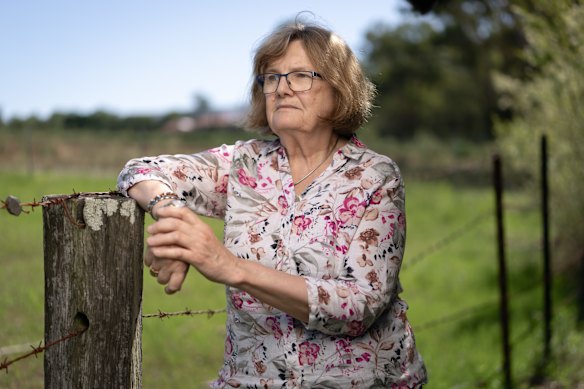
Karen Hedberg was getting desperate. Her email, sent last November, was one of many over several months seeking repayment of her $3 million in superannuation and answers from Christopher Edwards, her accountant. Most went unanswered.
After 50 years as a veterinarian, the 74-year-old believed she was retiring with a multimillion-dollar self-managed super fund.
Over the second half of last year, Hedberg had trouble extracting her funds and clarity about her investments from Edwards, who is also a solicitor. Hedberg now believes she might need to sell her home to survive. She is not alone.
More than 20 clients and staff of Edwards spoke to the Herald as part of this investigation. All except Hedberg and one other did so on the proviso of anonymity. Some feared it could jeopardise their chances of recovering their funds. Others were yet to tell their families about the potential financial loss.
Nearly all told similar stories. They claimed Edwards had talked them into rolling their superannuation into self-managed super funds (SMSFs), and/or loaning him considerable sums, which were invested into his developments.
Collectively, they allege Edwards owes them nearly $25 million.
An employee, who requested anonymity to discuss confidential workplace matters, estimated the 65-year-old held at least $100 million across more than 100 clients.
More than a dozen clients have alleged he has engaged in impropriety and unethical conduct. Almost all have attempted to withdraw some or all of the funds they claim they are owed. Fourteen alleged those efforts have so far been unsuccessful.
Clients have lodged complaints about Edwards with NSW Police, the corporate regulator, Tax Practitioners Board and Australian Taxation Office. Police did not confirm whether they were investigating.
Last September, Edwards was banned by the Australian Securities and Investments Commission (ASIC) from providing financial advice without a licence. Edwards has told clients the ban does not affect his business. The regulator has an ongoing investigation into Edwards.
Clients fear any intervention will come too late.
Approached outside his Richmond office this month, Edwards denied any wrongdoing.
Asked why he hadn’t repaid his clients, Edwards said the civil courts would “determine whether I have contractual obligations or not”. Asked whether he had done anything wrong, Edwards replied: “Correct. I haven’t.”
The problems underscore the risks in the loosely regulated SMSF sector, which has grown to about $1 trillion today and represents nearly one-quarter of the superannuation system.
Accountants have not been permitted to advise on SMSFs without a financial licence for a decade.
The clients
The themes of each client’s story were nearly identical. Many spoke of financial hardship and mental distress.
Six said they had known Edwards for decades — some while he was teaching in the late 1980s, others while he studied law at University of Technology Sydney. Many described the relationship as friendship; one described him as family.
Hedberg says she was convinced to transfer her financial affairs to Edwards given he was a solicitor. She claims she has not been provided with any copies of contracts or agreements with the companies where her savings have been invested.
Edwards’ promise of high returns enticed several clients: rates of up to 10 per cent paid quarterly was a common arrangement. A source said Edwards convinced him the returns of his retail super fund were inferior. So he transferred nearly $1 million into one of Edwards’ company’s bank accounts.
Funds were invested in corporate entities — primarily property developments across NSW and Queensland — in which Edwards held a financial interest and served as director.
Sources who have dealt with Edwards and his business partners for decades say the arrangements appeared to be beneficial to both him and his clients.
Since 2023, clients allege interest payments have become increasingly delayed — some have not been paid at all. Correspondence shows various explanations: medical episodes, frozen bank accounts and promises of “something more concrete” in the coming weeks.
A signed contract, provided to this masthead by one source, shows Edwards repeatedly missed quarterly payments, and failed to repay the principal within the 48-month term. Repayment was now more than a year overdue, according to the deed of agreement.
At least 10 clients were chasing Edwards by the end of 2025 for missing quarterly payments.
Susan Templeman, MP for Macquarie whose federal electorate encompasses Richmond, said: “Their distress is profound – the stress, the hours of work involved in trying to sort their affairs, as well as the financial implications that they have described.”
Those anxieties were exacerbated when an email from Edwards’ office landed in their inboxes. Payments would be delayed because Edwards had been admitted to hospital just before Christmas for a “routine floppy bladder operation”, it was explained, asking them to allow 10 additional business days for the “large settlement of funds”.
Another email arrived in mid-January: a promise that Edwards would soon provide a more concrete date as to when the cash would arrive.
‘The banning of me as a financial planner is interesting because I am not one. Speaking candidly, I do not want to be one.’
Accountant Christopher Edwards
On January 13, dozens of clients were told the delay was caused by an industry super fund freezing investor funds because of internal issues. Edwards’ email added that, “more fundamentally”, the ASIC investigation had resulted in his bank accounts being frozen.
“This did lead to a run-on-the-banks situation where many people who had been contacted by ASIC or read the ASIC press release decided to withdraw capital or not proceed with their obligations to the company,” he wrote.
“As a director, it is for this reason I had to freeze all capital withdrawals and also point out that there were contractual obligations to the company and these had to remain in place.”
The ban
“The news flash is misleading,” Edwards emailed Hedberg in September.
“The banning of me as a financial planner is interesting because I am not one. Speaking candidly, I do not want to be one.”
The correspondence arrived on September 19, two days after ASIC announced Edwards would be barred from providing financial advice until 2035.
It was just one of many investigations ASIC was undertaking, Edwards emailed Hedberg, urging her not to “lose sleep over this”.
“Fundamentally and from your perspective, please be assured all is fine with your invested funds,” he wrote.
In a statement, ASIC alleged that Edwards provided financial advice with “sufficient system, repetition and continuity” over a four-year period, despite not holding a licence. The regulator held “serious concerns” about other aspects of his conduct, particularly, the “significant conflict of interest” between his personal interest in securing funding for his property development companies and his obligations as a lawyer and an accountant.
“ASIC found Mr Edwards’ conduct in approaching his accounting and legal clients and making recommendations that they invest in companies which he controls was particularly serious,” ASIC wrote.
Despite saying the ban has no bearing on his business, Edwards has applied for a review of ASIC’s decision in the Administrative Review Tribunal. He told this masthead via email that responding to further questions would be “inappropriate” in light of those proceedings.
The investments
Three of Edwards’ investments are a long way from completion.
For years, Edwards has been trying to convert a derelict, asbestos-ridden abattoir in Gunnedah, a small town west of Tamworth, into a solar energy farm. Several million dollars had been kicked into remediating the site, but Edwards has faced cashflow problems recently, an employee with insights into the project said.
A Gunnedah Shire Council spokeswoman said there was no evidence of physical commencement of two development applications for proposed solar projects on the site. Work had commenced on a third subdivision.
Through two of his companies – Great Northern Morayfield and Great Northern Developments – Edwards has two property developments planned in Queensland.
Edwards’ plans to build 39 homes in Morayfield, north of Brisbane, shows no movement. The project’s town planner requested City of Moreton Bay council provide a two-year extension last April, saying the developer had engaged a new builder while the “plans and proposal requires further investigations before they can move forward”.
A development in a suburb of Bundaberg — a 47-home community proposed by Great Northern Development — remained covered by grass.
Great Northern Development has run into trouble in the past. In figures provided to a receiver appointed in 2019, Edwards estimated the company’s assets were valued at $36.6 million against total liabilities of $34.4 million — a net position of $1.15 million.
The receiver did not respond to requests for comment.
Those figures were similar to financial statements Edwards provided a decade earlier during litigation ASIC brought against Great Northern Development.
The staff
ASIC has subpoenaed staff and clients as part of the latest investigation into Edwards.
After efforts to talk Edwards into returning their funds, clients have engaged lawyers. Two civil matters are listed in the NSW Supreme Court for the end of February.
To avoid winding up Great Northern Development during the ASIC case in 2010, Justice Richard White gave the company an undertaking to appoint a trustee to act as a “safe harbour” for clients’ funds. ASIC brokered a deal with La Trobe Financial. The asset manager took out formal mortgages over Edwards’ company’s development sites, meaning the land could be seized and investors paid back if the investment failed.
Last month, La Trobe issued Great Northern Development with default notices, requiring the company to make payment on debts by late February. If Edwards doesn’t comply, La Trobe can use its powers as a secured creditor to appoint a receiver, sell off assets and wind up the Edwards’ company.
A spokesman for La Trobe declined to comment.
The Herald has uncovered allegations that Edwards’ has breached signed contracts, and lodged tax returns falsely declaring third-party audits of the SMSF accounts had not been qualified.
The daughter of one elderly client claimed Edwards’ staff member walked her mother to the local Commonwealth Bank branch to withdraw hundreds of thousands of dollars to invest in his company. It was the last she saw of the money.
‘The ATO and ASIC. Why can’t they talk to each other? That’s the billion-dollar question.’
Rakesh Sahgal
“It’s atrocious. He’s preying on vulnerable people,” she alleged, claiming Edwards was now failing to return calls or emails.
Two staff members claimed Edwards’ employees took clients to withdraw funds they believe ultimately went to his investments.
Rakesh Sahgal, one of the tax agents engaged by Edwards to audit his clients’ SMSF accounts, said he began refusing work from him after he issued a number of qualified reports because he could not independently corroborate the value of Edwards’ investments.
Sahgal said he reported Edwards to the Australian Tax Office “so many times”.
“The ATO and ASIC. Why can’t they talk to each other? That’s the billion-dollar question,” he said.
A spokesperson for the ATO said: “The ATO is unable to comment due to our obligations under taxpayer confidentiality laws.”
“The ATO works alongside ASIC to regulate all self-managed super funds (SMSFs) and, where permitted under the confidentiality laws, will share information and other intelligence with ASIC that enables us to meet our joint objectives.”
A spokesman for the regulator said: “ASIC’s investigation into Mr Edwards remains ongoing. We cannot comment any further on an ongoing investigation.”
Start the day with a summary of the day’s most important and interesting stories, analysis and insights. Sign up for our Morning Edition newsletter.
 Max Maddison is a state political reporter at The Sydney Morning Herald.
From our partners
Disclaimer : This story is auto aggregated by a computer programme and has not been created or edited by DOWNTHENEWS. Publisher: www.smh.com.au