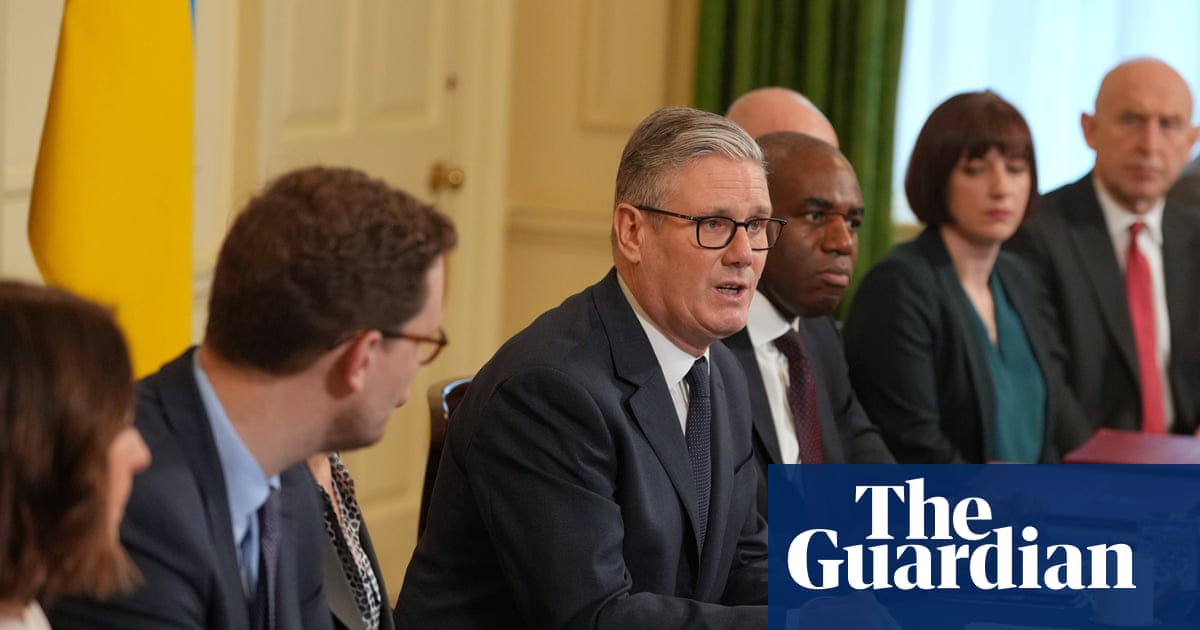
Keir Starmer’s drive to overhaul public services is failing to live up to its aims of shifting power from Whitehall to local areas, a report from the Institute for Government (IfG) has found.
Last summer, the government set out its three guiding principles for reform aimed at making public services such as the NHS, court system and children’s social care easier to access and better at helping people.
The objectives were to make public services “organised around people’s lives”, to improve outcomes by focusing on prevention of problems, and devolving power to local areas that understand the needs of their communities best.
However, the IfG’s analysis found that none of these were on course to happen by the next election, which is due by summer 2029.
Stuart Hoddinott, a public services expert at the IfG who wrote the report, said: “Our assessment is that by the end of this parliament, on the government’s current trajectory, public services will be more centralised, integration will have slowed or even reversed, and a measurable shift towards prevention will not have occurred.
“This would be a failure on its own terms, and would add up to a historic missed opportunity for a government that has devoted so much energy to public service reform.”
Those with knowledge of Downing Street’s aims for public service reform said the government’s ambition to make public services more local had run up against the impulse of many ministers and officials in Whitehall who wanted to keep power in the centre.
The report highlighted that in health, one of the big changes had been to abolish NHS England, bringing power more directly under the control of the Department of Health. And in local government, the Ministry of Housing, Communities and Local Government is abolishing the lower tier of local government to bring in bigger unitary councils.
The report said: “In three reorganisations (the police, local government and the NHS), ministers have chosen to bring smaller organisations together to create fewer bodies spread over larger areas.
“Rather than devolving power to services at the local level it has revealed a preference for centralisation, with control over four key services (including the NHS) being moved closer to ministers.”
It added: “Other structural changes will at best delay and at worst complicate its objectives of local integration and a shift to prevention. There is a mismatch between its stated aims and how departments are driving change.”
The IfG suggested any effort to change course should be taken by people close to the prime minister, such as his chief secretary, Darren Jones, with the public services cabinet committee as a logical forum for coordination.
Jones is leading the government’s move to bring in digital ID, which would integrate more public services under one platform and make them easier for people to access.
The aim is to deliver “a new digital state that delivers public services directly to you, a state that can move fast and fix things”.
However, it is not known when digital ID will be available for the public to access, with hopes that it will be ready before the 2029 election.
The Cabinet Office was approached for comment.
Disclaimer : This story is auto aggregated by a computer programme and has not been created or edited by DOWNTHENEWS. Publisher: theguardian.com