
Rejoice, gentle reader, for Bridgerton is back. Season 4 is all about power; how its unequal distribution can affect relationships, and how it should therefore be handled with immense care.
Most obviously, this is played out in the central romance between aristocratic rake Benedict Bridgerton (Luke Thompson) and lady’s maid Sophie Baek (Yerin Ha). “You may see her as a friend, but her station does not allow her a choice in the matter, does it?”, Mrs Crabtree (Susan Brown), Benedict’s housekeeper at his eccentrically named country pile, My Cottage, tells him. “Whatever there is between the two of you, she must acquiesce because it is what you wish.”
Mrs Crabtree is not wrong: relationships between employees and their superiors are a huge red flag, so this was always going to be a potentially problematic pairing. Bridgerton successfully pulls it off, mind you—thanks in no small part, I think, to the show’s sensitive examination of the way power operates in a range of different relationships: there is Lady Featherington (Polly Walker)’s poor treatment of her housekeeper Mrs Varley (Lorraine Ashbourne), which she attempts to dismiss using the disingenuous assertion that they are “like family”; there is the need to relinquish power in order to maintain an authentic friendship, as seen in the argument between Lady Danbury (Adjoa Andoh) and Queen Charlotte (Golda Rosheuvel); there is the power a mother has over her children, as demonstrated by Lady Violet Bridgerton (Ruth Gemmell)’s insistence that a reluctant Eloise (Claudia Jessie) chaperone her younger sister’s finishing classes. And then there is the power that children have over their mother.
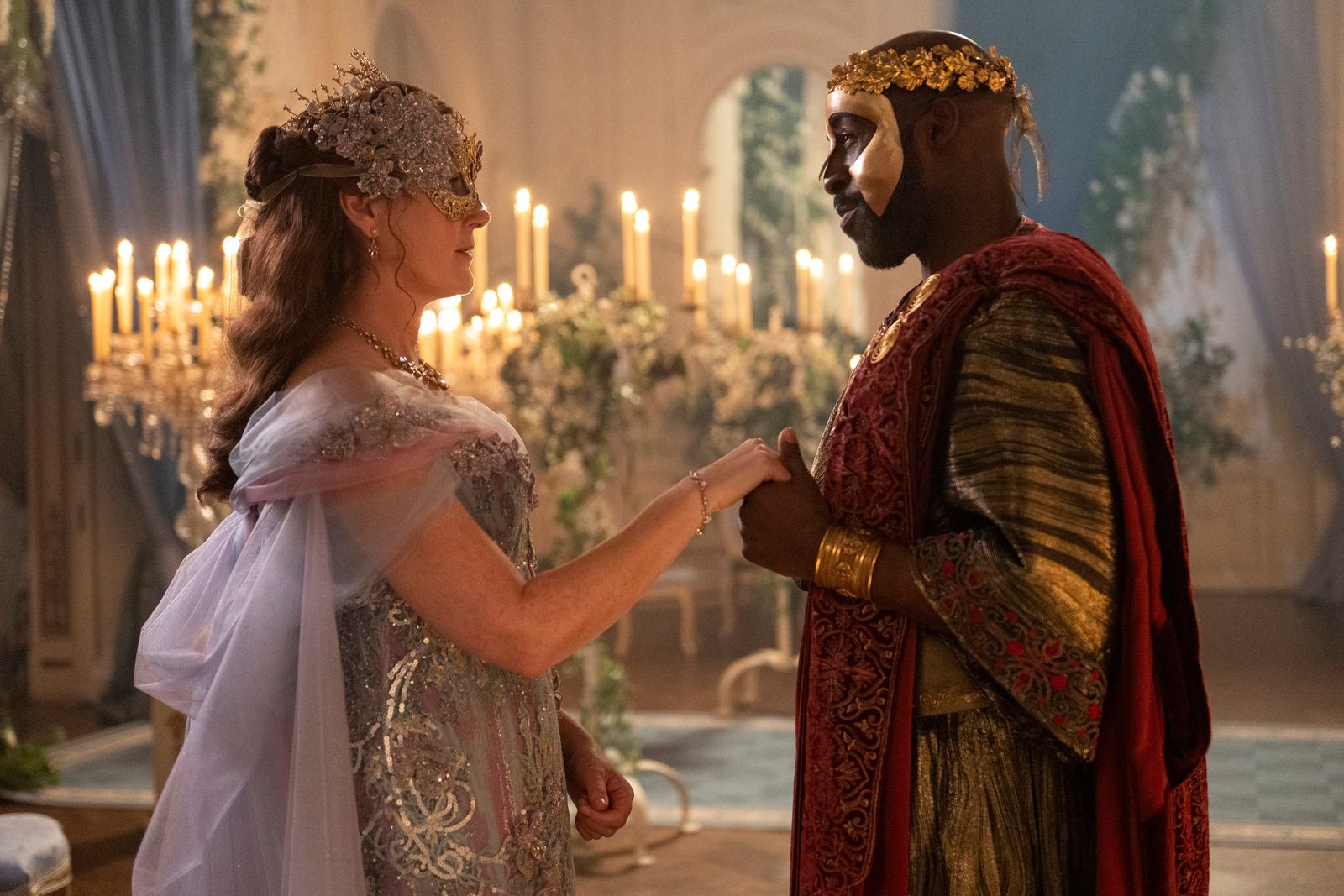
At the opening of season 4, Violet seems positively harassed by her children’s behaviour: Eloise’s continued refusal to entertain the notion of marriage, Benedict’s debaucherous party lifestyle. Meanwhile, her slow-burning flirtation with Lord Marcus Anderson (Daniel Francis) is heating up, but she feels conflicted. “I want to be seen and touched by you,” she tells him, “but there are the children.” Motherhood is all-encompassing—you get used to decentring yourself, to dedicating all of your attention, time, energy, even your body (“I’ve had eight children with this body,” Violet says) to the service of your offspring. It’s so easy to lose sight of your own wants and needs; so easy to feel guilty about doing something just for you.
Violet’s journey this season is to overcome that guilt and take back the power over her own private life. It is a joy to watch. “I often worry that to want something for myself is selfish,” she tells Lady Danbury. “But I… I do want particular things, and I should have them.” This is a radical assertion—albeit one delivered with characteristic hesitance. Not only is Violet admitting that she wants things (which itself feels taboo), and not only is she upholding that it’s okay for women to want things, she is unapologetically insisting that she deserves to have—that she should have—the things she wants. It’s a statement which defies the assumption that women—and especially mothers—should be passive and self-sacrificing. It’s brave; it’s powerful.
Disclaimer : This story is auto aggregated by a computer programme and has not been created or edited by DOWNTHENEWS. Publisher: vogue.in







