The Lakers’ struggles against more physical opponents hasn’t been a talking point in a while, but Sunday’s blowout loss to their longtime cross-country rival, the Boston Celtics, brought it back to the forefront.
Yes, the offense and the process behind it on Sunday afternoon was abysmal, especially in the first half. This led to the Lakers scoring their second-fewest points in a game this season (89) to the Celtics at Crypto.com Arena.
Part of the Lakers’ struggles were because they settled for what the Celtics wanted them to take: midrange shots against the deep drop defensive coverage Boston used with multiple big men when defending on-ball screens.
Just over 40% (40.7%) of the Lakers’ shot attempts against the Celtics came from midrange (outside of four feet from the rim to the 3-point line), which was tied for their seventh-highest mark of the season. Coach JJ Redick highlighted how the Celtics’ drop coverage put the Lakers in uncomfortable positions.
“There were opportunities to put more pressure on the rim,” Redick said. “Particularly in the first half. A lot of times when teams are on a deeper drop versus all our guys that play pick and roll, it kind of puts you a little bit in a bind of not having the obvious choice to pass, if that makes sense? So we just got to do a better job of just finding guys and moving the ball.”
But the Celtics also presented similar issues that the Lakers have struggled to consistently have an answer for: a physical team that establishes a hard-nose style of play early on.
Once the Lakers didn’t match physicality with physicality, frustration began to build.
And the Lakers took out their frustrations toward the officials – albeit after multiple egregious non-calls that favored the Celtics.
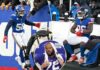
There was the technical foul Marcus Smart picked up after Jaylen Brown elbowed him in the face, with Smart being assessed the technical for arguing about the play. Reaves was also T’d up for arguing about the play.
Redick was given a technical later in the game while arguing Neemias Queta should’ve been called for goaltending or basket inference on a LeBron James layup attempt.

And once those frustrations were built up, the Lakers struggled to stay in the game.
“We can get that way sometimes,” Reaves said. “When you don’t get those calls, you can’t stay frustrated. You got to move on to the next play. I’m a culprit of that. I got to do better in that situation, and our whole team does as well.”
And the frustrations also affected the Lakers’ offensive playstyle.
Too often they resorted to one-on-one basketball or going to high pick and rolls without off-ball actions or movements once the Celtics took control of the game.
“Got to be able to understand games that are going to be tailored to play different ways,” Reaves said. “[With the] scoring ability [of] Luka [Doncic] and Bron, there’s going to be nights where you take matchups and you score and you win that way, and it’s going to be nights like [Sunday]. Got to do a better job all of us, myself included, playing with the pass. When you do that, everything’s going to open up more for one-on-one basketball. That’s what you want to do.”
The Celtics presented a similar challenge the Lakers will experience in the postseason.
Sunday showed they have more progress to make before passing the test.
Disclaimer : This story is auto aggregated by a computer programme and has not been created or edited by DOWNTHENEWS. Publisher: nypost.com