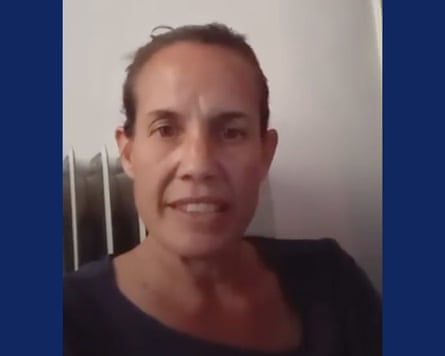
At least three people died within four months of one another after being shot with “less lethal” projectiles and stun guns at their homes, sparking a series of inquests and civil cases that could overhaul how police officers use force.
Police forces have argued the projectiles – such as bean-bag and foam baton rounds fired from weapons similar to shotguns and other launchers – provide officers with a less harmful alternative to firearms.
But the projectiles have been linked to deaths around the world, and critics have argued that their continued increase in police arsenal has not been matched by commensurate increases in accountability and oversight.
The use of the so-called “less lethal” weapons in incidents that led to the deaths of three people in NSW and Victoria has now come under scrutiny.
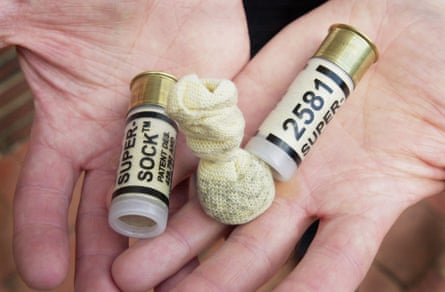
In July 2023, Mark Smith was shot five times with “less-lethal” projectiles and Tasered 14 times by police, a Victorian inquest has heard. His death came two months before Krista Kach was Tasered and hit in the chest with a bean-bag round from a “Super-Sock” shotgun fired by NSW police in Newcastle.
Steven Woodhouse died that November after allegedly being shot with bean-bag rounds and a Taser in Reservoir, in Melbourne’s north, by the Victorian Critical Incident Response Team (Cirt) – the same police unit involved in Smith’s death.
Victoria police also faced at least two other recent court cases regarding injuries caused by “less lethal” projectiles fired at protesters.
A coroner planned to deliver findings into Smith’s death later this year, and an inquest in Kach’s death was due to start on 2 March.
Meanwhile, Woodhouse’s older sister, Shaye Woodhouse, filed a supreme court case against the state in December, alleging the death of her 29-year-old brother was caused by catastrophic injuries inflicted by police.
Bean-bag rounds reintroduced
Kach’s family questioned why her death had taken so long to come before a coroner.
“In the time since our mum’s death and the date of the coronial hearing, there have been more cases,” the family said in a statement.
Sign up: AU Breaking News email
The family also questioned the use of “less lethal” weapons on their mother. “We had never heard of a bean-bag to be used on a woman experiencing a major mental health crisis before – and we had no idea they had plans to use it on her,” they said. “[Police] need serious reform on why and how they use any ‘less than lethal’ weapons.”
The postmortem report on Kach, 47, described the cause of death as a “gunshot wound to the chest”, after she was Tasered and hit with a bean bag-style round from a Super-Sock shotgun after a long standoff with police in Newcastle.
“It would appear that the beanbag round, or the Super-Sock round as it’s known by the manufacturers, has entered the body of the deceased and ended up striking her heart, causing her death,” the NSW police acting commissioner, David Hudson, said at the time.
“It was a less than lethal option that was taken and unfortunately on this occasion, as it has done around the world on very few occasions, has resulted in a death.”
The use of bean-bag rounds was suspended by NSW police after Kach’s death but has since been reintroduced.
As part of a previous investigation into less lethal tools, Guardian Australia obtained records of use of force by NSW police since 2020. While the documents logged incidents where OC spray, batons and stun guns were used, projectiles were not included as a category.
In 2023, NSW police said that bean-bag rounds had been used in at least 15 high risk incidents, but this was not included in the use of force statistics.
A year before Smith and Woodhouse died, the Victorian Cirt was savaged in a report by the Independent Broad-based Anti-corruption Commission for inaccurately recording uses of force and acting inconsistently with the charter of human rights.
Separately, two protesters shot with projectiles in 2021 are also taking legal action against Victoria police in the county court.
Both alleged they were shot with little warning, causing wounds that required continuing treatment. One of the cases settled in December.
“The projectile left a wound the size of a 20 cent coin next to my spine which required surgery and has left an unsightly scar,” the protester whose case remains open said.
“I felt humiliated, degraded, and was left questioning what I had done wrong.”
Robinson Gill lawyer Jeremy King, whose clients include people shot by Victoria police with Tasers or less lethal projectiles, said the weapons used were similar to those used by ICE in the US.
“There’s almost zero oversight over that type of weaponry, how they are using it, and how much it costs,” he said.
A Victoria police spokesperson said bean-bag rounds had not been used since 2020, but could not comment on the deaths of Smith or Woodhouse.
The force has previously said publicly that it uses 40mm baton rounds in tactical operations, including at protests in 2025.
The police spokesperson said the civil case settled with the protester shot with a less-lethal round in 2021 was resolved after consideration of litigant guidelines that require the state to handle such claims fairly, promptly and consistently.
“Only a small number of civil matters have been filed against Victoria police regarding non-lethal tactical options,” the spokesperson said.
Fuse-box effect
The exact weapons used during the incident involving Smith have been suppressed by the Victorian coroner’s court at the request of police, despite Guardian Australia arguing for any restrictions on publication to be lifted.
The type of stun gun used during Smith’s arrest is no longer in use by the critical incident response team.
His death came after a “series of dominoes” fell, the senior police officer who conducted an internal review into the death told the inquest in February. Smith was armed with a sword and a knife, and had made threats against his neighbour before police responded.
The inquest heard Smith was familiar with how Cirt operated, and was previously unaffected by the use of OC spray.
He was shot with less lethal rounds, before he was Tasered – including in the head and while the device was set to “drive-stun” mode as he was under a riot shield.
Drive-stun mode is described by the weapon’s manufacturer as a “pain compliance option” that can only be used when the Taser is pushed firmly against a person, as opposed to deploying the probes typically used when the device is fired.
Acting Supt Ilsa Wakeling told the inquest that the Cirt was decreasing the amount of Tasers used in incidents in general, because the weapons were unreliable.
Counsel assisting the coroner, Rachel Ellyard, has said it was open to find Smith had lost consciousness, dropped his weapons and was under the shield before at least one of the deployments of the Taser in drive-stun mode.
Ellyard told the inquest that deputy state coroner Paresa Spanos could find that this use of force by police did not comply with its own guidelines, though the others did. There was no suggestion any use of force was unlawful, Ellyard said.
Dr Paul Bedford, a forensic pathologist at the Victorian Institute of Forensic Medicine, told the inquest that Smith died from a cardiac arrest. But he outlined three factors that could have cause the death – pre-existing cardiac issues, including an enlarged heart and narrowed arteries, in the context of a stressful situation; Smith’s use of methamphetamine; and the constraints placed upon him by police.
Any of three of the factors could have caused his death individually, let alone when they occurred in tandem, Bedford said. In this way, he said Smith’s death was like an “eggshell skull” case.
The use of Tasers could have been a factor, with Bedford agreeing that the impact on the heart could have been similar to blowing a fuse box when too much charge is put through it.
Bedford told the inquest of five large distinct bruises on Smith’s thigh and buttocks where projectiles had hit him. He said extensive bruising increased the likelihood of cardiac arrest, as it would have lowered the amount of blood available in the body to circulate to the heart.
Smith’s mother, Arita Smith, said in a submission at his inquest that more had to be done to prevent similar deaths.
“I have sat and listened to all of the evidence that has been presented, and I still ask myself: ‘Is there a better way?’” Smith said.
“Sitting in the court room has not been easy, but it’s the last thing I can do for him.”
Disclaimer : This story is auto aggregated by a computer programme and has not been created or edited by DOWNTHENEWS. Publisher: theguardian.com