By David Crowe in Lviv
December 7, 2025
The daily life of a relentless war is on display in all its contrast when the people of Lviv walk the streets of their city in western Ukraine. On any day, they might see a funeral. On the next, a wedding. In the night, they might seek shelter from a missile strike. In the morning, they could pass a hair salon busy with people who want to look their best. Life is bustling around them – and death speeds through the air.
“This is the craziness,” says Elizabeth Dotsenko, a family physician.
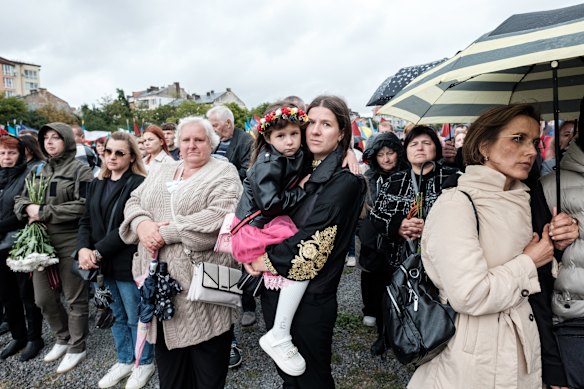
Residents of Lviv gather to mark Ukrainian Independence Day in the third year of war.Credit: Global Images Ukraine via Getty Images
“But it is our normal life,” adds Olha Ortynska, a doctor and respiratory specialist.
We are talking at a medical clinic in the southern suburbs of Lviv on a foggy weekday morning. The nearby roads are choked with traffic, as if we were in any other European city during a morning rush hour. The cafes are busy with customers ordering espressos and matcha lattes, and stylish clothing stores line the narrow streets near the historic central square. Life during wartime can seem like life elsewhere.
But every morning, at 9am, the city comes to a halt when church bells toll for those who have fallen. Here, as in every community across Ukraine, people know to stop for a minute of silence. On Tuesday, I stood in a cafeteria as dozens of people rose from their seats to mark the moment. On Wednesday, I was walking in a park when everyone stopped and bowed their heads. On Thursday, I was in a taxi when the traffic came to a halt at an intersection. Some passengers stepped out of their cars to stand in silence on the road.
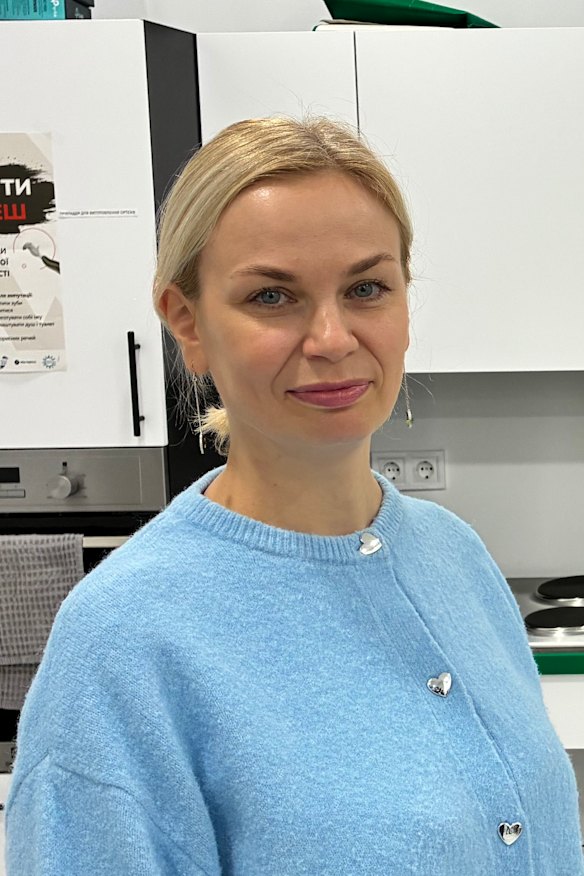
Olha Ortynska, executive director of the Ukrainian Catholic University Medical Clinic.Credit: David Crowe
Every family is changed by the war because everyone knows someone who has died, or been displaced, or is serving the nation in some way, or is at serious risk of death. Nobody can know if their city will be spared from the next wave of missiles and drones. The strain never stops, and it leads to a question: how long can the people of Ukraine endure this war?
Ortynska is the executive director of a new health centre that provides family care as well as specialist support for veterans. Dotsenko is the project manager. They show me into a room where they help survivors who have lost limbs on the front line or in civilian attacks. It has physical therapy equipment and a kitchen where patients with prosthetic arms and legs can learn to live in a new way.
This centre, the Ukrainian Catholic University Medical Clinic, is a sign of the need for new care across the country. But it is rare because it is new and entirely funded by the nearby university and its donors. It adds capacity to a health system under severe pressure as the casualties at the front drive thousands of wounded soldiers into the nation’s military hospitals, while the nightly missile strikes send wounded civilians to emergency departments.
‘We don’t have any choice. We have to continue to fight.’
Oleh Biliansky, Unbroken
“All the time, we feel we have these tragedies in our lives,” says Ortynska. “And people feel tired. But, you know, I guess we don’t have a choice. It wasn’t our choice to start the war. We want to live in peace, develop our society, have our children grow up with normal lives.”
An immediate end to the war seems possible, in theory, if Ukraine accepts the terms laid out by Russian President Vladimir Putin. He wants, at a minimum, all of the Luhansk and Donetsk regions in the east, as well as the formal transfer of Crimea in the south, along with much of the territory near Kherson and Zaporizhzhia. He wants a cap on Ukraine’s army and other curbs on its power and alliances. These are some of the elements of a 28-point plan advanced by US President Donald Trump’s personal envoy, Steve Witkoff, that has been rejected by Ukraine and its European partners.
“Sometimes it’s tremendously tough,” says Dotsenko. “I’m with two toddlers, alone, while my husband is serving, and sometimes it’s crazy tough. But, going for the compromise, we would lose our freedom. Those 28 points are just giving up. This has already cost us a lot. So, we would just betray all the lives we already put as a price for freedom.”
This is the common refrain from Ukrainians when they see world leaders trying to decide on a peace plan. Most think Putin has no interest in a fair peace because they know their history and believe Russia will always claim their territory. “We have the best land in the world,” says Nina Synyakivych, a retired teacher who runs a volunteer centre in Lviv. “But we don’t have a good neighbour.”
Soldiers who have returned from the front admit that victory is distant. One told me, without wanting to be named, that it would be better to accept peace terms. Another told me that Russia was winning. The concerns about the command of the war are heightened by the corruption scandal in Kyiv, as ministers and senior officials lose their jobs amid an investigation into kickbacks.
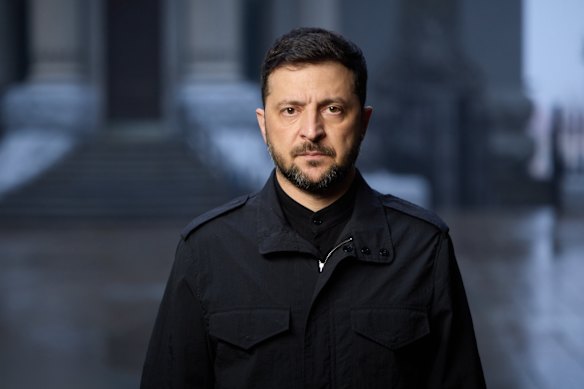
Volodymyr Zelensky is under pressure at home and overseas.Credit: AP
This means Ukrainian President Volodymyr Zelensky is trying to handle the peace talks abroad while he is losing trust at home. There are signs of weakening confidence: when the Zelensky government relaxed border controls in August so that men aged 18 to 22 could leave the country, neighbours, including Germany and Poland, reported an influx of almost 100,000 young men. Nobody can be sure how many will return for military service. Older men are still barred from leaving.
The United Nations estimates that at least 14,383 civilians have been killed by Russian forces since the full-scale invasion of February 2022. This includes 738 children. Another 37,541 civilians have been injured. While Ukraine does not release a regular tally of its military losses, Zelensky said last December that 43,000 Ukrainian soldiers had been killed since the full-scale invasion.
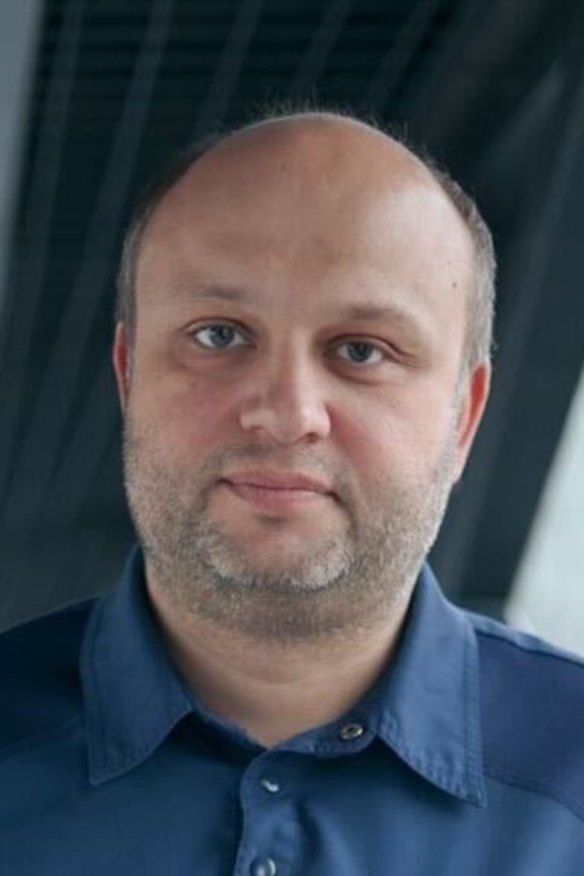
Oleh Biliansky, director of Unbroken.Credit: David Crowe
The memory of the dead changes those who live. As I spoke to Ortynska about medical care, she mentioned a friend who had been killed in action. The conversation changed in an instant as she wiped away a tear. Her friend, Mykola, was a tradesman. She and her family came to know him so well that she knew he could look after her children when she needed help.
Mykola joined the Armed Forces of Ukraine last year and became the head of a drone unit in Donetsk. Last month, as his comrades took cover in a dugout during an air attack, he went to make sure their generator kept running, but the generator’s noise meant he could not hear the drone above him. He died at the age of 38, leaving a wife and daughter, aged three.
Nations have survived brutality before. The German Blitz of 1940 rained bombs on civilian targets in Britain. Civilians were incinerated in Dresden, Hiroshima and Nagasaki. Aspects of the war in Ukraine, however, seem newly vicious. When an FPV drone explodes in a village and kills a family, it means a Russian drone pilot is operating the “first person view” weapon from a screen. The pilot sees and selects the civilian victim.
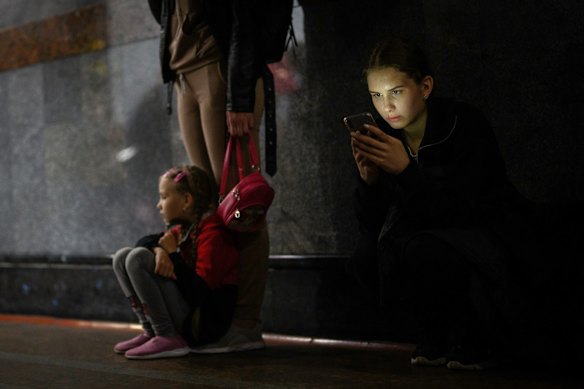
A woman and child shelter in Lviv during the early months of the war in 2022. Credit: Leon Neal/GETTY IMAGES
“We are full of stress, and there is a level of PTSD,” says Oleh Biliansky, the director of the Unbroken centre in Lviv, which treats thousands of patients who have suffered facial injuries or the loss of limbs. The corridors of the centre, next to one of the city’s major hospitals, are busy with people in wheelchairs, on crutches and walking on prosthetic legs.
Biliansky says there has been a 300 per cent increase in civilian illnesses over the past two years. “It’s because of stress, and Russian attacks on civilian infrastructure,” he says. While his centre helps people who suffer direct attack, it also does rehabilitation for people who suffer from heart disease, strokes or other conditions.
But the centre’s name, Unbroken, highlights the conviction that Ukraine will prevail. Biliansky has received help from around the world, including funding from the Ukraine Crisis Appeal in Australia, to help a wounded population survive.
“We don’t have any choice. We have to continue to fight,” he tells me. “We can talk about the stress, about the political situation, after the war. Right now, we must be together.”
In war, perhaps even more so than in peace, people find ways to connect. The rave scene continues in Kyiv, even though organisers have to hold daytime events because of nightly attacks. The gig guide to Kharkiv, close to the Russian front, includes heavy metal and jazz in the weeks ahead; the concerts are in the early evening. On Friday night in Lviv, as in other communities, people gathered to sing hymns for the Feast of Saint Nicholas.
There is a national effort to improve mental health. Ukraine’s first lady, Olena Zelenska, launched a policy two years ago to set up new support centres, and she called the program “How Are You?” to encourage people to actually listen to others when they ask the standard question.
An academic study published this year compared Ukraine to several other European countries and found, to nobody’s surprise, that the country led all others in its level of distress. The surprise was that it also had the highest level of hope.
‘Resilience is a choice’
“Hope is very good indicator of resilience,” says Oleh Ramunchuk, a child psychiatrist and the director of the Institute of Mental Health at the Ukrainian Catholic University in Lviv.
“All the time we are reminding each other that we need to take care of ourselves, that resilience is choice and that we can do something about that. So there are two realities: severe distress, which is continuous, and then this common effort to preserve hope and to foster resilience.”
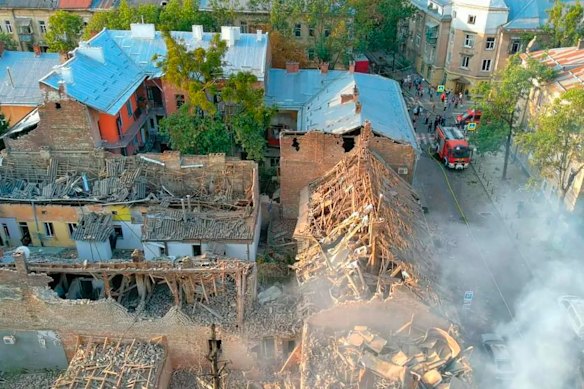
Air raid damage in Lviv in 2024. The western city has escaped comparatively lightly to other parts of Ukraine. Credit: AP
Nobody can be constantly resilient. The Institute of Mental Health runs programs for emergency service workers to take a break from responding to air attacks. “They see a lot of injuries, they see a lot of trauma,” says the institute’s chief executive, Orest Suvalu, a psychiatrist. The program takes them to a safer location for a time and offers counselling if they wish. “They are ready to continue their work, but they need some rest. And that is how we can support them.”
Some leave the country in search of safety, even when that means husbands stay in Ukraine while mothers and children move to Europe. The queue for the Ukrainian Railways service from Przemysl in Poland – stopping in Lviv before continuing to Kyiv and Kharkiv – is a long line of women with a handful of men.
About seven million people have left the country since the full-scale invasion, according to United Nations data. But many have returned. It is common to talk to people who spent some of 2022 abroad and returned to keep their families together, despite the risk of living in cities that suffer attacks.
When I visit Unbroken, my guide speaks with an English accent from her time in London. When I talk to a group of young drone developers over beer and snacks, one of them tells me of his time working for a tech company in China – and his decision to come back to Ukraine to work in defence.
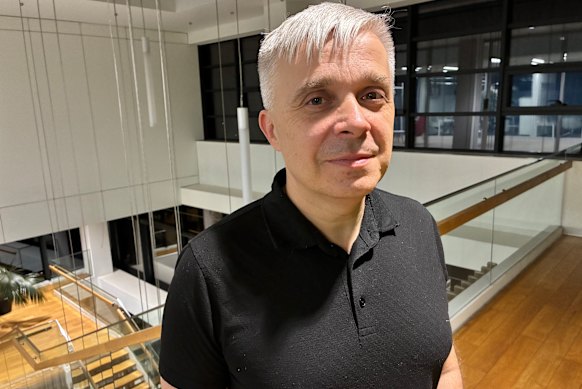
Oleh Romanchuk: “We have this common ritual which is about commemoration … which is about gratitude”.Credit: David Crowe
Romanchuk points to the way people maintain the bonds of their community. They volunteer. They talk to their neighbours when they have to gather in an air raid shelter. (I finish this feature during an air raid alert at 1.30am; people walk into the shelter with their pillows, and not a word is spoken. A few brief conversations only start when the all-clear sounds at 2.05am, and everyone heads back to bed.)
And, of course, Ukrainians stand together when the bells toll at 9am to remember the fallen.
“Every time, I’m moved by that,” says Romanchuk. “We are very much aware of those who gave their lives, whether they were soldiers or they were children who died because of a missile attack. We feel this pain, but we also kind of feel a gratitude for this sacrifice.
“You feel that in that moment, we have this common ritual which is about commemoration, which is about gratitude, and which is also about our responsibility to continue because we are all connected. Those who died, those who live and those who will come.”
Get a note directly from our foreign correspondents on what’s making headlines around the world. Sign up for our weekly What in the World newsletter.
Most Viewed in World
Disclaimer : This story is auto aggregated by a computer programme and has not been created or edited by DOWNTHENEWS. Publisher: www.smh.com.au