JOHANNESBURG — Bryson DeChambeau looked exhausted, leaning on the edge of a desk in the LIV Golf media center Thursday afternoon. His chin sagged as he exhaled, only raising for a sip from his grape-flavored Celsius energy drink.
“It’s been a long couple weeks,” he said, referring to LIV’s trio of consecutive March stops: Hong Kong to Singapore to South Africa. “But this is what LIV is supposed to be.”
DeChambeau looked out through the floor-to-ceiling windows of the media center at a golf course buzzing, spectators moving in every direction. The first round had just ended and he held a share of the lead.
“It might not work everywhere,” he said, “but in certain spots, it absolutely can.”
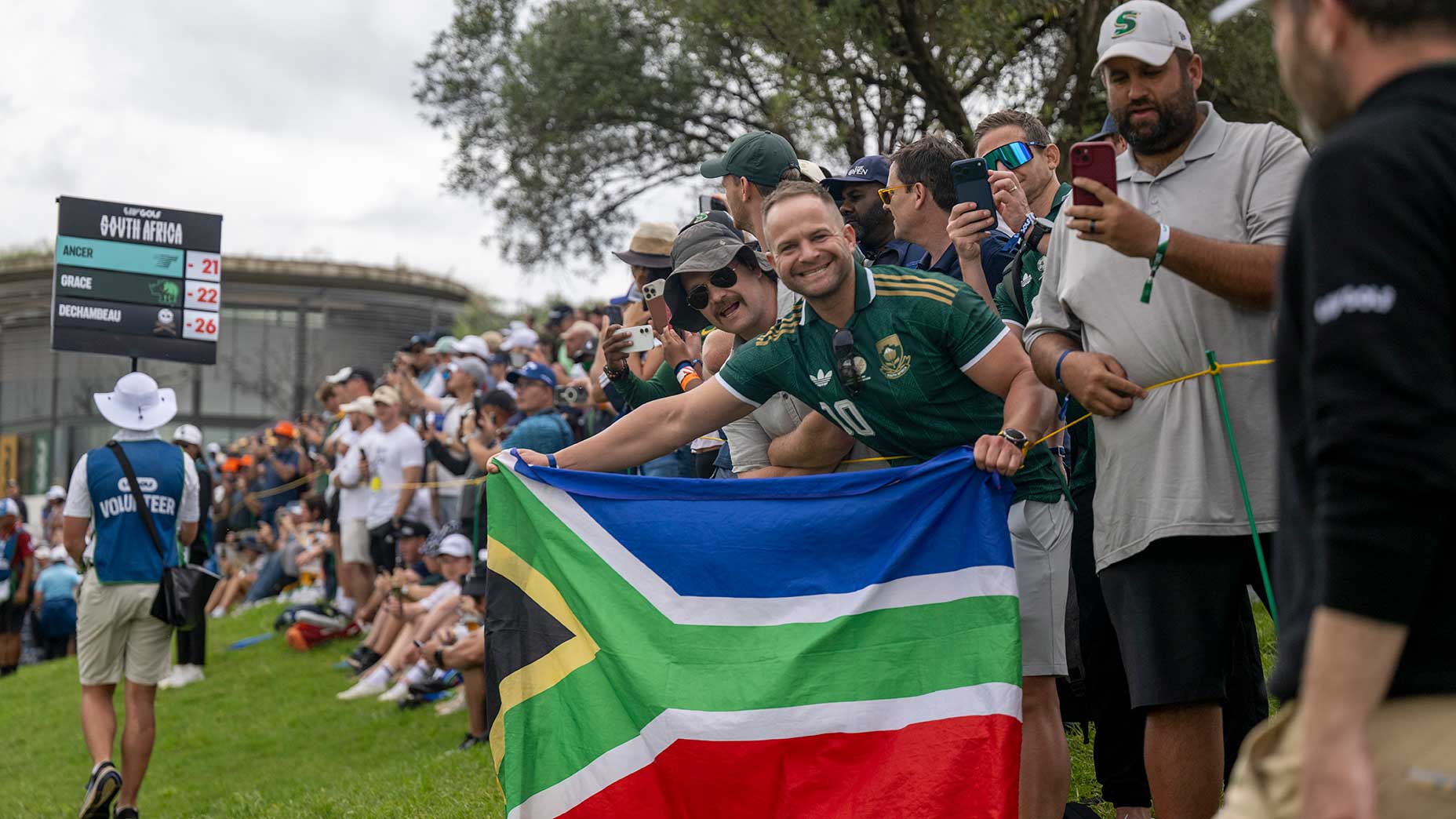
That sentiment is the theme of the moment for LIV Golf as it leaves behind its fifth event of the year, in South Africa. Fourteen months ago, when Scott O’Neil took the helm from Greg Norman, the league was not ready for the African continent. But shortly after O’Neil arrived, Louis Oosthuizen convinced South Africa’s minister of sports, art and culture, Gayton McKenzie, to attend LIV’s Korea event to better understand the league. McKenzie met DeChambeau that week and quickly became enamored with LIV’s offerings. He is a boisterous man, unshy about his desires to bring big sport to his country and so keen to do so that he did a handshake deal with O’Neil on that Korea trip. Ten months later, LIV South Africa became one of the most successful events in the league’s four-year history.
The reasons behind that success, as ever, require context. How LIV creates its events is, now more than ever, plainly obvious, as if spelled out on a chalkboard at LIV HQ, or in the application the league requires municipalities to fill out. If a location checks enough boxes, LIV is likely to bring an event there. If it doesn’t check enough boxes, like, for example, receiving government funding, LIV is likely to look elsewhere.
<figure class="youtube-facade" data-content="
“>
“Adelaide is the template,” LIV pro Brendan Steele told me on the range last week. He was giddy. There was anticipation in the air, with digital clocks ticking down everywhere you looked ahead of the first round. By Adelaide, Steele means Australia, but more specifically, the state of South Australia, which welcomed LIV years ago and has been hosting its most successful event ever since. That it coincided this year with an out-of-nowhere win by Anthony Kim was gravy.
Steele and I chatted only briefly, but he said great LIV events don’t necessarily need to “check all those boxes.” That feels optimistic, especially when it comes to LIV’s desire for government funding.
South Australia has signed on as LIV’s Australian home through 2031. New Orleans is getting its first LIV event this year, but only after earmarking $7 million to make it happen, from the same budget that offers public funding to host the Super Bowl and other major sporting events. LIV went to Chicago in each of its first four seasons — no other city could say that — but is not this summer, because sufficient state funding never materialized. If the Chicago Bears are going to struggle to get Illinois state money, to the point of considering a move to northwest Indiana, LIV Golf likely will, too. (Perhaps unsurprisingly, LIV has found a new Midwest home in Indianapolis.)
For LIV South Africa to become a reality, getting McKenzie to pursue government aid was step 1 — and McKenzie, who was out and about at the Club at Steyn City all week long, was the right man for the job. He so badly wants F1 to reroute its globe-trotting schedule through his country that he spoke up when multiple races were canceled recently in the war-torn Middle East. In hopes of landing an F1 race in the future, he recently promised to make an offer the racing circuit couldn’t refuse. He’ll now have a golfy case study to include in his proposal.
It’s unclear what amount of public funding LIV Golf’s Joburg event landed, but it clearly led to a massive success. On Sunday morning, LIV announced it would return to South Africa next April, with McKenzie essentially opening the ticket window himself.
“LIV Golf is never leaving this continent again,” he said. “Which means we’re going to be here 2027, 2028, 2029, 20-forever. We’re going to be here.”
Getty Images
——–
AFTER THE SECOND ROUND, DeChambeau is back in the media center, sipping another Celsius, panting less heavily this time.
“Be honest,” he starts, “how many PGA Tour events are like that?”
He’s referring to the sound, the fervor, the hanging-around-well-after-the-round element that happens when the golf is a lead-in to a performance by one of South Africa’s biggest DJs, Black Coffee. Between Friday and Saturday, event organizers had to replace the white picket fence surrounding the party hole with a metal one out of fear that the crowd would trample it.
“Not many,” I say. “But be honest, at how many places can this actually happen?”
“Five or six internationally,” DeChambeau says, indicating he’s given the idea thought. He rattles off Australia, South Africa, Spain and England, maybe one in Asia.
“And definitely one in Chile, for Torque [GC].”
The globalist mind wanders. Santiago … Buenos Aires … DeChambeau was not the only LIV contractor to suggest this number of roughly six locations worldwide that could host the raucousness of 100,000 people who want a festival concoction that pairs golf with music, arts, food, etc. That is the LIV product now more than ever. It’s impossible to know how many attendees are treating the golf as an opener for Calvin Harris, or how many view Harris as a dessert following DeChambeau, but LIV sees either scenario as a market advantage.
South Africa is not necessarily starved for pro golf. The DP World Tour has played host to four tournaments in the country in the last four months alone. But what the DPWT brings to South Africa is so different from LIV that it’s almost offensive to each league to compare the two. The DPWT isn’t trying to create festivals. LIV isn’t trying to do anything but make a massive, memorable splash. All of which made event organizers, in the planning stages, think far more about the 2003 Presidents Cup — held in South Africa — than any Nedbank Challenges. Last week’s event was endlessly hailed as the biggest golf event in South African history, just like the Adelaide event in February was similarly dubbed for Australia.
The architect of these events is Ross Hallett, who brings decades of golf-event experience from IMG. He wants every LIV event to be as big in scale as the Presidents Cup, but while feeling less like a traditional golf tournament. “Music works,” he says. “We know it. Easy. How do you incorporate art? We haven’t got it [figured out], but there’s [local] art on every TV tower.”
In Hong Kong, local celebrity chefs were cooking in the fan village all week, with mirrors placed above their heads so spectators could better see.
“They were mic’d up and I was like, This is awesome,” said O’Neil, LIV’s CEO. “Now, is it for everyone? No. Does it move the needle in selling more tickets? I don’t know. Maybe, maybe it doesn’t. But like the whole total experience. It’s like that fully cultural experience, which I love, and I think over time that wins because it’s right in the demo. It’s right in the demo: culture, food, art, music, golf.”
That O’Neil referenced golf last among those attractions might well have been unintentional but it does raise a question: Can the golf at LIV Golf matter significantly to hardcore, traditional golf fans? O’Neil obviously thinks so. And in person, the competition in South Africa was mostly riveting, even if the water-logged course lacked intrigue.
In a dream scenario, the league’s two best players — and two of its most expensive signees — landed in a playoff. Suddenly, two of the best pre-Masters storylines are a result of LIV Golf, which hasn’t happened before. Adding more juice, South Africa’s Southern Guards were one 18th-hole birdie putt away from a playoff of their own.
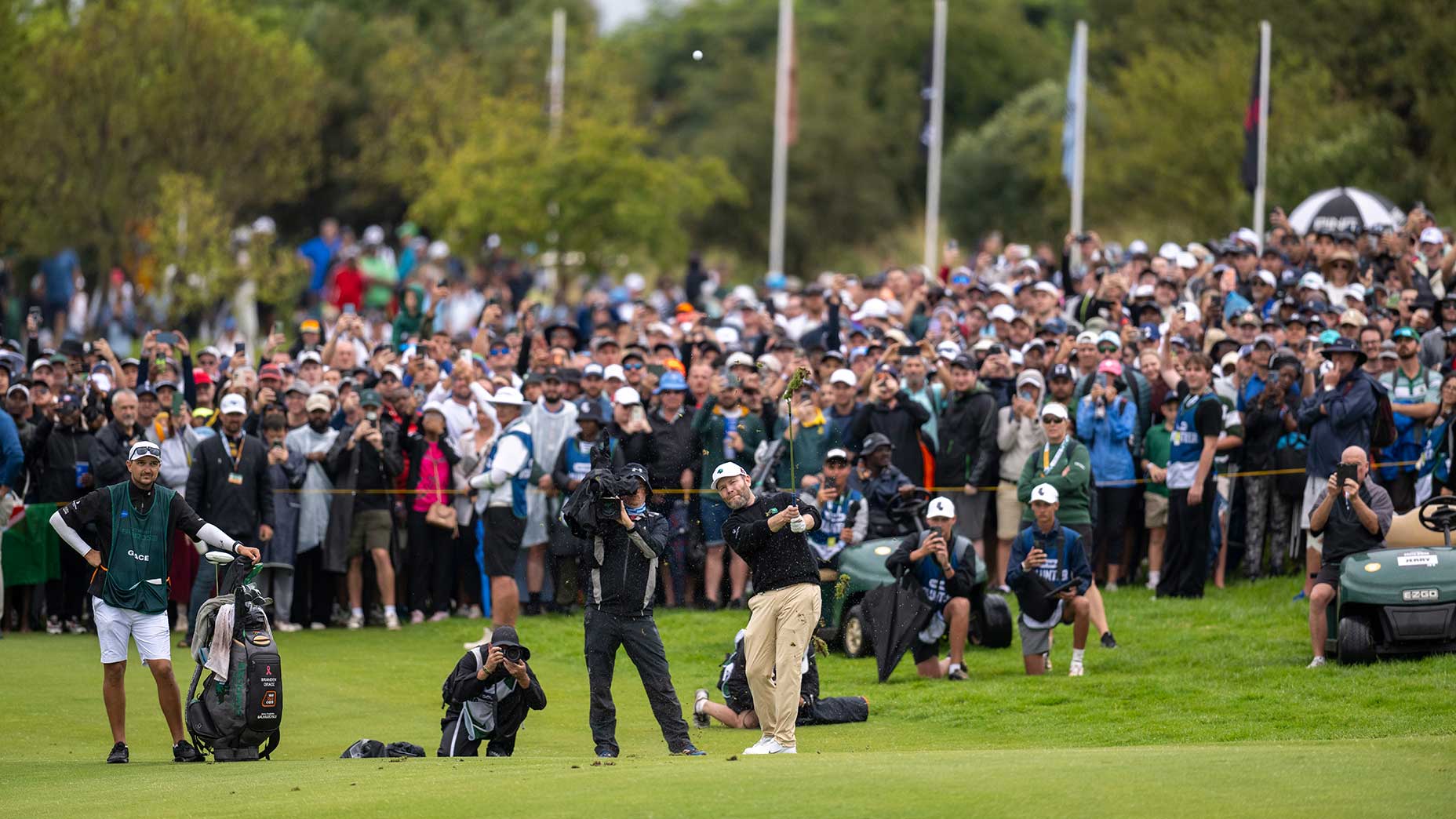
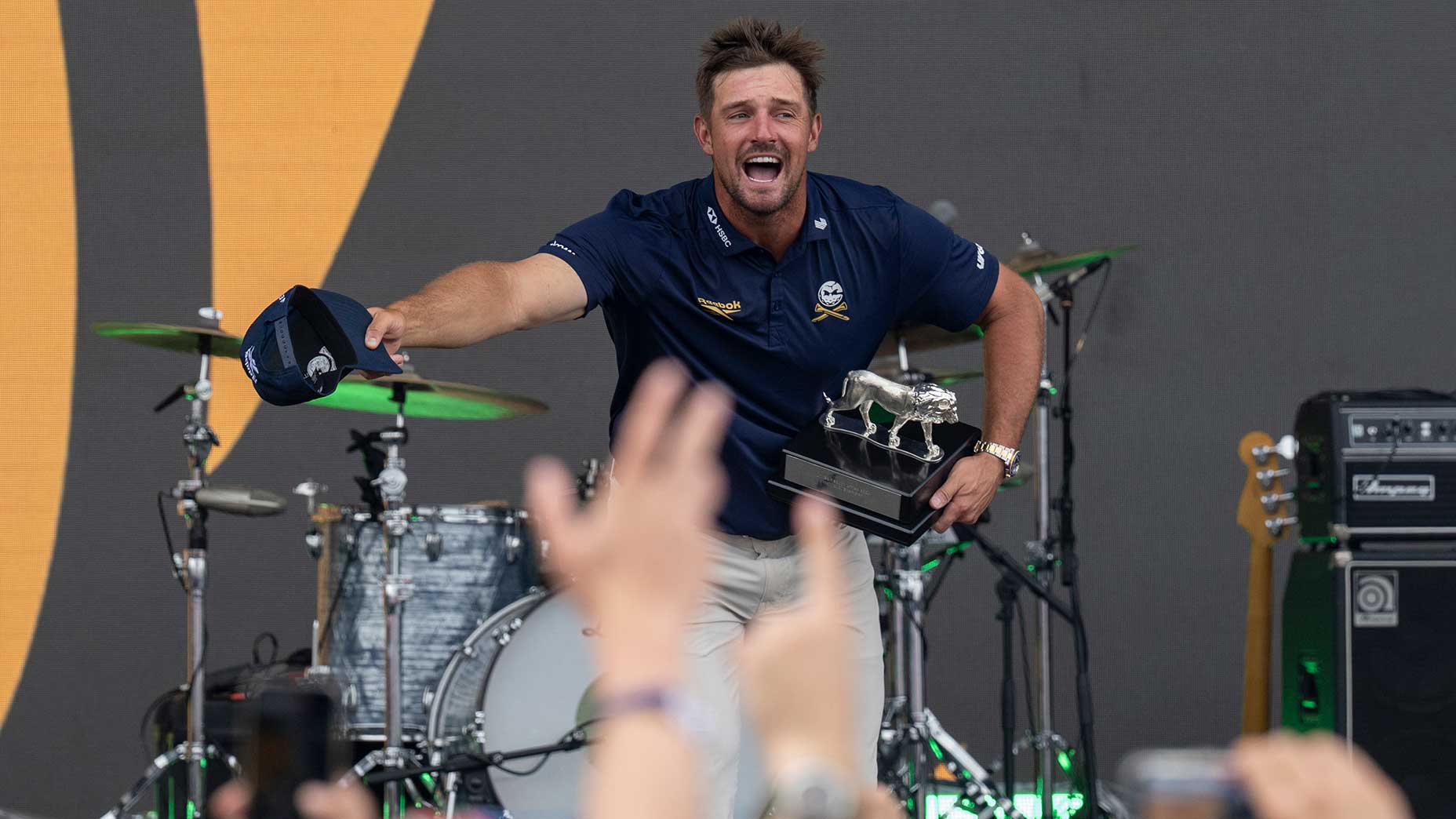
On the final hole in regulation, with rope lines dropped, DeChambeau needed to get up and down for par; as he went to work, an enormous crowd tried getting in his head with a rendition of their national anthem. On the first playoff hole, more drama, with DeChambeau hitting a stunning 3-wood from a mud-ball lie to set up his winning birdie. The setting was special; it moved DeChambeau to tears. All week he’d been treated like Elvis — sometimes signing autographs for an hour at a time — and even acted like a frontman on the championship stage, coming back out for an encore of applause, throwing his hat into the crowd and shouting, “I LOVE YOU GUYS.”
Getty Images
That this culmination happened at 8 a.m. on America’s East Coast matters because there tends to be this truism ringing through LIV’s best results: You kinda had to be there to appreciate them. Between time zones and lack of interest from the Golf Channel demo, there remains a disconnect between the action abroad and how it resonates at-large, particularly in the U.S.
On a year-over-year basis, LIV’s international television numbers are up. But throughout its four-plus seasons, the American TV numbers have not been good, and the American TV market is where a dominant amount of value is derived for sports leagues all over the globe. For the PGA Tour, for example, TV rights make up nearly two-thirds of its “core business” revenues.
TV can be less important for LIV Golf, but can it be unimportant? On LIV’s current TV deal, its events bounce among FS2, FS1 and FOX and have been out-rated by similarly scheduled PGA Tour events by a factor of 10x or 11x, according to Nielsen Big Data + Panel. LIV hopefuls believe in time the league will pull market share from the PGA Tour. But if LIV wants to put a dent into its American TV deficit this season, it’ll have to do so against five Signature Events on the PGA Tour. That’s not an uphill climb; it’s a vertical-face ascent.
——–
THERE IS A SENSE OF AMAZEMENT, for Johannesburg locals at least, at how quickly LIV erected its business in their backyard. One person who lives on property at the Steyn City Estate said the event buildout sprouted out of the ground like mushrooms.
When the Southern Guards approached McKenzie to get the government green-light, they thought it would probably happen in 2028, maybe by 2027 if they were lucky, but certainly not 2026. But McKenzie made it happen. O’Neil says local sponsors are almost just as important as local government support, and while they didn’t get a title sponsor this year — like LIV had in Hong Kong — he thinks they will next year.
Stroll the Steyn City property and you’ll see far more local and global brands leaning into LIV than it had during its first season. Coca-Cola’s suite of products — from Powerade to Monster Energy — were well placed throughout the fan village. The concert stage was sponsored by Castle Light, South Africa’s leading beer producer. Saudi Arabian companies such as Roshn, Riyadh Air, Maaden and Aramco, are also well repped, a vital reminder that the big money required to bring this tour to the African continent is still coming from the Middle East. The Saudi Public Investment Fund also has continued to inject investment into the league.
LIV has been able to lower costs over time, but O’Neil projected to the Finanical Times that it will take between five and 10 more years for the league to become profitable. All of which means Saudi money will continue to be a requirement to reach markets like South Africa. (One reason F1 might be taking its time with going to South Africa is that it may not generate the same amount of revenue — from tickets or sponsorship — as it could elsewhere.) LIV will obviously continue seeking other markets that could mimic its recent success. And when it does, is it filling a gap within the global golf ecosystem?
Early in the week, I was curious to discuss that idea of “gaps” in the pro game, as promises rained down about how special LIV South Africa would be. The notion of LIV satiating thirsty markets has caught hold enough that Rory McIlroy even praised LIV for finding its footing in Australia.
Getty Images
DeChambeau and his Crushers GC teammates were doing a pre-tournament press conference where, unsurprisingly, the captain received a majority of the questions. But sitting next to him was Paul Casey, a 48-year-old veteran who grew up traveling the DP World Tour, spent five straight years serving on the PGA Tour Player Advisory Council and now sits on the player advisory group at LIV. I asked him, as he looks at the pro-golf ecosystem, what gaps is LIV filling?
“That’s a good question,” Casey said. “It’s a complicated question and one I’d probably defer to answer some other time because it’s nuanced. Yeah, product-market fit is a real thing that we discuss. We talk about it a lot as players actually. I don’t think it ever gets talked about enough.”
Product-market fit is a mostly simple business idea where companies reach a specific audience with unique needs by offering a product that meets them. In Silicon Valley, it’s easier to point at. Applied to the complex (and competitive!) golf world — emphasis on world — it can be a tricky thing to analyze. LIV Golf will always stage an event in Saudi Arabia, for obvious reasons. It will probably always stage events in Australia, given its success there. Will it go to Chile, as DeChambeau wants?
A few minutes later, when the press conference had finished, Casey pulled me aside.
“I think it just comes back to, What do the fans want?” he told me. “I keep going back to the Charlie Munger quote: ‘You show me the incentives, and I’ll show you the outcome.’”
By that Casey meant executives from any tour tend to take their leagues in such obvious directions that it’s not hard to see their goals. And if you look at the golf world, it’s not surprising where certain tours end up, based on the incentives they’re in pursuit of. Casey thinks it would take a bottle of wine — maybe two — and a few hours of chatting to solve the schedule of global golf. He’s not wrong.
The next time I saw Casey was five days later behind the 18th green. He was standing next to me as the Rahm-DeChambeau playoff began.
“So,” I asked him. “Does this suffice for product-market fit?
“This is definitely product-market fit,” Casey said, pausing for a few beats. “There aren’t many tournaments in the world like this one.”
For so many reasons, he was right.
Disclaimer : This story is auto aggregated by a computer programme and has not been created or edited by DOWNTHENEWS. Publisher: golf.com