

At first glance, the two Friday practice sessions ahead of the Formula 1 Australian Grand Prix suggested that a close race between all four top teams could be on the cards in Melbourne. Ferrari set a dominant fastest time in the first free practice session, before Oscar Piastri in the McLaren clocked the quickest lap in the afternoon.
However, the real winner of Friday was neither Ferrari nor McLaren, but Mercedes. In the crucial long runs at the end of the second free practice session, with a lot of fuel in the car, the Silver Arrows demonstrated just how strong the W17 really appears to be.
While teams can still play with fuel loads and different engine modes during qualifying simulations, that becomes significantly more difficult in long runs. At the very least, the fuel loads tend to be relatively comparable among all teams.
George Russell destroys the competition
The fastest man in the long runs was clearly George Russell. The Briton was a massive 0.48 seconds per lap quicker than his Mercedes team-mate Kimi Antonelli and 0.6s ahead of the first Ferrari of Lewis Hamilton.
Mercedes’ pace did not come as a complete surprise. At the end of the first free practice session, there had already been some shorter long runs, and there too the Silver Arrows were clearly faster than Red Bull and Ferrari, which were also running with heavy fuel loads at the same time.
But back to the second session: the third-fastest team in the long runs was Red Bull, although already with an extrapolated deficit of a hefty 0.8s per lap. All gaps have already been corrected for different tyre compounds. Mercedes ran the hard C3 tyre, while Red Bull used the medium C4 compound, which should actually have been faster.
World champion team McLaren, on the other hand, disappointed significantly in the long runs – despite Piastri setting the fastest time in the second session. The Australian ended up with a tyre-adjusted deficit of 1.27 seconds per lap to Mercedes. Team-mate Lando Norris, meanwhile, was on a completely different programme and did not set representative long-run times.
Sandbagging: Did Mercedes conceal its true pace?
Mercedes’ long-run dominance may initially seem surprising given the tight lap times in both practice sessions. However, a look at the data shows that Mercedes likely used significantly less engine power in its qualifying simulations than the competition.
At the end of the second sector, where the cars reach their highest speed on the Albert Park circuit, Mercedes managed only 279 km/h with both cars on their respective fastest laps.
Oscar Piastri reached 289 km/h at the same point with the same engine on his way to the fastest lap. Telemetry data shows that the Mercedes works team experienced a stronger drop-off in top speed toward the end of the straight in this sector – the so-called “super-clipping”.
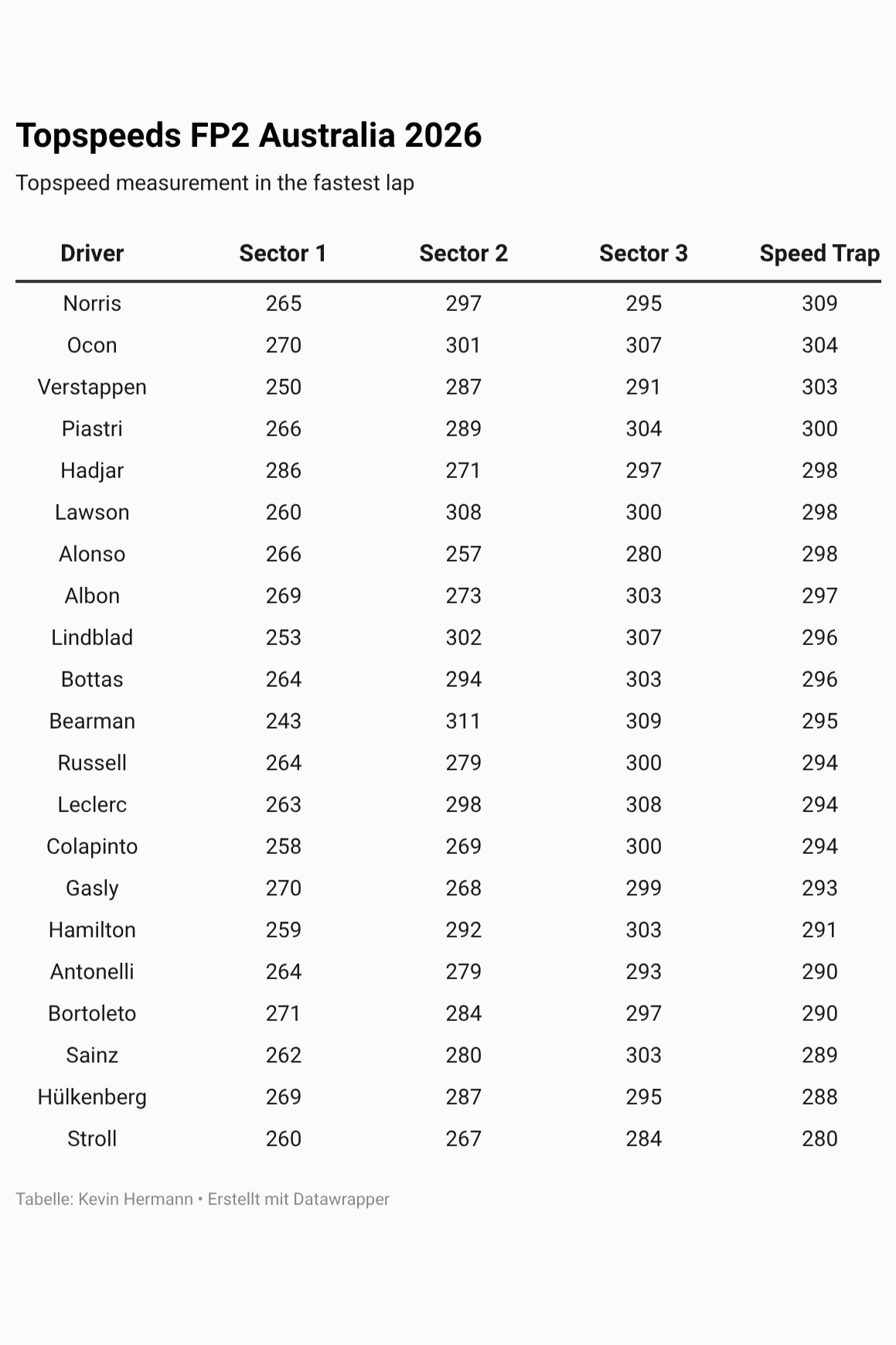
It is also noticeable that Mercedes ranked near the bottom of the top-speed charts in the other sector speed traps as well. In the speed measurement at the end of the start-finish straight before Turn 1, Russell reached 294 km/h, while Antonelli managed only 290 km/h on his personal best lap. Piastri’s McLaren reached exactly 300 km/h there.
At the end of the lap, at the speed trap directly on the finish line, Mercedes again lagged behind: 300 km/h for Russell and only 293 km/h for Antonelli despite a slipstream, while Piastri was once again faster with 304 km/h.
Mercedes therefore appears to have kept a considerable amount of engine power in reserve, while customer team McLaren seemingly already showed more of what is possible with the Mercedes engine over a single lap. Piastri’s fastest time may therefore falter slightly, as McLaren had turned the engine up more aggressively.
Engine mapping: Major differences between teams
The top-speed values in the individual sectors also provide a small insight into how the teams distribute battery power over the course of a lap. In fact, there were significant differences here.
Ferrari performed comparatively poorly in the official speed trap shortly before the first corner. Charles Leclerc reached only 294 km/h there, while Hamilton managed 291 km/h. By comparison, Norris was clocked at 309 km/h on his fastest lap.
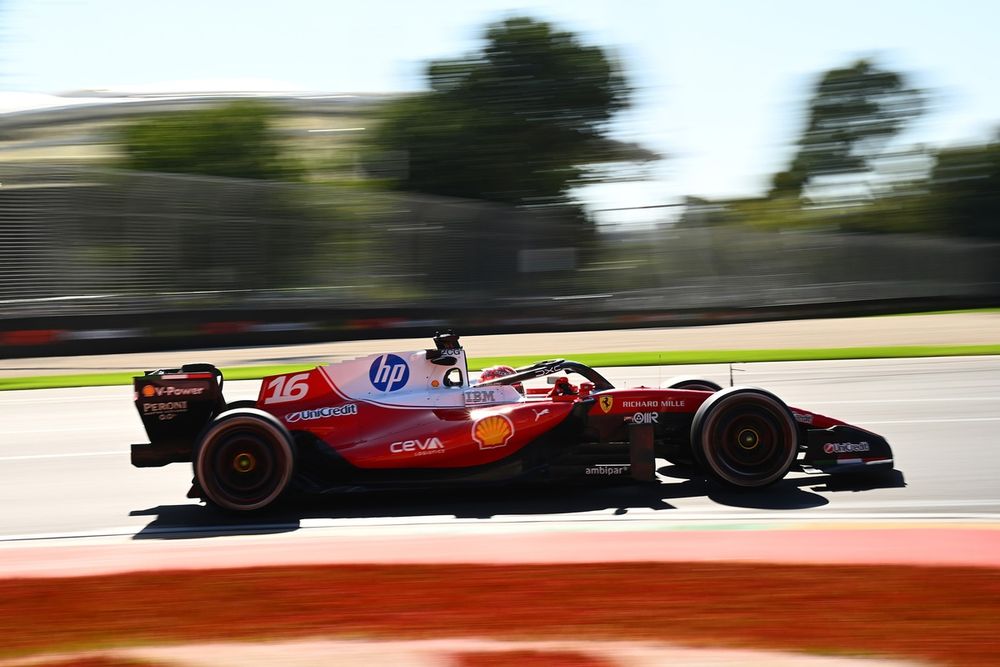
Charles Leclerc, Ferrari
Photo by: Quinn Rooney / Getty Images
In return, Ferrari was significantly stronger in the measurement on the finish line at the end of the lap. Leclerc reached a remarkable 308 km/h there, while Antonelli managed only 293 km/h by comparison. Ferrari was also well positioned at the end of the second sector with 298 km/h.
The top-speed values of Red Bull are also interesting. Isack Hadjar reached 286 km/h at the end of the first sector after Turn 5 on his fastest lap. FT2 winner Piastri managed only 266 km/h there, and Hadjar’s team-mate Max Verstappen even just 250 km/h.
Red Bull therefore ranked worse in the speed measurements in the second and third sectors, as the energy had apparently already been used up in the first sector.
However, the large differences – even within the teams – show that the teams do not yet appear to be entirely certain about how the ideal battery management for the Albert Park Circuit should look. It is quite possible that further tests will be conducted in the third free practice session once the data from Friday has been analysed.
Midfield: Audi Suddenly “Best of the Rest”?
But there were interesting findings not only among the top teams, but also in the midfield. Over a single lap, Racing Bulls impressed with rookie Arvid Lindblad. The Briton set the eighth-fastest time overall. His long run, however, left much to be desired: with an average deficit of 2.62 seconds per lap to the front, he was clearly in the rear midfield.
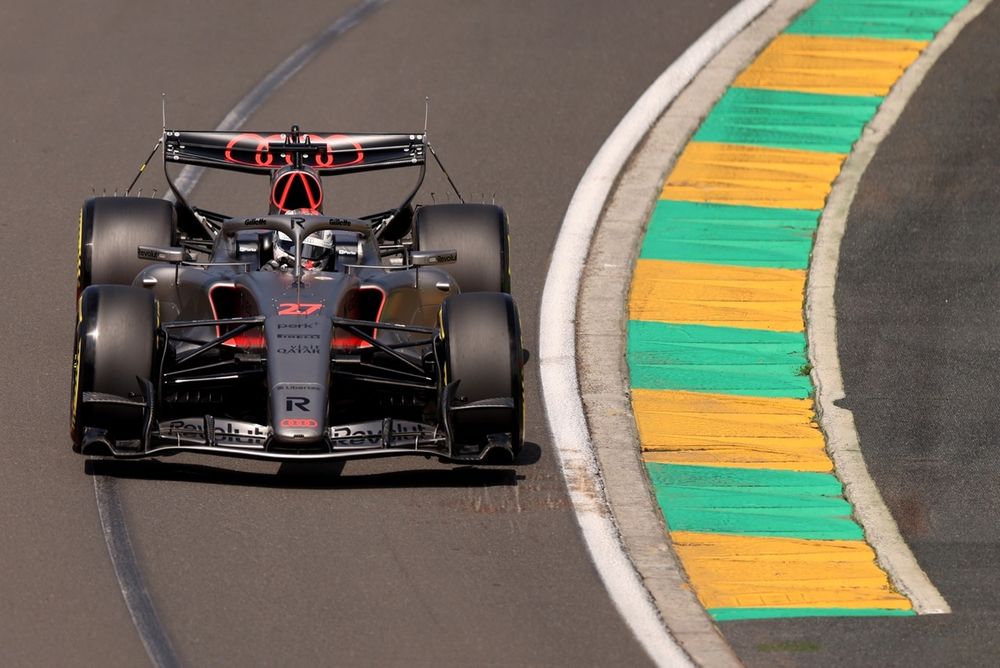
Nico Hulkenberg, Audi F1 Team
Photo by: Anni Graf – Formula 1 via Getty Images
With a lot of fuel in the car, however, Audi impressed. Nico Hulkenberg set the fastest long run in the midfield – on average he was 1.95 seconds per lap behind George Russell. His team-mate Gabriel Bortoleto (+2.14) was also in the front part of the midfield with his long-run pace.
The Haas team appeared to struggle more with heavy weight than over a single lap. Around 2.4 seconds per lap were missing for the US-American team compared to the front. That made them slower than Alpine driver Franco Colapinto (+2.13) as well as Liam Lawson in the second Racing Bulls (+2.16).
The slowest drivers in the long runs were Alexander Albon in the Williams (+2.82) and Cadillac driver Valtteri Bottas. The Finn, with an average deficit of 4.84 seconds per lap, was even clearly detached in last place. Aston Martin did not complete any long runs.
Tyre wear low: One-stop strategy likely
Tyres are unlikely to be a major factor this weekend. Wear during the long runs was very low on all three compounds and will likely decrease even further over the course of the weekend as more grip builds up on the track.
This suggests that Melbourne – as in previous years – will likely come down to a clear one-stop strategy. Pirelli chief engineer Simone Berra explains: “The well-known phenomenon of graining in Melbourne appeared again this year, with it generally being more noticeable on the front axle.”
“According to our initial findings, none of the options appears to be particularly disadvantaged, meaning all three compounds could come into play for possible race strategies. Wear seems limited and manageable for the drivers.”
We want your opinion!
What would you like to see on Motorsport.com?
– The Motorsport.com Team
Disclaimer : This story is auto aggregated by a computer programme and has not been created or edited by DOWNTHENEWS. Publisher: motorsport.com








