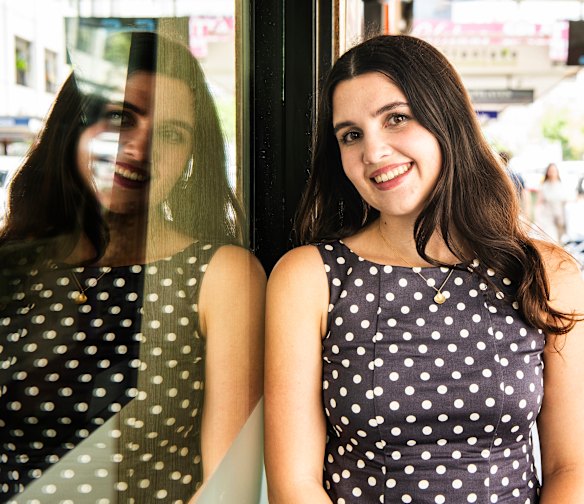

Seven-year-old Lucia Porteus wasn’t picking up on all the social cues her peers managed to seamlessly decipher. She couldn’t sit still, and concentrating in class was often beyond her.
“I was doing silly things … I’d get in trouble, and I seemed to be a bit slow to mature,” Porteus, now 21, said.
Her teacher suggested to her mother, Katrina Porteus, that Lucia be assessed for attention-deficit hyperactivity disorder (ADHD).
It took about nine months for the initial appointment with a developmental paediatrician, who, after several tests and sessions, diagnosed Lucia and prescribed medication.
“With Lucia, it was pretty obvious,” Katrina recalls of the assessment outcome. She was diagnosed with combined ADHD: hyperactive and inattentive.
“As a parent, you want your child to excel, not just in school, but in making friends, fitting in,” she said.
Lucia knows she’s lucky: “Many of my peers have struggled to access medication or a diagnosis for ADHD because of costs and long wait lists.”
NSW GPs will soon be able to diagnose ADHD under the state government’s major reforms to make it easier and cheaper for people to get treatment, which has previously been restricted to psychiatrists and paediatricians.
Almost 600 GPs have registered their interest in the training on diagnosing and treating ADHD that begins in March, Health Minister Ryan Park said.
“We know the impact high-quality ADHD care can have on family wellbeing, we are deeply committed to ensuring children in metro and regional NSW are not left behind,” he said.
The medication was a critical component of Lucia’s treatment, Katrina said. “We couldn’t have managed without it.”
Lucia’s diagnosis also meant she was granted special considerations at school and university, such as rest breaks, assignment extensions to address “time-blindness”, and additional reading time during tests, and sit examinations in the morning rather than the afternoon when her concentration waned.
Non-pharmacological interventions, including an ADHD coach and developing coping strategies, were also key for Lucia, who recently completed her bachelor of psychological science and plans to pursue further studies to help people with special needs succeed as she has.
The NSW government-funded training program will prioritise GPs working in rural, regional, and remote areas, where a lack of specialist services and the state’s worst wait times for ADHD assessments are major barriers for families seeking help for young children, teenagers, and adults.
Sydney and other metropolitan areas will follow, Park said.
Asked how the government plans to prevent a worsening of what has been categorised as an overdiagnosis of ADHD among some cohorts, Park said the government believed ADHD was underdiagnosed.
More than 800 GPs have been trained to fill repeat ADHD medication scripts under the reforms. More than 5000 patients have received their prescriptions this way (more than 18,000 scripts), Park said.
Minister for Mental Health Rose Jackson said feedback had been “incredibly positive, with some going as far as saying it been life-changing for managing their treatment”.
Sydney Dr Will Errington, co-chair of the Royal Australian College of General Practitioners’ special interest group for ADHD, autism and neurodiversity, said specially trained GPs would help relieve the long wait times for many people with ADHD, which is estimated to affect roughly 10 per cent of children and 6 per cent of adults.
“But it’s only a problem, if it’s a problem,” Errington said. “Some people can have symptoms of ADHD and get along just fine [without a diagnosis or interventions].”
The RACGP, Royal Australian and New Zealand College of Psychiatrists, and Royal Australian College of Physicians, which represents paediatricians, had formed a working group to consider how the reforms would operate and what support the specialist could provide to GPs.
RANZCP president-elect Dr Angelo Virgona said, “It’s important that GPs have somewhere to go when they have more complex cases present to them, particularly people with comorbid conditions: severe mood disorders, post-traumatic stress disorders and other conditions more in the realm of psychiatrists to assess and provide ongoing care.”
Virgona said there was likely overdiagnosis of ADHD, as people identified with symptoms that were common “on a spectrum” in the general population, as social media influencers and advocates raised its profile.
“The question is really about symptom severity and how much these things impact your functioning,” Virgona said.
“I suspect there is more underdiagnosis. I have seen people who have had symptoms for many years, since their childhoods. They have that constellation of symptoms, [but] have been treated for depressive and anxiety disorders and substance disorders.”
Park encouraged people interested in an assessment to speak with their GP to understand if they could provide it.
“We know the impact high-quality ADHD care can have on family well-being. We are deeply committed to ensuring children in metro and regional NSW are not left behind,” he said.
Start the day with a summary of the day’s most important and interesting stories, analysis and insights. Sign up for our Morning Edition newsletter.
From our partners
Disclaimer : This story is auto aggregated by a computer programme and has not been created or edited by DOWNTHENEWS. Publisher: www.smh.com.au