Most Democratic-led states say they will continue to universally recommend and administer the hepatitis B vaccine at birth, despite new guidance against it issued last week by a federal vaccine advisory panel handpicked by Health and Human Services secretary Robert F. Kennedy Jr.
The Northeast Public Health Collaborative and the West Coast Health Alliance, which formed earlier this year in response to Kennedy’s concerning overhaul of vaccine policy, along with a other blue states, plan to to defy the latest recommendations made by the Centers for Disease Control and Prevention’s Advisory Committee on Immunization Practices, or ACIP.
Hepatitis B is a serious, incurable infection that can lead to liver damage and liver cancer. It can be passed from mother to child during delivery, and without vaccination, about 90 percent of infants infected at birth develop chronic hepatitis B infection. Among those with chronic infection, 25 percent will die prematurely from the disease.
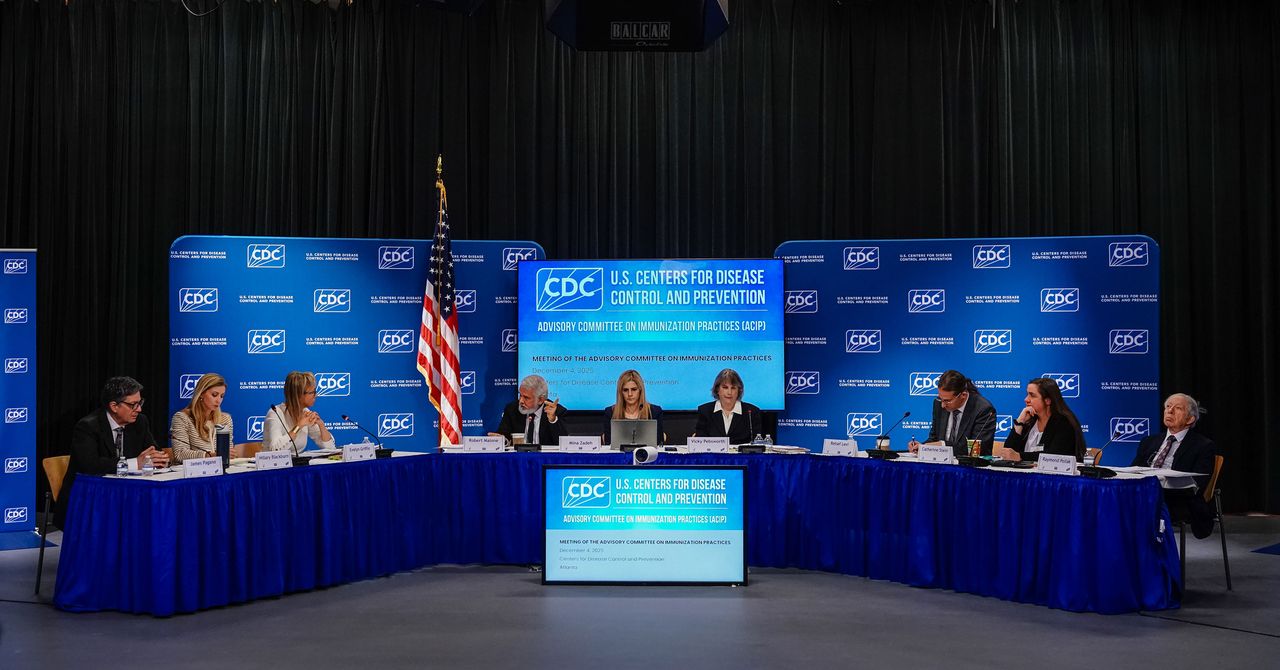
Since 1991, ACIP and the American Academy of Pediatrics have recommended a universal dose of the hepatitis B vaccine within 24 hours after birth. The sooner a newborn gets the vaccine, the higher the chance of preventing chronic infection. The birth dose is credited with dramatically lowering infection rates in children. Yet last week, Kennedy’s newly formed ACIP, which includes several vaccine skeptics, overturned that 30-year precedent. In June, Kennedy announced a “clean sweep” of ACIP, removing all of its previous 17 experts and replacing them with new members of his choosing.
During a chaotic two-day meeting that was riddled with misinformation, the committee voted to recommend the hepatitis B vaccine at birth only for infants born to pregnant people who test positive for the virus, or whose status is unknown. For those whose hepatitis B status is negative, the panel recommended “individual-based decision-making”—meaning parents should talk with their doctors about vaccination first. If the baby does not receive the first dose at birth, the panel suggests delaying the first dose until the child is at least two months old.
Medical experts have decried the decision, saying that screening across the US is imperfect and does not catch all infections. Half of people who have it don’t know that they’re infected.
“The United States went through several iterations of recommendations for vaccinating against hepatitis B that were all risk-based. We tried screening mothers, we tried only vaccinating babies born to mothers living with hepatitis B, and they all failed. The universal birth dose was the ultimate success, and the reason why we’ve seen childhood hepatitis B cases decline by 99 percent since we implemented it,” says Michaela Jackson, director of prevention policy at the Hepatitis B Foundation.
ACIP’s recommendations typically become official CDC policy, which is then widely adopted by states. Historically, many states have also tied ACIP recommendations to insurance coverage of vaccines. But states are starting to break with that tradition in the wake of the Trump administration’s anti-vaccine actions.
The Northeast Public Health Collaborative—which represents the public health agencies of Connecticut, Delaware, Maine, Maryland, Massachusetts, New Jersey, New York, Pennsylvania, Rhode Island, and Vermont—continues to recommend that all newborns receive a hepatitis B vaccine birth dose within 24 hours of delivery. Newborns born to birth parents who test positive for hepatitis B infection or have an unknown status should be vaccinated even sooner, within 12 hours of birth, according to the collaborative. In addition, all children should complete the full vaccination series, which usually involves three doses, within 18 months.
The New York State Department of Health said in a statement that ACIP’s votes “do not alter New York’s evidence-based recommendations, which continue to include a hepatitis B vaccine birth dose for every newborn, without delay, as well as completion of the full vaccine series in infancy.”
Maryland’s health department has issued an advisory to healthcare professionals and birthing hospitals reiterating the importance of the birth dose. The department also issued a standing order, essentially a prescription, to ensure hepatitis B vaccine access for infants and children ages up to 18 years old across the state.
In Pennsylvania, the state’s insurance commissioner assured residents that insurers will continue to cover the hepatitis B vaccine for newborns. In October, Pennsylvania governor Josh Shapiro signed an executive order to protect access to evidence-based vaccines and directed state agencies to align vaccine guidance with credible medical experts, such as the American Academy of Pediatrics.
The West Coast Health Alliance—a coalition between Oregon, Washington, California and Hawaii—also said it “strongly supports that hepatitis B vaccination continue to be routinely offered to all newborns.”
The Illinois Department of Public Health said in a statement that its current guidance remains unchanged. The state recently enshrined into law vaccine access and a state-level structure to provide evidenced-based recommendations. It adopted the CDC immunization schedules as of August 7, before any of the new ACIP guidance was issued.
The Colorado Department of Public Health and Environment is recommending that healthcare providers continue offering the vaccine to newborns and that it is working to ensure that private insurers throughout the state continue to cover the vaccine. Colorado was one of the first states to adopt legislation earlier this year to protect vaccine access in the wake of the Trump administration’s changes.
Michigan and New Mexico also issued statements in support of the birth dose, while Minnesota’s state epidemiologist told a local radio station that the health department will continue to advise pediatricians and families to get the vaccine at birth.
These state-level policies will likely lead to differences in vaccine uptake across the country. One analysis by researchers at Oregon Health and Science University, which didn’t take into account these state-level differences, predicts that delaying the birth dose could lead to more than 1,400 hepatitis B infections among children in the first year of the change and eventually, 304 cases of liver cancer and 482 related deaths among them.
“The United States has tried targeted vaccination, in the 1980s and early 90s, and it does not work,” says John Ward, who previously directed the CDC’s Division of Viral Hepatitis and currently heads hepatitis B eliminations efforts at the Task Force for Global Health, a nonprofit. “Any transmission of this virus from mother to child that comes about because of this ACIP recommendation is an unnecessary harm for this country to bear.”
Disclaimer : This story is auto aggregated by a computer programme and has not been created or edited by DOWNTHENEWS. Publisher: wired.com