
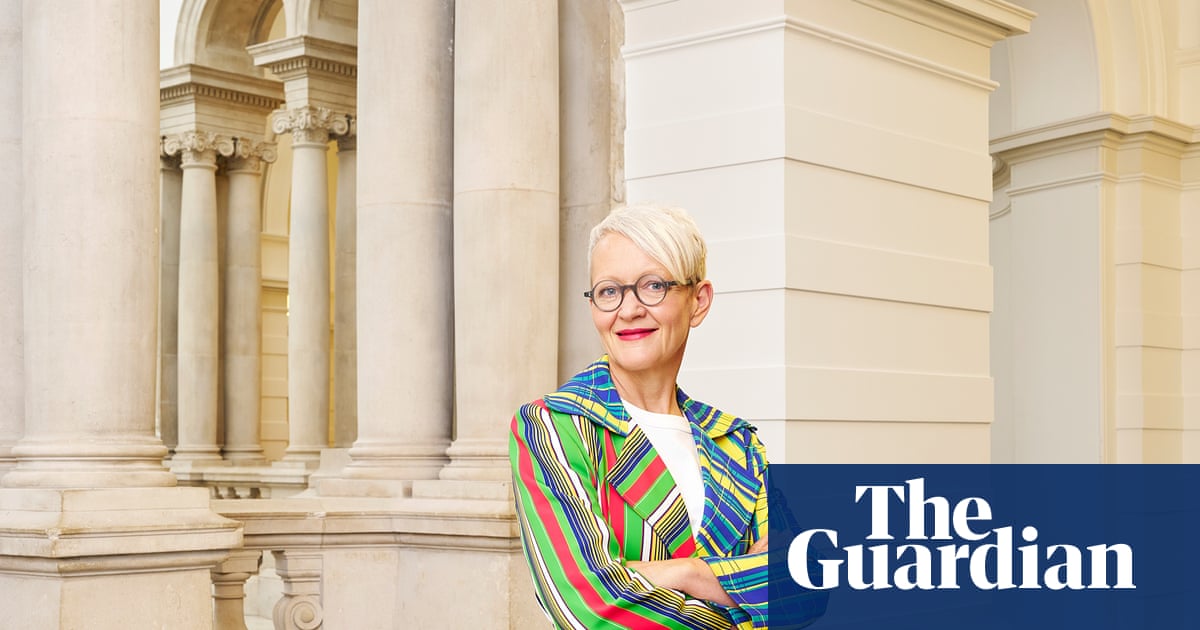
Maria Balshaw is to step down as the director of Tate in 2026, after a challenging nine-year tenure when she steered the organisation through the Covid-19 pandemic and had to deal with fluctuating attendance figures and financial instability.
Balshaw, who joined as director in June 2017 after a celebrated spell as the leader of the Whitworth in Manchester, said it was a privilege to serve as director but now was the time for her to move on.
She said: “With a growing and increasingly diverse audience, and with a brilliant forward plan in place, I feel now is the right time to pass on the baton to the next director. My greatest thrill has always been to work closely with artists, and so it is fitting that Tracey Emin’s exhibition will be my final project at Tate.”
Balshaw was described as a “trailblazer” by the Tate chair, Roland Rudd, who said she “has never wavered from her core belief – that more people deserve to experience the full richness of art, and more artists deserve to be part of that story”.
Balshaw had the unenviable task of taking over from Nicholas Serota, the long-serving director, who established Tate Modern 25 years ago and is currently chair of Arts Council England.
She oversaw several successful projects, including Steve McQueen’s Year 3 – when the artist took a “collective school portrait” of 76,000 seven and eight-year-olds from across London.
Group shows, including Women in Revolt and Life Between Islands highlighted previously marginalised artists, something Balshaw was proud of, while there were major shows for Leigh Bowery and Emily Kam Kngwarray.
The director was also critical of arts organisations taking sponsorship from fossil fuel companies. Balshaw said that “the public has moved to a position where they think it is inappropriate”, adding that Nicholas Cullinan, the director of the British museum, which has a £50m deal with BP – would have to deal with “public dismay” over the sponsorship. Tate dropped its deal with BP in 2016.
There were some high profile scandals as well, including in 2022 when the Guardian revealed the organisation paid a six-figure settlement to two artists after they claimed discrimination, victimisation and harassment.
Balshaw inherited a large, sprawling institution with four sites around the UK and mounting running costs, which were severely impacted by the pandemic.
There were other redundancies in 2020, as Tate attempted to save £4.8m during the Covid-19 lockdown. Earlier this year Tate announced it would cut 7% of its workforce in an effort to reduce funding deficit from the pandemic.
Staff represented by the PCS union have recently been on strike over pay and conditions, and the industrial action could continue into 2026.
Figures released in March showed that Tate Modern and Tate Britain had experienced a 27% decline in attendance since 2019 – although as Balshaw said in a letter to the Guardian, 2019 was Tate’s most successful year ever in terms of attendance.
Tate Modern, which celebrated its 25th anniversary this year, welcomed more than 76,000 people during its birthday weekend – a turnout insiders hope could signal a rebound in 2025.
The expansion of the National Gallery and a change in its collection policy to include modern art was also seen as a threat to Tate by some senior figures, although Balshaw welcomed the move.
Tate said the search for a new leader would start imminently. The Department of Culture, Media and Sport and the Tate trustees will oversee the process with the prime minister ultimately signing off on the appointment.
Balshaw said she is looking forward to working on the Tracey Emin show in early 2026, and will concentrate on working with artists and her writing.
Disclaimer : This story is auto aggregated by a computer programme and has not been created or edited by DOWNTHENEWS. Publisher: theguardian.com




