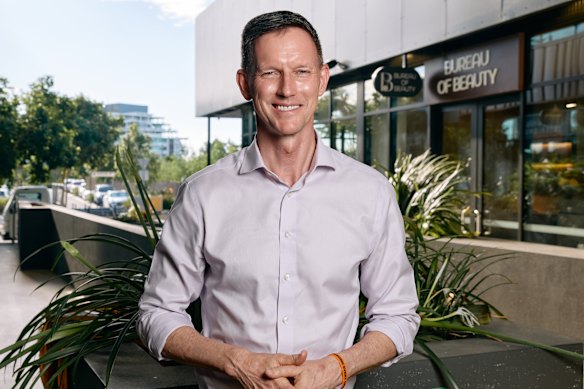
Mark Bailey doesn’t think he’s been handed a poisoned chalice, despite being given a portfolio historically perceived as a burden reserved for political rivals.
Following the late 2023 resignation of former premier Annastacia Palaszczuk, who had loyally stuck by Bailey through periods of intense scrutiny, the former transport minister quit cabinet before almost certainly being dumped by incoming leader Steven Miles.
But less than 12 months later, he was back on the frontbench as the shadow health spokesman following Labor’s election loss.
“I took it on the chin,” Bailey said of his cabinet resignation, in a wide-ranging interview with this masthead in his electoral office in Yeerongpilly.
“That’s politics. Sometimes things happen.”
Bailey says his promotion to the health portfolio shows Miles “has a lot of faith in me” – and he’s adamant the role is an opportunity.
“[Health is] something that does touch everybody’s lives in so many ways.
“Sure, [it’s] one of the hardest portfolios … but that should be something to aspire to.
“It’s not something to complain about. It’s something to get results in.”
The LNP, meanwhile, have based their health sector “results” on Labor’s failures, as they pledge to reduce ambulance ramping rates, cut long elective surgery waitlists, and deliver infrastructure within budget.
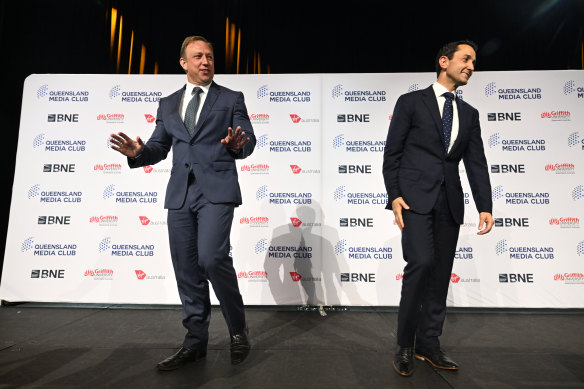
With near-weekly regularity over the past year, Premier David Crisafulli and Health Minister Tim Nicholls have said these undertakings are needed to “heal Labor’s health crisis” and revive services after a “decade of decline”. And a large number of voters agree.
Polling in the lead-up to the 2024 state election showed healthcare and aged care ranked as one of the top issues influencing Queenslanders.
Despite a misstep on abortion that nearly saw Crisafulli’s campaign come unstuck, voters ultimately entrusted the LNP to manage the state’s health system for the next four years.
It leaves a long road ahead for the shadow health spokesman, who now has three years to convince Queensland that Labor can return to the driver’s seat in a portfolio that has traditionally been an area of strength. But Bailey is confident he’s got the gumption for it.
“We are going back to the grassroots, reconnecting with the community, and we intend to earn that trust by the next election,” he says.
Bailey’s office sits on the corner of King Arthur Terrace in Yeerongpilly’s Green Riverside Village, a short ride from his home on Brisbane’s southside, an area in which he’s lived since moving with his family from the Gold Coast at the age of six.
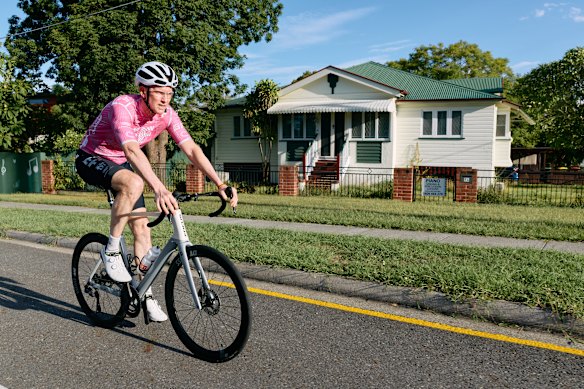
His parents divorced seven years after relocating, leaving his mum to raise the household as a single parent. “That was a bit more challenging, but my mum always provided,” he says.
Bailey’s interest in politics – “the contest of ideas” – was stirred during his time at Cavendish Road State High School. By his final year, he was meeting with a group of students in the library every day before school to “dissect The Courier-Mail and debate the issues of the day”.
“We realised we were progressive people, so we all joined the Labor Party the year after,” he says.
Two brushes with death during adolescence have lent extra weight to Bailey’s current political ambitions.
While riding to school along Logan Road, aged 15, he was struck by a car door and “catapulted” into oncoming traffic. In an ambulance to the Princess Alexandra Hospital, paramedics were only convinced that the teen had been run over after seeing black tyre marks on the back of his legs.
Two years later, Bailey spent more than a week in the Mater Hospital’s intensive care unit with salmonella food poisoning.
“The health system saved my life twice,” he says. “I’m not from a wealthy background, it was [because of] a strong public health system and fantastic staff and doctors.”
After high school, Bailey studied at the University of Queensland. Despite graduating with a teaching degree, he spent the next nine years as the deputy chair of Brisbane City Council’s planning committee.
He left council after almost a decade to spend time out of the “political bubble”, moving briefly to Byron Bay before relocating to New York City to pursue acting.
“I kind of felt it in my bones that I wanted to be in a major city,” Bailey says of his 2½-year sabbatical. “It was a great experience … I don’t regret a single day.”
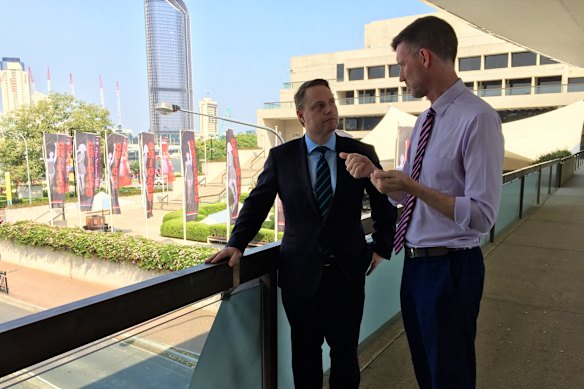
But politics eventually lured him back to Australia. “In the world, there are a lot of actors [but] there aren’t enough activists … there are not enough people getting progressive change done. I thought that’s where I’m most needed.”
He returned to Queensland during the height of Campbell Newman’s reign as LNP premier. “We rapidly went back to the 1980s almost overnight in terms of the meanness [and] the disrespect for people,” Bailey says.
“That made me riled up … and then I decided I’d come back and run for state politics again.”
Bailey won the seat of Yeerongpilly and was given the roads, ports and energy portfolios after Labor ousted Newman in 2015.
Two years later, he replaced Jackie Trad as minister for transport and main roads.
He cites efforts under those portfolios – accelerating the Gold Coast’s light rail project and the Coomera Connector – as some of his proudest political achievements. But the years were not without controversy.
During his time as transport minister, Bailey faced criticism for cost blowouts on key projects, notably a $960 million excess on Brisbane’s Cross River Rail.
He was briefly stood aside from cabinet during a Crime and Corruption Commission investigation into his use of a personal email address in 2017, though was later cleared of corruption.
Last week, he was named in the ongoing CFMEU inquiry, accused of directing his department and its contractors to negotiate with the embattled union, and of running a “sham” consultation on the government’s Best Practice Industry Conditions policy.
When asked about the recent scrutiny, Bailey said it wouldn’t be appropriate to comment at this early stage. “I’m obviously watching, as many people are, the inquiry closely.”
Bailey was among the crowd on Tuesday when Nicholls delivered a keynote speech outlining the LNP’s Hospital Rescue Plan, drafted after a review of Labor’s Hospital Expansion Program found significant budget blowouts and delays.
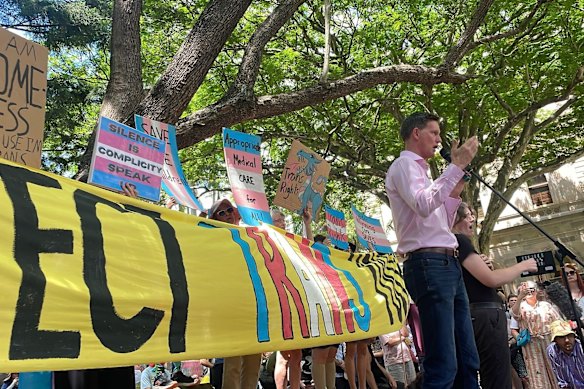
Such critique, Bailey says, overlooks the challenges wrought by the COVID-19 pandemic. “The criticisms were politically convenient, but the reality was, the pandemic had huge impacts on construction costs, both public and private,” he says.
“We said the criticism was code for cuts and costs. What’s the first thing [the LNP] did? They did a review and cut a whole lot of the hospital expansion programs.”
If Bailey sees his current portfolio as a redemption arc for past misgivings, he’s not wasting time pitching his case to Queenslanders.
Returning serve on the LNP’s “decade of decline” claim, he’s been vocal about the Crisafulli government’s mishandling of last year’s flu season, its ban on pill testing and gender services for children, and its wage negotiations with public healthcare workers.
“You need a government where, from the top down, public health is the first priority that drives every single decision,” he says. “That’s not happening [in Queensland] right now.
“And you need a premier and health minister on the same page … and a health minister who will back best-practice medicine over ideology.
“In opposition, there are a range of things you can achieve through pressure and advocacy … and [the LNP] will get maximum pressure from me.”
Start the day with a summary of the day’s most important and interesting stories, analysis and insights. Sign up for our Morning Edition newsletter.
Disclaimer : This story is auto aggregated by a computer programme and has not been created or edited by DOWNTHENEWS. Publisher: www.smh.com.au