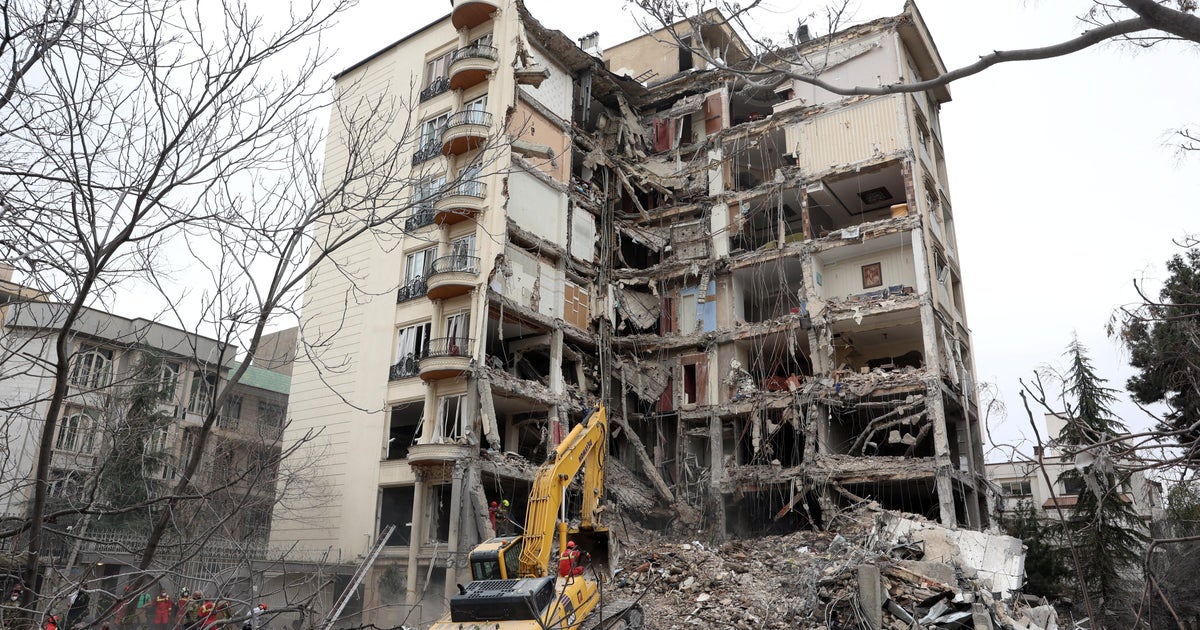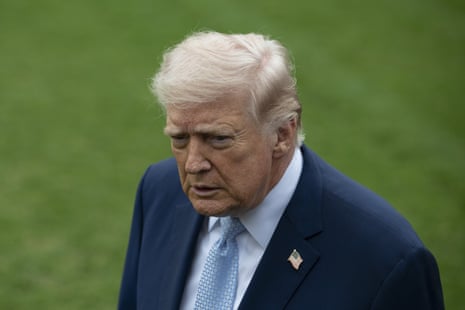
The US president, Donald Trump, has said he has instructed the defence department to postpone all airstrikes against Iranian power plants and energy infrastructure for a five day period. This is subject to the “success” of ongoing “meetings and discussions”, he said in a Truth Social post.
Trump said that, over the last two days, Washington and Tehran had “very good and productive conversations regarding a complete and total resolution of our hostilities in the Middle East”.
Trump said on Saturday that he was giving Iran 48 hours – until shortly before midnight GMT on Monday – to open the strait of Hormuz, the vital waterway effectively being blocked by Iran which carries about a fifth of global oil and liquefied natural gas supplies.
Tehran said it would “irreversibly destroy” essential infrastructure across the Middle East, including vital water systems, if the US followed through on Trump’s threat.
Iran also said it would hit power plants in all areas that supply electricity to American bases, “as well as the economic, industrial and energy infrastructures in which Americans have shares.”
Stock markets are suddenly surging after Donald Trump claimed that Tehran and Washington held “very good and productive conversations” over an end to the US-Israeli war on Iran. You can follow all of the latest market reaction in our business blog:
Iran’s Fars news agency, which is affiliated with Iran’s Islamic Revolutionary Guard Corps (IRGC), has quoted a source as saying there has been “no direct or indirect” contact between Iran and Donald Trump, in contradiction to the US president’s statement just now.
The unnamed source said Trump “backed down” after hearing Iran would target power plants in “West Asia”. We have not been able to independently verify the contents of this report yet.
From Trump’s statement it is not clear how Iran and the US might agree to “a complete and total resolution” to end the US-Israeli war. Trump previously said its goal was regime change and called on “the Iranian people to take back their country”.
But goals have shifted throughout the conflict, which never had clear objectives and has had a hugely damaging economic toll throughout the world, including in the US, where gasoline prices have soared.
The Iranian government remains in power despite the US and Israel assassinating senior leaders, including the former supreme leader, Ali Khamenei, whose son Mojtaba replaced him.
Analysts say there is no clear off-ramp for Trump, whose limits of power have been tested by Iran’s continued ability to control the strait of Hormuz.
The US president, Donald Trump, has said he has instructed the defence department to postpone all airstrikes against Iranian power plants and energy infrastructure for a five day period. This is subject to the “success” of ongoing “meetings and discussions”, he said in a Truth Social post.
Trump said that, over the last two days, Washington and Tehran had “very good and productive conversations regarding a complete and total resolution of our hostilities in the Middle East”.
Trump said on Saturday that he was giving Iran 48 hours – until shortly before midnight GMT on Monday – to open the strait of Hormuz, the vital waterway effectively being blocked by Iran which carries about a fifth of global oil and liquefied natural gas supplies.
Tehran said it would “irreversibly destroy” essential infrastructure across the Middle East, including vital water systems, if the US followed through on Trump’s threat.
Iran also said it would hit power plants in all areas that supply electricity to American bases, “as well as the economic, industrial and energy infrastructures in which Americans have shares.”
In this explainer, my colleague Hannah Ellis-Petersen has looked at why desalination plants are so critical to Gulf countries and how civilians would be affected if water infrastructure was destroyed during the war. Here is an extract:
Desalination plants are considered to be among the most sensitive civilian infrastructure in the Gulf. They perform a simple but critical role: they turn seawater into drinking water by removing the salt and other minerals. Today that mostly done through a process called reverse osmosis.
These plants are completely essential for the survival of the Gulf countries, which are small but have vast cosmopolitan cities and industries and are situated in an arid desert environment. These countries have very little rainfall, few lakes or rivers and only a small supply of natural freshwater springs.
People living in the Gulf region rely on just a few desalination plants to provide most of their water, making them a highly strategic and high-impact target in any conflict. These plants are situated on the coast, just across the Arabian Gulf from Iran, making them an easy target for an Iranian attack.
Disabling the plants would have a significant impact on civilian populations and could be an effective way to cause suffering in a country without direct attacks on civilians.
It would also be devastating for industry, which also relies on the water from these plants. The Gulf’s crucial energy industries, including oil and gas, are interconnected with the desalination of water.
The UK’s prime minister, Keir Starmer, has said there is “no assessment” that the UK is being targeted by Iranian missiles, after the Israel Defense Forces (IDF) claimed on Saturday that Tehran had weapons that could reach up to 4,000km (2,485 miles).
The IDF also said the Iranian regime posed “a global threat”, claiming Iran’s missiles “can reach London, Paris or Berlin”, without offering any evidence to back up its claim.
The IDF statement was issued after an attempted Iranian strike on the joint UK-US base on Diego Garcia – in the Chagos Islands – on Thursday night into Friday morning. Diego Garcia is about 3,800km (2,360 miles) from Iran and home to an airbase capable of accommodating long-range US bombers.
Asked whether the UK was within range of Iranian missiles, Starmer told the media this morning:
We carry out assessments all the time in order to keep us safe, and there’s no assessment that we’re being targeted in that way at all.
But of course, it’s my job to ensure that British interests, British lives are always uppermost in my mind.
What we need here is de-escalation, and that’s why we had a statement from a number of countries last week about what we need to do about the Strait of Hormuz, which obviously needs careful coordination and a viable plan.
But it’s very important we defend our interests, we defend British lives, but without getting dragged into the war, and that’s the clear divide I’ve put in place.
An Iranian missile would have to travel roughly 2,700 miles to reach London. With the war continuing to escalate, the UK has confirmed it is authorising the use of British military bases to strike Iranian missile launchers that are targeting commercial ships in the strait of Hormuz, as my colleagues write here. Previously, UK bases were only being used to strike Iranian sites targeting British allies and interests in Gulf states.
The internet blackout in Iran has entered its 24th day, according to internet monitoring group NetBlocks. It said in a post:
It’s now day 24 of Iran’s internet blackout, with the measure passing 552 hours among the most severe registered in any country.
International connectivity remains unavailable to the general public while authorities maintain a selective whitelist for global access.
‘Whitelisting’ allows some officials and institutions to continue to access the internet while it is blocked to the general public.
Those without access to Starlink or alternative ways to communicate – which are often expensive – are cut off, not only from the outside world but the blackout also severely curtails Iranian’s ability to communicate with each other, making mobilisation, for example, much more difficult.
The Guardian US’s deputy business editor, Callum Jones, has written an interesting analysis piece exploring why China, which has long braced for a Gulf oil supply shock, is in a much better position to absorb disruption to energy supplies than many other Asian countries. Here is an extract:
Oil exports from the Middle East have tumbled 61% over recent weeks, according to maritime tracking consultancy Kpler – roiling countries across Asia, which relied on the region for 59% of its crude imports in 2025, and have been left racing to conserve energy.
But China, the world’s second-largest economy, appears to be in a very different position to much of the continent.
Its energy system has “significant buffers”, Michal Meidan, the head of China energy research at the Oxford Institute for Energy Studies, an independent research institute, explained in a recent paper – from huge reserves of oil and liquefied natural gas (LNG) to a robust domestic supply, including alternative energy sources, such as wind and solar.
China, which usually imports around half its crude supplies from the Middle East, is not as exposed as other Asian economies. “While a very high proportion, it is limited when compared to Japan, India or Korea,” said Meidan. Japan, for example, sources about 95% of its oil imports from the region.
Asked about Donald Trump’s threats to “obliterate” Iran’s power plants, Chinese foreign ministry spokesperson Lin Jian warned:
“If the war expands further and the situation deteriorates again, the entire region could be plunged into an uncontrollable situation.”
“The use of force will only lead to a vicious cycle,” he said, adding that the war – which the US and Israel are widely seen to have started illegally – should not have begun in the first place.
The UAE’s defence ministry said in a post this morning that its defences were responding to incoming missile and drone “threats” from Iran. There were no immediate reports of any injuries or casualties.
It said yesterday that it had responded to 1773 drones, 345 ballistic missiles and 15 cruise missiles since the war was triggered by the killing of the former Iranian supreme leader, Ali Khamenei, in joint US-Israeli airstrikes on 28 February, which then led to Iran responding with attacks across the Gulf region.
Iran’s defence council threatened to lay sea mines to block the entire Gulf if Iran’s coasts or islands are attacked, according to the Fars news agency.
“Any attempt by the enemy to attack Iranian coasts or islands will naturally, and in accordance with common military practice, cause all access routes and communication lines in the Persian Gulf and the coasts to be mined with various types of naval mines, including floating mines that can be released from the coasts,” the statement read.
“In that case, the entire Persian Gulf will practically find a situation similar to the strait of Hormuz for a long time. This time, along with the strait of Hormuz, the entire Persian Gulf will be practically blocked, and the responsibility for it will lie with the threatening party.”
Iran has permitted some friendly countries, including China, India, Pakistan, to secure safe passage of their ships through the strait, but has effectively closed it down for others by attacking ships and reportedly laying mines in the waterway, causing a major crisis in global energy markets.
The US is reportedly considering plans to occupy or blockade Iran’s strategically crucial Kharg Island to pressure Tehran to reopen the vital waterway, in what would mark a huge escalation in the US-Israeli war.
As we have reported, the US president, Donald Trump, who is facing domestic pressure as oil prices soar, warned late on Saturday that the US will “obliterate” Iranian power plants if the strait is not open before a 48-hour deadline (23:44 GMT on Monday according to the time of his Truth Social post).
Keir Starmer is expected to hold an emergency Cobra meeting this afternoon to discuss the economic fallout of the Iran war on the British people, amid the threat of higher inflation. Chancellor Rachel Reeves and Bank of England governor Andrew Bailey are expected to be in attendance
The meeting comes after Starmer spoke with Trump overnight for 20 minutes in a meeting that was described as “constructive”. The two leaders spoke about the “essential” need to reopen the strait of Hormuz to boost oil supplies to the global economy.
Iran has effectively halted all traffic through the shipping corridor since the US and Israel launched a joint attack on Iran on 28 February. Trump has pushed for European allies to send ships to help reopen the strait but no leaders have so far committed to get involved.
If you’re just joining us, here’s a snapshot of the latest key developments in week four of the US-Israel war on Iran.
-
Iranian president Masoud Pezeshkian said “threats and terror” were strengthening Iranian unity, after Donald Trump warned on Sunday he would “obliterate” Iranian power plants if the strait of Hormuz was not fully opened within 48 hours. Tehran said it would destroy essential infrastructure including water systems across the Middle East if Trump carried out his threat.
-
The situation facing the world is now more serious than the two oil crises in 1973 and 1979 as well as the gas crisis sparked by Russia’s invasion of Ukraine, said the head of the International Energy Agency, Fatih Birol. It was like “two oil crises and one gas crash put all together”. He also said the IEA would release more stockpiled oil “if it is necessary”.
-
The Israeli military said early on Monday it had begun a wide-scale wave of strikes targeting Iranian infrastructure in Tehran. Air raid sirens sounded across parts of northern and central Israel, including Tel Aviv, and the occupied West Bank overnight on Sunday, warning of incoming missiles from Iran.
-
Global stock markets were hit and oil prices rose on Monday after Trump’s 48-hour ultimatum and Israel’s warning that the war would continue for several more weeks. A wave of selling is sweeping through Asia-Pacific markets, while the US dollar is rising today as investors seek out a safe haven.
-
British prime minister Keir Starmer is set to chair an emergency meeting on the economic fallout from the Iran war on Monday, with chancellor of the exchequer Rachel Reeves and Bank of England governor Andrew Bailey also attending, the UK government has said.
-
Vietnam and Russia are expected to sign energy deals during Vietnamese prime minister Pham Minh Chinh’s visit to Moscow that started on Sunday, Hanoi said, amid surging fuel prices in Vietnam.
-
Indonesia is eyeing up to 80tn rupiah ($4.7bn) in savings to cushion its economy from the fallout of the war, according to the government.
-
New Zealand will temporarily permit fuel meeting Australian standards to be supplied domestically for up to 12 months, the government said, amid soaring prices and potential supply risks.
-
Four ambulances belonging to the Jewish community ambulance service have been set on fire in London, with police saying they were treating the incident as an “antisemitic hate crime”.
With agencies
Donald Trump’s threat to “obliterate” Iran’s power plants unless the strait of Hormuz reopens is hitting global stock markets today, as reported earlier.
A wave of selling is sweeping through Asia-Pacific markets at the start of the week. Japan’s Nikkei has dropped by 3.4% in afternoon trading, China’s CSI 300 has lost 2.8% and South Korea’s KOSPI index has slumped by 6.5%.
The US dollar, meanwhile, is rising today as investors seek out a safe haven.
Trump’s ultimatum, and Tehran’s threat to “irreversibly destroy” essential infrastructure across the Middle East in response, means the war is entering a new phase of escalation, analysts warn.
Markets are finally starting to wake up to the gravity of the potential for long-term impact on energy markets, reports Neil Wilson, an investor strategist at Saxo UK.
This is an escalatory doom loop – or ‘escalation trap’ with currently no realistic off-ramp. Neither side has an incentive to back down as the costs of doing so are increasing day by day. Each side thinks pushing harder will force the other to back down.
As well as fears of escalation in the conflict, investors are also bracing for rises in interest rates this year, with central banks under pressure to fight a rise in inflation.
See more on the Iran war’s fallout in our business blog here:
Here are some of the latest images coming in from the Middle East amid the escalating war.
Four ambulances belonging to the Jewish community ambulance service have been set on fire in London, with police saying they were treating the incident as an “antisemitic hate crime”.
Officers were called to Golders Green about 1.45am on Monday after receiving reports of a fire.
The Metropolitan police confirmed the incident in north London was being treated as an antisemitic hate crime.
The London fire brigade (LFB) said it had sent six fire engines and about 40 firefighters to the fire, which damaged four vehicles.
Several cylinders on the vehicles exploded and caused windows to break in an adjacent block of flats, the LFB said. No injuries were initially reported.
Police superintendent Sarah Jackson said police were on the scene to carry out urgent inquiries and “we are in the process of examining CCTV and are aware of online footage”.
We believe we are looking for three suspects at this early stage.
See the full story here:
Disclaimer : This story is auto aggregated by a computer programme and has not been created or edited by DOWNTHENEWS. Publisher: theguardian.com