
Iran’s parliament speaker Mohammad Bagher Ghalibaf said on Monday that “no negotiations” were held with the United States after US president Donald Trump announced talks were ongoing.
“No negotiations have been held with the US, and fakenews is used to manipulate the financial and oil markets and escape the quagmire in which the US and Israel are trapped,” Ghalibaf said in a post on X.
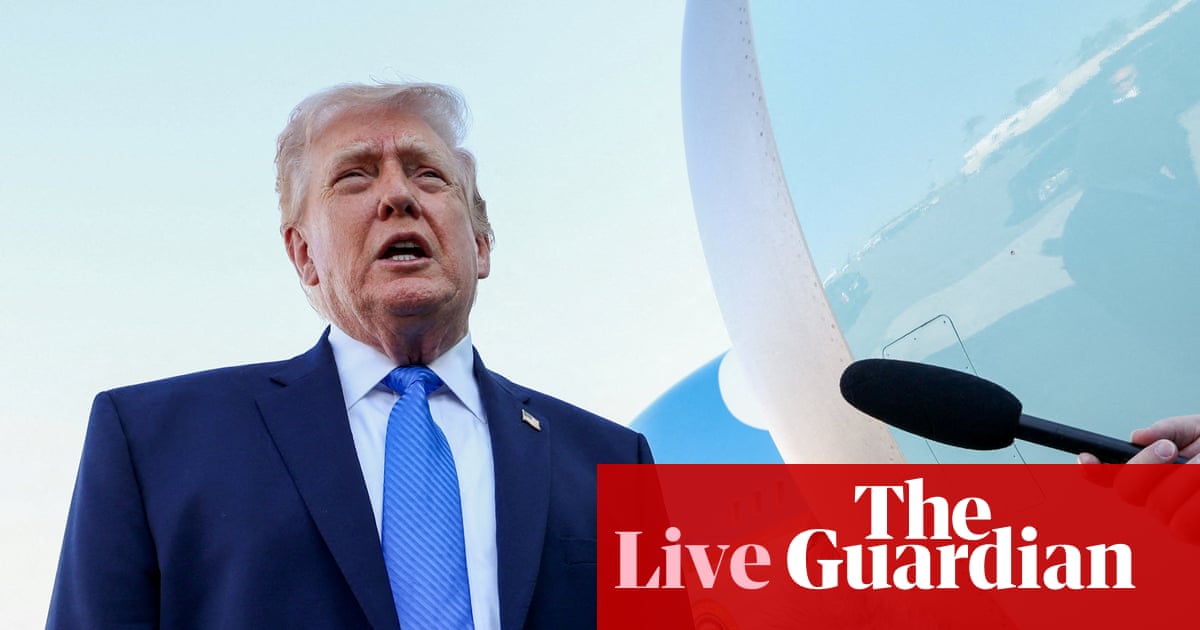
It came as US president Trump announced “very good” talks on Monday with an unidentified Iranian official after abruptly shelving plans to attack the Islamic republic’s power plants.
The Axios new site, citing an unnamed Israeli official, named Trump’s interlocutor as Ghalibaf.
Iranian foreign ministry spokesman Esmaeil Baqaei indicated that messages had been received from “some friendly countries indicating a US request for negotiations aimed at ending the war,” according to the official IRNA news agency.
The US embassy in Muscat has lifted its shelter in place guidance for the city, but the guidance remains in place for the rest of Oman, the embassy said in a post on X.
It had earlier issued a security alert for the whole country because of “ongoing activity”, without elaborating further.
The backchannel talks between Donald Trump’s special envoy, Steve Witkoff, and the Iranian foreign minister, Abbas Araghchi, were not a secret in the sense that the Egyptian foreign ministry had tweeted that conversations were under way on Sunday, 24 hours before Trump’s late Monday deadline to start blowing up Iran’s energy infrastructure.
But such is the chaos surrounding the process that the discussions – thought to be well short of negotiations – may have lasted longer than Sunday, with more than one mediator, as is often the case, jostling for the title of peacemaker-in-chief.
Pakistan’s army chief, Asim Munir, for instance, spoke with Trump on Sunday, while Pakistani prime minister, Muhammad Shehbaz Sharif, held talks with Iranian president, Masoud Pezeshkian, on Monday. It is possible Pakistan could become the venue for further talks that this time would include JD Vance, the vice-president, a private sceptic about the war. Keir Starmer, the UK prime minister, was right to warn not to bank on an early end to the conflict.
Trump insists it was the Iranians who requested to talk, and their minds had been concentrated by Trump’s threat of destroying a $10bn power plant. Tehran initially denied any talks had happened either directly or indirectly, saying:
There is no negotiation whatsoever between Tehran and Washington. The statements of the president of the United States are within the framework of an attempt to lower energy prices and buy time for the implementation of his military plans.
Iran’s lines of political authority have been in a state of chaos due to damage wreaked by the Israeli assassination campaign. Among the survivors, Pezeshkian has his strengths as a unifying figure of integrity, but is out of his depth in nuclear talks, and not fully trusted by the military. Ali Larijani, the former secretary of the supreme national security council and Iran’s political glue in the past 12 months, had just been buried. The new supreme leader was possibly in a coma, and definitely invisible. That largely left in terms of politics Mohammad-Bagher Ghalibaf, the speaker of the parliament, and a staunch supporter of the Islamic Revolutionary Guards Corps.
But Ghalibaf put out a partial denial by saying no negotiations with the US have taken place, a formula that left other options open short of direct negotiations with the US. He wrote:
Our people demand the complete and humiliating punishment of the aggressors. All officials stand firmly behind their Leader and people until this goal is achieved. No negotiations with America have taken place. Fake news is intended to manipulate financial and oil markets and to escape the quagmire in which America and Israel are trapped.
Yet gradually, the Iranian foreign ministry spokesman Esmail Baghaei opened up. The spokesman said:
Over the past few days, messages arrived through some friendly countries indicating America’s request for negotiations to end the war, which were responded to appropriately and in accordance with the country’s principled positions – Iran’s stance regarding the strait of Hormuz and the conditions for ending the imposed war has not changed.
You can read Patrick’s full analysis here:
Pakistan stands ready to host US talks with Iran, a foreign office spokesperson has told CNN, after Tehran said Donald Trump’s claims that the regime wanted to make a deal to end hostilities “fake news”.
The broadcaster quotes Tahir Hussain Andrabi saying on Monday that “if both sides agree, Pakistan is always ready to host talks”.
His comments came after contradictory statements from the US president and Iranian leadership earlier in the day.
Trump claimed there have been talks between the United States and Iran over the past day in which the two sides had “major points of agreement”, appearing to avert a potentially severe escalation of the conflict.
Tehran has denied the claim, in which Trump also speculated that a deal could soon be done to end the war. Iran’s foreign ministry spokesperson said no talks had been held with the US since the bombing campaign began 24 days ago.
HMS Dragon has arrived in the eastern Mediterranean, three weeks after an Iranian-made drone hit the British base of RAF Akrotiri, the defence secretary has said.
The Type 45 destroyer will begin “operational integration into Cyprus’s defence” from Monday night, John Healey told MPs.
The British government has faced criticism for the slowness to deploy a warship to the region, after moves by Greece and France to send extra naval support to Cyprus after the attack.
The Cypriot government has also expressed concern that the drone was able to hit the base, suggesting that the presence of the British base on the island should now be reviewed.
An Israeli strike hit Beirut’s southern suburbs on Monday, state media reported according to Agence France-Presse, hours after the Israeli army issued an order for residents of the area to evacuate.
An AFPTV live broadcast showed a cloud of smoke over the densely populated southern suburbs, which are considered a Hezbollah stronghold and have not been hit since Friday night.
While Israel’s prime minister Benjamin Netanyahu said US president Donald Trump saw a chance of an agreement with Iran, he also said Israel would continue its strikes against Iran and Lebanon.
Netanyahu said in a video statement on Monday: “We will protect our vital interests under any circumstances,” he said, adding: “At the same time, we continue to strike both in Iran and in Lebanon.”
Israel’s prime minister Benjamin Netanyahu said on Monday that he spoke with Donald Trump, who saw a chance of reaching a deal with Iran.
Trump believed there was a possibility of “leveraging the mighty achievements obtained by the IDF (Israel Defence Forces) and the US military, in order to realize the goals of the war in a deal – a deal that will preserve our vital interests,” Netanyahu claimed in a video statement released by his office.
I’ll bring you more on this shortly.
The Israel Defence Forces has claimed it had struck the main security headquarters of Iran’s Islamic Revolutionary Guard Corps (IRGC) as part of a “wave of strikes that was completed a short while ago in the heart of Tehran”.
“The headquarter was used by the IRGC to synchronize unit activities and to conduct situational assessments. It was also responsible for directing the Basij Battalions,” the IDF claimed in a statement.
In addition, it claimed: “Prior to the strike, steps were taken to mitigate harm to civilians, including the use of precise munitions, aerial surveillance, and additional intelligence.”
The attack hasn’t been independently verified.
As we’ve been reporting, Donald Trump has said he is postponing strikes on Iranian power plants for a five-day period, extending a deadline he gave the regime to open the strait of Hormuz.
The US president had threatened to ‘obliterate’ Iran’s power plants, while Tehran said in return it would ‘irreversibly destroy’ essential infrastructure across the Middle East, including vital water systems, in the conflict’s latest escalation.
The war in the Middle East is now in its fourth week as Trump declares the US and Iran had “good and productive conversations” (which Tehran denies), but what could come next?
Lucy Hough speaks to the Guardian’s diplomatic editor, Patrick Wintour.
Speaking in Memphis earlier, Donald Trump claimed that Tehran “wants to settle” and that there’s a “very good chance of a deal” with Iran.
“We’ve eliminated everything there is to eliminate in Iran, including leaders,” he said.
Tehran has “one more opportunity to end its threats” towards the United States and its allies, he said, adding:
We are now having really good discussions. They started last night, a little bit, the night before that. I think they’re very good. They want peace. They’ve agreed they won’t have a nuclear weapon. But we’ll see. We have to get it done.
As Trump repeats his suggestion that all of Iran’s leaders are “gone”, it’s worth noting that, as we reported earlier, he has also said today that the US is talking to a “top person” within the Iranian regime to try to end the war, but not the new supreme leader, Mojtaba Khamenei.
Khamenei has not been seen in public since being named supreme leader two weeks ago, after an Israeli airstrike killed his father and predecessor, Ali Khamenei, fuelling speculation about his health. Trump had made clear before his selection that he considered Mojtaba an “unacceptable” choice, and has speculated about the extent of his injuries and his ability to lead Iran.
Further, Trump told reporters earlier that there have been talks between the US and Iran over the past day in which the two sides had “major points of agreement” and said both wanted “to make a deal”.
He claimed the US and Iran are discussing 15 points to end the war, with Tehran giving up nuclear weapons as points “number one, two and three”. The US president also said he would postpone American attacks on Iranian power plants by five days after having “productive conversations” with Tehran.
Iran’s foreign ministry, meanwhile, denies that any talks with the US have taken place during the past 24 days. And per our last post, Iran’s parliament speaker Mohammad Bagher Ghalibaf has called Trump’s claims “fake news” to “manipulate” oil markets.
“No negotiations have been held with the US, and fakenews is used to manipulate the financial and oil markets and escape the quagmire in which the US and Israel are trapped,” Ghalibaf said in a post on X.
Iran’s parliament speaker Mohammad Bagher Ghalibaf said on Monday that “no negotiations” were held with the United States after US president Donald Trump announced talks were ongoing.
“No negotiations have been held with the US, and fakenews is used to manipulate the financial and oil markets and escape the quagmire in which the US and Israel are trapped,” Ghalibaf said in a post on X.
It came as US president Trump announced “very good” talks on Monday with an unidentified Iranian official after abruptly shelving plans to attack the Islamic republic’s power plants.
The Axios new site, citing an unnamed Israeli official, named Trump’s interlocutor as Ghalibaf.
Iranian foreign ministry spokesman Esmaeil Baqaei indicated that messages had been received from “some friendly countries indicating a US request for negotiations aimed at ending the war,” according to the official IRNA news agency.
Pakistan’s prime minister Shehbaz Sharif on Monday said he spoke with Iran’s president Masoud Pezeshkian, and promised Islamabad’s help in bringing peace to the region.
The pair have spoken several times in the last month, notably to exchange Ramadan and Eid greetings but also to reaffirm Pakistan’s hope for an end to the conflict with the United States and Israel.
Sharif said he extended greetings to Pezeshkian for the Persian new year and they also discussed “the grave situation in the Gulf region and agreed on the urgent need for de-escalation, dialogue and diplomacy”.
In a post on X, he said Pakistan was also committed to playing “a constructive role in advancing peace in the region”.
Several strong explosions and air alert sirens rang out on Monday in Bahrain, according to an AFP journalist, the first to be heard in the Gulf since US president Donald Trump said talks to end the war with Iran were underway.
“Citizens and residents are urged to remain calm and head to the nearest safe place,” Bahrain’s interior ministry said on social media.
Iran’s ambassador to the UK has been summoned by the Foreign Office over his country’s “reckless and destabilising actions” in Britain and overseas.
Seyed Ali Mousavi was called into the Foreign Office after an Iranian and a British-Iranian dual national were accused of carrying out hostile surveillance on London’s Jewish community.
The Foreign Office said the UK takes the threat posed by Iran and its proxies “extremely seriously”.
The diplomat was summoned on the instruction of F=foreign secretary Yvette Cooper and was met by Middle East minister Hamish Falconer.
A Foreign Office spokesman said: “The summons follows the recent charging of two individuals, one Iranian national and one British-Iranian dual national, under the National Security Act, on suspicion of providing assistance to a foreign intelligence service.
“National security remains our top priority, and we take threats posed by Iran and those who do its bidding extremely seriously.
“This government will take all measures necessary to protect the British people, including exposing Iran’s reckless and destabilising actions at home and abroad.”
Ukraine’s military intelligence has “irrefutable” evidence that Russia continues to provide intelligence to Iran, Ukrainian president Volodymyr Zelenskyy said on Monday after meeting the head of military intelligence.
“Russia is using its own signals intelligence and electronic intelligence capabilities, as well as part of the data obtained through cooperation with partners in the Middle East,” he said on X.
Kremlin last week dismissed a Wall Street Journal report that Russia was sharing satellite imagery and improved drone technology with Iran as “fake news“.
The United States has requested a meeting with Iran’s parliament speaker Mohammad Baqer Qalibaf on Saturday, a senior Iranian official told Reuters, without mentioning any proposed venue.
The official, who asked not to be identified due to the sensitivity of the matter, said the Supreme National Security Council had yet to decide on any proposed talks and Iran had yet to respond.
A calculation that the US-Israeli war on Iran is spewing greenhouse gases faster than 84 countries combined underestimates the true impact of the war on the climate, according to one of the world’s most senior climate scientists.
On Saturday, the Guardian revealed the findings of an analysis of the carbon impact of the war, which found it had led to 5 million tonnes of carbon dioxide emissions in just its first 14 days, making it a disaster not just for the people of the region, but also for the climate.
On Monday, Johan Rockström, director of the Potsdam Institute for Climate Impact Research, told the Guardian:
While this study confirms the devastating amounts of climate-damaging emissions from the ongoing war in Iran, it is very likely a dramatic underestimate of the negative effects of war on the global climate crisis. The reason is that war undermines trust and ability among nations to collectively act on the global climate crisis, and the war moves attention and finance away from investments in accelerating the path away from climate danger.
However, this does not have to be the case, if political leaders draw the right security conclusions from this war. The Iran war makes it blatantly clear that it is self-destructive for any nation to depend on oil and gas imports. Accelerating the economic path away from fossil fuels is the best step to ensure stable economic development and high resilience against future energy shocks.
Iran’s foreign ministry spokesperson has denied holding any talks with the US during the past 24 days, sharply undermining Donald Trump who claimed that the US and Iran have held “very good and productive conversations” on an end to the war.
In recent days, friendly countries sent messages indicating that the US had requested talks to end the war, but Iran had not responded, state news agency IRNA quoted the ministry spokesperson as having said.
Disclaimer : This story is auto aggregated by a computer programme and has not been created or edited by DOWNTHENEWS. Publisher: theguardian.com



