
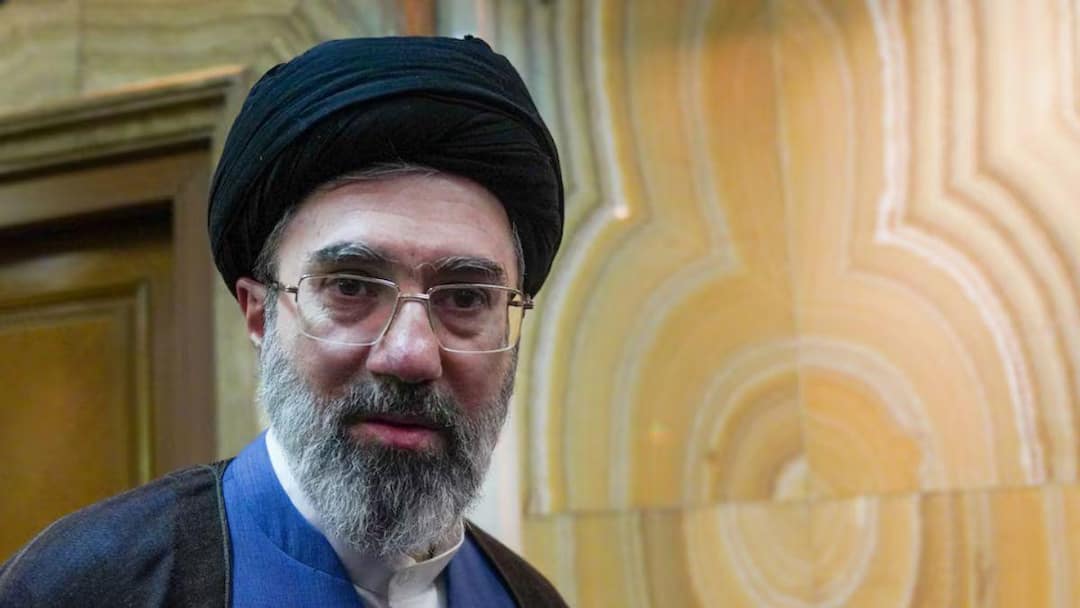
Iran’s newly appointed Supreme Leader Ayatollah Mojtaba Khamenei has rejected proposals for de-escalation conveyed through intermediaries, insisting that any talks can only take place after Israel and the United States are “brought to their knees”, according to a senior Iranian official quoted by Reuters. The remarks came during his first foreign policy discussions since taking over the position following the death of his father, Ayatollah Ali Khamenei. The stance signals a hardening of Iran’s position as the U.S.–Israeli war on Iran enters its third week with no sign of easing.
Hard Line From New Leader
According to the report, the senior official said Mojtaba Khamenei had taken a “very tough and serious” position during his first foreign policy session since being named supreme leader. It was not clear whether the leader attended the meeting in person or remotely.
The official, speaking on condition of anonymity, said two intermediary countries had passed proposals to Iran’s Foreign Ministry aimed at reducing tensions or securing a ceasefire with the United States. No details were given about the countries involved or the content of the proposals.
The supreme leader reportedly responded that it was not the right time for peace, saying negotiations could only begin once the United States and Israel were defeated and agreed to pay compensation. Under Iran’s political system, the supreme leader has final authority over all state matters, including foreign policy and military decisions.
War Enters Third Week
No new images of Mojtaba Khamenei have been released since he was chosen by a clerical assembly to replace his father more than a week ago. Iranian officials have said he suffered minor injuries in the strikes that killed the former leader, while U.S. officials have suggested the injuries were more serious, Reuters reported.
The conflict between Iran and the United States and Israel is now in its third week, with at least 2,000 people reported dead. The Strait of Hormuz remains largely closed, disrupting global shipping and pushing up energy prices, while several U.S. allies have declined requests from President Donald Trump to help reopen the vital route.
In his first public message after taking office, read on state television last week, the new supreme leader said the closure of the Strait of Hormuz should remain in place as pressure on what he called Iran’s enemies. Reuters previously reported that attempts by Middle Eastern allies to begin diplomatic negotiations had been rejected by Washington.
Related Video
Breaking News: Pakistan Bombs Kabul Residential Areas, India Condemns Attack on Civilians and Hospitals
Disclaimer : This story is auto aggregated by a computer programme and has not been created or edited by DOWNTHENEWS. Publisher: abplive.com



