
More young people have signed up to vote in Māori electorates, new figures from the electoral commission show, as New Zealand prepares for an election this year.
The rise comes after years of tense relations between Indigenous New Zealanders and the centre-right coalition government. The latest figures show 58% of eligible 18- to 24-year-olds have registered for the Māori roll, up from 50% in 2023.
What are the Māori electorates? How do they work – and how certain is their future in the New Zealand political landscape?
What are the Māori electorates?
There are seven Māori electorates – or seats – in New Zealand’s 120-seat parliament. You need to be Māori to vote in these electorates, but anyone can stand in these seats.
The electorates tend to be geographically huge, spanning multiple tribes and districts. The seat of Te Tai Tonga, for example, covers the entire South Island, Rakiura/Stewart Island and much of Wellington city – about 151,723 sq km (58,580 sq miles).
When anyone of Māori descent registers to vote, they choose whether to be on the Māori roll or the general roll.
The electoral commission said 54% of eligible voters had registered as of March for the Māori roll – up from 51% in 2023 when the last election was held.
Like everybody else, people who are registered on the Māori roll get only two votes: one for their preferred political party and another for their constituency MP. They cannot vote for a general electorate MP.
How long have Māori electorates been around?
When New Zealand first held elections in 1853, only men who owned land were able to vote. But Māori owned land communally, which rendered them ineligible.
As a temporary workaround, four special Māori seats, divided into geographic districts, were introduced in 1867. The number remained fixed until the mid-1990s, when they increased to five, and then the current seven in 2002.
In the 1980s, a royal commission proposed abolishing the seats if New Zealand moved to an electoral system of proportional representation, which it did in the 1990s. It suggested the influx of new parties under a proportional system would increase Māori representation.
But after a strong campaign from many Māori organisations, the seats were retained when New Zealand adopted its new system – mixed-member proportional representation (MMP) – which was established to stop the horse race between the two major parties and more fairly distribute seats to smaller parties based on their share of the votes.
However, the minor populist party New Zealand First, in arguing for the seats’ abolition, says Māori representation has grown to record levels with MMP: the current parliament has 33 MPs of Māori descent.
How do the Māori seats tend to swing?
The Māori electorates have tended to lean towards leftwing parties, but they have hardly been a safe zone for Labour.
When the Labour government passed controversial land legislation in the early 2000s, Māori outrage saw the birth of the Māori party, Te Pāti Māori, in 2005. Te Pāti Māori went on to support the National government after 2008.
Its support withered away until it was ejected from parliament completely in 2017, when all of the seats were claimed by Labour. Since then, the seats have largely been a jostle between Te Pāti Māori and Labour.
The other major party, centre-right National, has tended to struggle in the seats, refusing to run candidates at all between 2002 and 2023, although it has said it plans to stand candidates in the seats again this year.
Why do the Māori electorates divide opinion?
Debate over the existence of the Māori seats has existed for about as long as the seats themselves, and it’s a question that flares during most elections.
But with Māori making up less than 20% of the New Zealand population, putting them to a referendum would mean their future would be largely decided by non-Māori.
That has raised questions similar to those heard during the Voice referendum in Australia, over whether the rights of a minority should be put to a vote by the majority.
In 2014, the former National prime minister John Key, when asked by the New Zealand Herald whether he would abolish the seats, said it was an issue he wouldn’t go near. “Do you really want to rip a country apart?” he said.
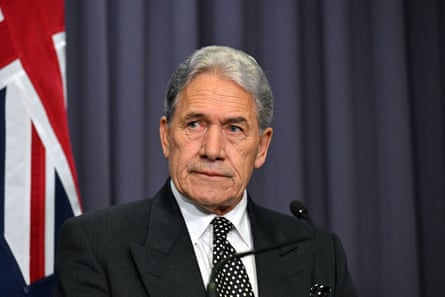
NZ First’s leader and foreign affairs minister, Winston Peters, first campaigned for a Māori seat in 1975. After the 1996 election, NZ First represented all the Māori seats. But in recent years, Peters has turned instead to calling for their abolition.
“If the Māori seats have enough people who support them then they could be retained. But the fact is, we currently have a record number of Māori in parliament and in cabinet,” Peters said in February.
Another partner in the governing coalition, Act, also supports getting rid of Māori seats. But the prime minister, Christopher Luxon, said it had not been discussed by his caucus.
Opposition parties have condemned the proposal, with the Labour MP Kieran McAnulty calling it “a cheap and cynical attempt to try and get some cheap votes”, before adding that it should be Māori who decide the future of the seats.
Disclaimer : This story is auto aggregated by a computer programme and has not been created or edited by DOWNTHENEWS. Publisher: theguardian.com


