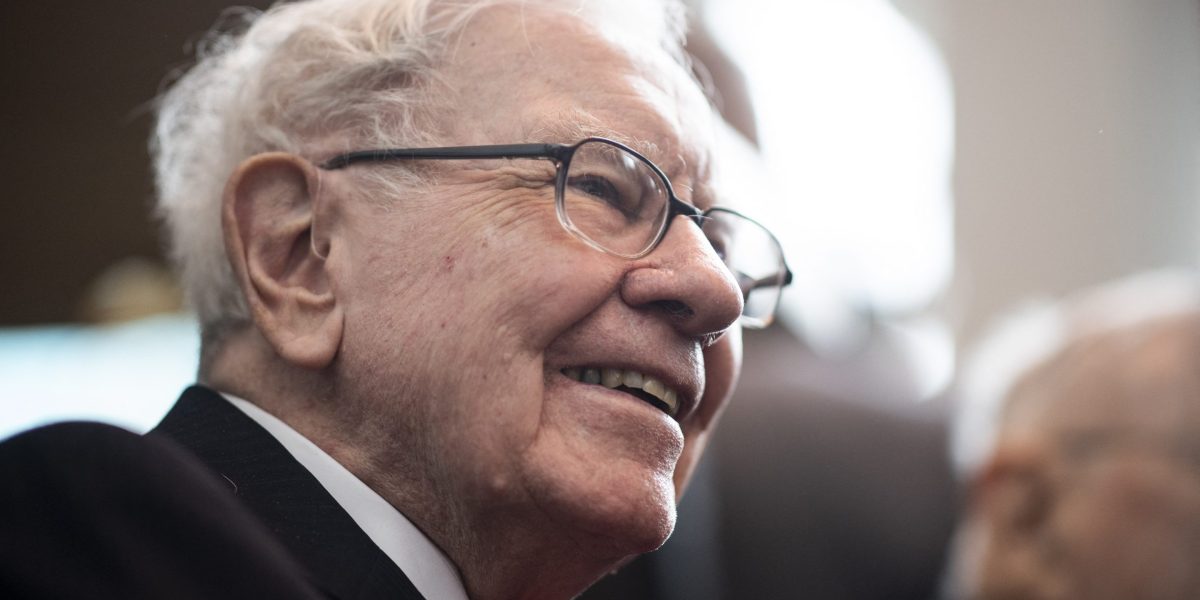
Larry Fink, CEO of the world’s largest asset management firm, BlackRock, has been on Americans’ case about not saving enough for retirement.
In a 2025 shareholder letter, he warned “almost no one is close” to the amount they need to save for retirement. BlackRock, which has $14 trillion in assets under management, surveyed 1,000 registered voters, asking how much they’d need to retire comfortably, and the average response was roughly $2.1 million.
“That’s a lot,” Fink wrote. “More than I was expecting.”
And it’s far more than Americans have actually saved for retirement. BlackRock’s survey showed 62% of Americans had less than $150,000 saved for retirement—only 7% of what they think they need to retire comfortably.
But if Americans had listened to the likes of Fink and legendary investor Warren Buffett, they could be in better shape to migrate to Florida, hit the links, and enjoy uninterrupted time with their grandkids.
Buffett’s primary rule for saving for retirement is to invest for the long term and allow compound interest (interest earned on interest) power your portfolio.
“My wealth has come from a combination of living in America, some lucky genes, and compound interest,” Buffett wrote in his Giving Pledge letter in 2010. Buffett, along with Bill Gates and Melinda French Gates started the Giving Pledge, encouraging billionaires and other ultra-high-net-worth individuals to give away the vast majority of their wealth during their lifetime or upon their death.
The former Berkshire Hathaway CEO, who retired at the end of 2025, often uses a snowball analogy to illustrate how compound interest does much of the work for investors.
“Life is like a snowball,” Buffett has said, according to his authorized autobiography, The Snowball: Warren Buffett and the Business of Life. “The important thing is finding wet snow and a really long hill.”
Invest and stay the course
Nothing better showcases the power of compound interest than Buffett himself. The 95-year-old, who still lives in a $31,000 Nebraska home despite having a net worth of nearly $150 billion, says he accumulated most of his wealth after the age of 65, when the power of compound interest kicked into high gear.
In his formula for wealth creation, Buffett stays invested in productive assets and doesn’t sell when stocks appear volatile in the short term.
And while Buffett insists his strategy works, America’s economy doesn’t always reward the people who most deserve it.
“My luck was accentuated by my living in a market system that sometimes produces distorted results, though overall it serves our country well,” Buffett wrote in his Giving Pledge letter. “I’ve worked in an economy that rewards someone who saves the lives of others on a battlefield with a medal, rewards a great teacher with thank-you notes from parents, but rewards those who can detect the mispricing of securities with sums reaching into the billions.”
“In short, fate’s distribution of long straws is wildly capricious,” he added.
But part of financial success is knowing how to plan for the long term, which isn’t widely taught or understood by Americans.
“Most financial advisors recommend workers start saving for retirement as soon as they enter the workforce,” according to a February report by the National Institute on Retirement Security. “However, the reality of preparing for retirement often differs from the expectations of workers or the overly optimistic financial projections of advisors.”
Fink has also long warned about America’s retirement crisis, with one of his other main arguments being the security system will fail because life expectancy is rising.
“The problem will only get harder and nastier as the oldest Gen-Xers start to retire,” Fink argued. “They’re the first generation primarily dependent on 401(k)s. And the 401(k) trend is growing with Millennials and Gen Z.”
Disclaimer : This story is auto aggregated by a computer programme and has not been created or edited by DOWNTHENEWS. Publisher: fortune.com