
Cemlyn Davies,Wales political correspondentand
Angela Ferguson,BBC Wales
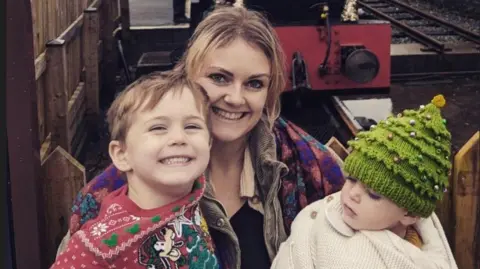 Mari Ellis Dunning
A mother-of-two says she is “baffled” that smacking a child was ever legal in Wales, nearly three years on from a ban being introduced.
Mari Ellis Dunning, 32, said she sought “to meet my kids with compassion before anything else”.
Hundreds of parents have been sent on out-of-court parenting courses since the smacking ban was introduced in March 2022, according to a Welsh government report, and “fewer than five” cases had since been referred to the Crown Prosecution Service (CPS), with no convictions.
But opponents of the ban said it was “diverting police from serious crime and placing unnecessary strain on social services”.
According to the Welsh government review, the aim of the act was to “protect children’s rights whilst adopting an educating and preventative approach which avoids criminalising parents”.
It showed 365 people were referred for out-of-court parenting support by police staff between April 2022 and March 2025, instead of facing prosecution.
Of those referred to the service, 310 completed the course with 265 reporting a positive outcome.
Data from three of Wales’ four police forces revealed 6,200 physical punishment cases since the act was implemented.
This was up from 3,900 before the so-called smacking ban.
However, the report found no one in Wales had been convicted of common assault or battery on a child in their care since the ban came into force.

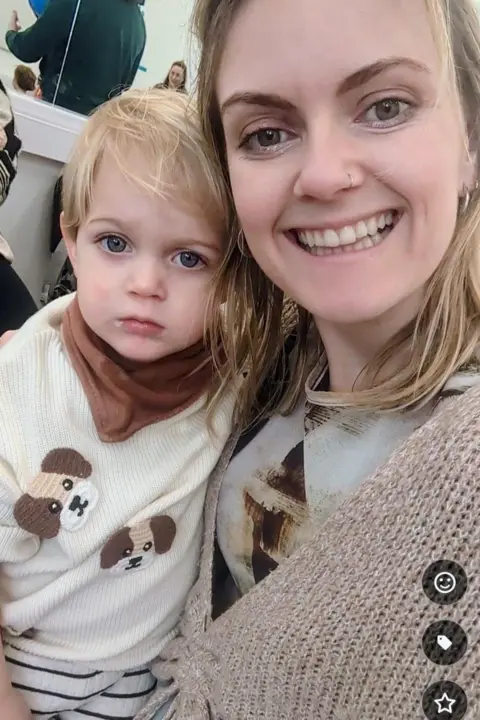 Mari Ellis Dunning
Mari, who lives in Aberystwyth with her sons aged two and five, said for children to grow up to become well-regulated adults “how can you possibly teach them that by physically harming them”.
“I don’t know why I would ever feel the need to physically harm a child,” said Mari.
The ban saw the removal of reasonable chastisement as a legal defence.
This means anyone who smacks a child in their care in Wales can be arrested and prosecuted for assault.
Wales’ Social Justice Cabinet Secretary Jane Hutt said the ban was “something we must be very proud of”.
 Antonia Merola Jones
Antonia Merola Jones, a single parent-of-one from Mold, Flintshire, said the ban should also be in force across the border.
“I was delighted to see it introduced in Wales and I’m proud that we have such a great approach to tackling this problem,” she said.
“I just want to see it widely introduced. I think England should learn from Wales and potentially introduce this across the border too.”
Antonia, who is head of marketing and communications for a university, said physical punishment offered no proven benefits and created a risk of harm.
She added she felt public support in ending that punishment of children was strong, which was backed up by the review reporting “a general trend towards disapproval of physical punishment”.
“Growing up in the 1980s, smacking was accepted but now it is very much frowned upon,” said Antonia.
‘Positive parenting techniques’
Frontline services had reported that “positive parenting techniques and awareness from parents and carers is increasing”, the report said.
Although “some professionals such as the police reported an increase in time-consuming processes” as a consequence of the legislation, such challenges had been “partially mitigated”, it added.
The data shows the aim of the act “is being realised in practice”, the review says.
Cabinet secretary for Social Justice Jane Hutt said the review “shows the law is embedding well”.
“I thank all of those who played their part in this legislation…because this is something that we must be very proud of.”
However, Simon Calvert from the Be Reasonable campaign group who opposed the ban said: “This law is costing the taxpayer millions, diverting police from serious crime and placing unnecessary strain on social services.”
“Instead of focusing on neglect and abuse, professionals are being drawn into intrusive investigations of ordinary, loving families.”
He said it was “impossible to reconcile the Welsh government’s claim that implementation is ‘progressing well’ with the data it has produced”.
Sociologist and Be Reasonable supporter Dr Ashley Frawley said “being investigated for assaulting your child is huge”, adding it would go on a person’s record, even without prosecution.
Dr Frawley, from the Centre for Parenting Culture Studies at the University of Kent, added that authoritative parenting “often uses smacking as a back-up method combined with a lot of love”.
“The vast majority of parents know the difference between beating a child and a light tap,” she said.
NSPCC chief executive Chris Sherwood said the “trailblazing work” in Wales had “changed public opinion and improved social services’ ability to safeguard children”.
“The report further echoes the unequivocal evidence that physical punishment is harmful, ineffective and damages the trust and wellbeing at the heart of family relationships,” he said.
He said the charity questioned why England and Northern Ireland were “lagging behind”.
Disclaimer : This story is auto aggregated by a computer programme and has not been created or edited by DOWNTHENEWS. Publisher: BBC