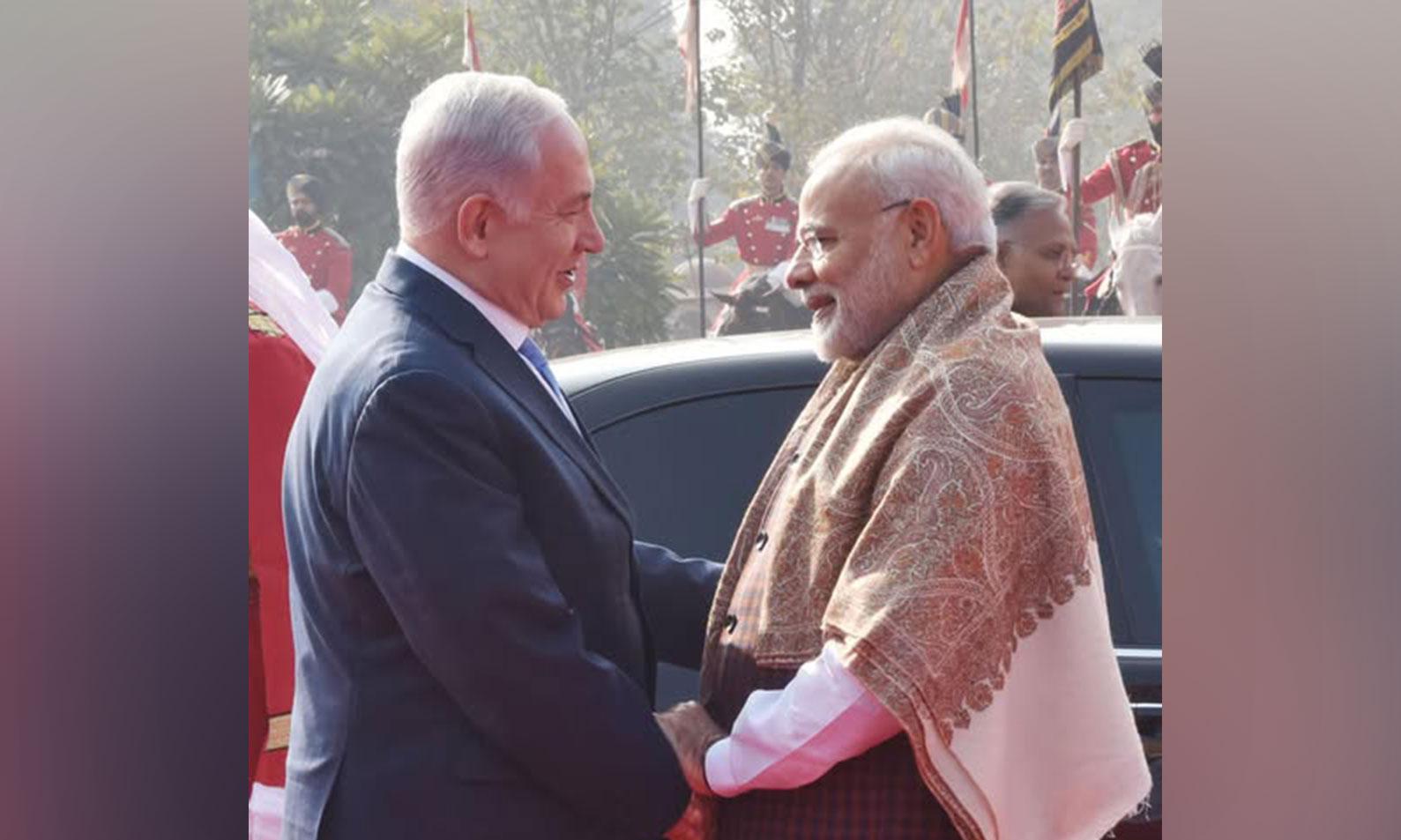
Tel Aviv: Israeli Prime Minister Benjamin Netanyahu outlined the travel plans and engagements for Prime Minister Narendra Modi’s upcoming visit to Israel, set to take place from Wednesday, describing it as a “historic” moment reflecting the deepening ties between the two nations.
Speaking at the start of the weekly government meeting on Sunday, Netanyahu said the visit would showcase the “special relationship” forged in recent years between Israel and the global power that is India, as well as his personal rapport with PM Modi.
“This week, expression will be given to the special relationship that has been forged over recent years between Israel and the global power that is India, and between myself and its leader, Prime Minister Modi. We are personal friends; we speak frequently on the phone and visit one another,” Netanyahu said.
Highlighting past engagements, he noted that both leaders had visited each other’s countries and maintained close communication. He said the upcoming visit would further strengthen bilateral cooperation across economic, diplomatic, and security spheres.
“I have visited India, and Modi has visited here. We waded together in the waters of the Mediterranean, and much water has flowed since then in the Mediterranean, the Ganges, and the Jordan, though less in the Jordan. In any case, one thing has happened: The fabric of this relationship has grown tighter, and he is coming here so we can tighten it further through a series of decisions related to strengthening cooperation between our governments and countries. This includes economic, diplomatic and security cooperation,” he said.
Netanyahu said PM Modi is scheduled to deliver a speech at the Knesset and will participate in an innovation event in Jerusalem. The two leaders will also visit Yad Vashem, Israel’s official memorial to the victims of the Holocaust.
Emphasising technological collaboration, Netanyahu said the two countries would promote cooperation in high-tech sectors, including artificial intelligence (AI) and quantum computing.
“So, on Wednesday, the Prime Minister of India will arrive. He will deliver a speech at the Knesset, and I am sure you will all be there. We will also hold an innovation event in Jerusalem and visit Yad Vashem together. I should also note an additional point of special cooperation: We will promote cooperation in high-tech, AI, and quantum computing. I say AI and quantum not because they are the future, but because they are the present. We, of course, want to be among the world’s leading nations in these fields,” Netanyahu stated.
India last week hosted the AI Impact Summit in New Delhi, the first international AI summit in the Global South, bringing together policymakers, industry leaders, academics, and civil society representatives to deliberate on responsible AI governance and inclusive technological advancement.
Sharing his address in a post on X, Netanyahu described PM Modi’s upcoming visit as “historic,” referring to him as his “dear friend.”
“The bond between Israel and India is a powerful alliance between two global leaders. We are partners in innovation, security, and a shared strategic vision. Together, we are building an axis of nations committed to stability and progress. From AI to regional cooperation, our partnership continues to reach new heights. Looking forward to seeing you in Jerusalem, PM Modi!” his post added.
This will be PM Modi’s second visit to Israel, following his 2017 trip when he became the first-ever Indian Prime Minister to visit the country.
On the diplomatic front, Netanyahu spoke about a broader strategic vision involving a network of alliances in and around the Middle East.
He described the concept as a “hexagon” of partnerships that would include India, Arab nations, African nations, Mediterranean countries such as Greece and Cyprus, as well as other Asian nations.
“I want to say something regarding the diplomatic aspect: In the vision I see before me, we will create an entire system, essentially a ‘hexagon’ of alliances around or within the Middle East. This includes India, Arab nations, African nations, Mediterranean nations (Greece and Cyprus), and nations in Asia that I won’t detail at the moment. I will present this in an organised manner,” he said.
“The intention here is to create an axis of nations that see eye-to-eye on the reality, challenges, and goals against the radical axes,” he added, referring to what he described as radical Shia and emerging radical Sunni blocs.
Disclaimer : This story is auto aggregated by a computer programme and has not been created or edited by DOWNTHENEWS. Publisher: deccanchronicle.com