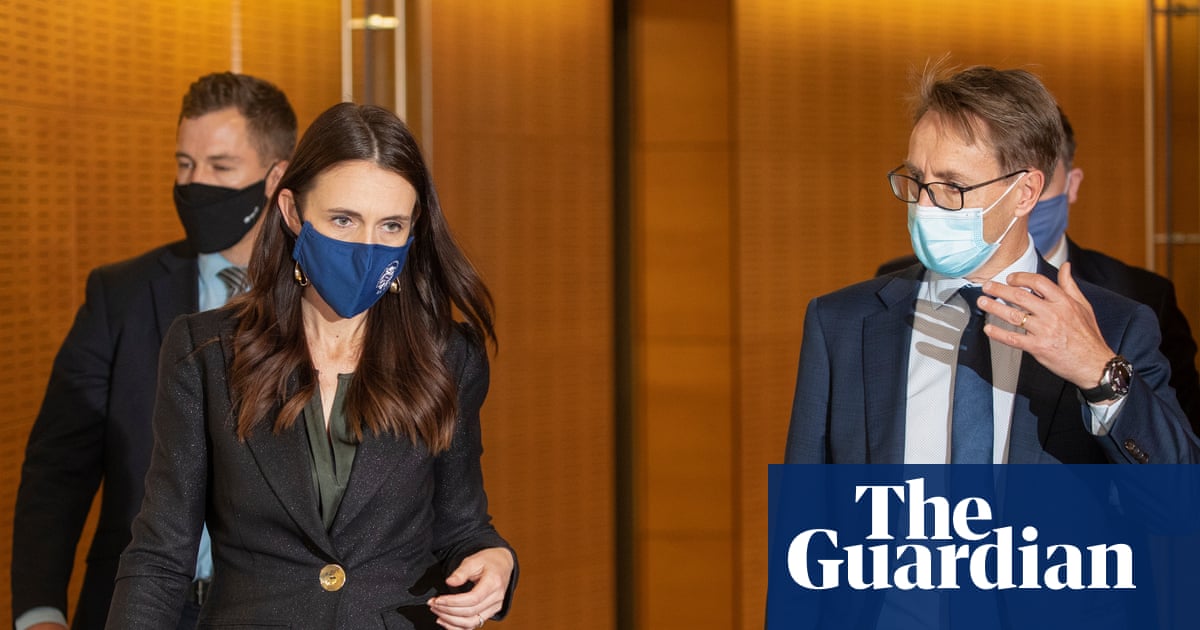
A royal commission into New Zealand’s Covid response has found it was one of the best in the world but acknowledged the period had left “scars”.
The second of two inquiry reports on the pandemic was released on Tuesday and focused on the period between February 2021 to October 2022, when the government changed from an elimination strategy to one of suppression and minimisation of the virus. It also examined vaccine safety and the government’s immunisation programme, lockdowns and tracing and testing technology.
The royal commission was established in 2022 by Jacinda Ardern’s Labour-led government, which was in power during the pandemic.
New Zealand has recorded 5,641 Covid deaths since 2020. The country’s strict response, which included lockdowns, vaccine mandates and border quarantine helped to save tens of thousands of lives. But as the pandemic wore on, some anger over the restrictions set in and a small but vocal fringe of anti-vaccine and anti-mandate groups emerged, leading to a violent protest on parliament’s lawns.
The first phase of the inquiry, released in late 2024, found New Zealand had one of the lowest rates of Covid deaths per capita among developed countries. It largely accepted the need for vaccine mandates, while acknowledging they had caused distress and economic harm to some New Zealanders.
In the report released on Tuesday, the commission found that New Zealand did well in responding to the pandemic and the decisions and methods used in the response were “considered and appropriate” but also identified where the response was “lacking”.
“New Zealand’s response strategy and settings weren’t always sufficiently responsive to changing circumstances; for example, they weren’t adapted early enough to deal with later variants of the virus,” it said.
“At a time when speed was often critical, some decisions had to be made without enough information and data, or without sufficient consideration of all the impacts that might arise, or without important checks and monitoring.”
The commission said it heard from many people who expressed pain and anger about the impacts of the pandemic and the response, and there were lessons to be learned from their experiences.
“The pandemic, and the response to it, has left scars,” it said.
“During the period examined in this phase, people continued to die and others suffered long-term health impacts. Some lost all faith in government and other institutions, and remain disengaged, sceptical or even hostile towards them today.”
It said ministers and officials were facing a complex and high-stakes situation and were “doing the best they could”, adding that evidence showed New Zealand had “among one of the best pandemic responses in the world”.
But it noted while restrictions such as vaccine mandates were a valid tool for a pandemic response, they should be “treated with great care”.
Before listing 24 recommendations, the report noted that its goal was “not to apportion blame but to ensure New Zealand is better informed ahead of the next pandemic”.
The commission found that exiting the elimination strategy was difficult, and the lack of a timely update on the strategy meant the response appeared to many to be “over-centralised and risk-averse”. It suggested leaders should present elimination strategies as “temporary from the outset” to help manage public expectations.
On the issue of vaccine hesitancy, the commission said the concerns raised were “not grounded in reliable evidence or aligned with scientific consensus”. It suggested governments should continue to be guided by the best scientific evidence and an agency should be tasked with monitoring trust and social cohesion.
The health minister, Simeon Brown, said while New Zealanders supported the initial 2020 Covid response, the restrictions continued longer than necessary and the economic costs were not given sufficient weight.
“New Zealanders made enormous sacrifices and placed enormous trust in their government. We owe it to them to understand what happened and learn from it.”
In a joint statement, Ardern and the former deputy prime minister Grant Robertson said they accepted the findings and recommendations of the commission, RNZ reported.
“We got a lot right. More than most. But there are areas that could have been better,” they said.
The Labour leader, Chris Hipkins, said the country now needs to strengthen its institutions, public trust and processes to face a future pandemic.
“Over the past two years, the government has cut public health capability while commissioning multiple reviews that repeat the same conclusions,” Hipkins said.
“National now needs to answer a simple question: are we better prepared for the next pandemic today than we were in 2020?”
Disclaimer : This story is auto aggregated by a computer programme and has not been created or edited by DOWNTHENEWS. Publisher: theguardian.com