
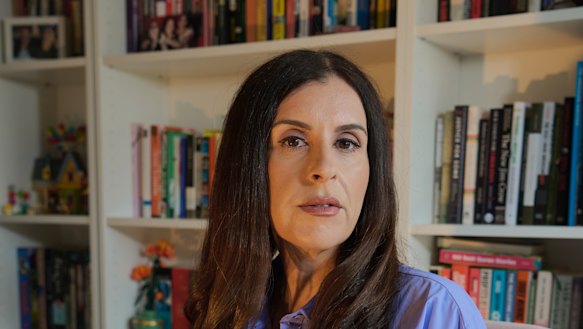

Newcastle Writers Festival has defied a national firestorm over Dr Randa Abdel-Fattah that led to the cancellation of Adelaide Writers’ Week, naming the Palestinian-Australian author in its 2026 program.
Dr Abdel-Fattah’s appearance at the festival on March 28 was announced on Friday morning, a day after the NSW arts minister stressed the need for social cohesion as questions were raised in NSW Parliament about the event’s $250,000 government grant.
In January, the Adelaide Festival board disinvited Abdel-Fattah from Adelaide Writers’ Week, a move which set off a boycott by 180 writers, led festival director Louise Adler to resign, and to the 2026 event being cancelled.
Abdel‐Fattah will discuss her novel, Discipline, “reflecting on the role of fiction in challenging injustice and offers insight into her writing process and the urgent themes shaping her work”.
She will also appear alongside Evelyn Araluen and Cheng Lei in a panel discussion the same day about resurgent racism, widening inequality and the tightening grip of censorship in conversation with lawyer Josh Bornstein.
Newcastle Writers Festival director Rosemarie Milson said she issued the invitation to Abdel-Fattah last August after reading her book. She said she came under no pressure, either from government or her board, to rescind that invitation.
“The book is good, and it really is unique, a part of the flourishing movement in literature in western Sydney and centres on a Muslim journalist and academic and touches on contemporary issues,” Milsom said.
“An invitation to appear in a writers’ festival program is not an endorsement of a writer’s personal views, and we support an individual’s right to freedom of expression. She is in conversation about her book and in a panel discussion and that’s a broad panel who have their own views on things, whose views I don’t profile based on politics or religion. That would be dangerous.”
Abdel-Fattah has come under fire for past social media posts that said Zionists had “no claim to cultural safety” and that institutions that considered “fragile feelings of Zionists” were “abhorrent”.
This week she has said that those comments had been taken out of context. She was also criticised for posting an illustration of a paraglider with a Palestinian flag parachute as her Facebook profile photo the day after the October 7, 2023, Hamas attack on Israel. She has since said she was not aware of the scale of the attack at the time.
In NSW Parliament on Thursday, Liberal MP Aileen MacDonald questioned whether it was appropriate for the Newcastle Writers Festival to receive its $250,000 state grant if Dr Abdel-Fattah was on the bill. Programming and funding decisions should ensure taxpayer funds support a broad cross-section of the community, not narrow political interests, she said.
Emphasising the need for “social cohesion” and Jewish arts lovers to feel welcome, Arts Minister John Graham said: “I’m also not a big fan of cancel culture.
“I do not support cancelling Thomas Friedman or Deborah Conway or a range of Palestinian artists. That backfires pretty rapidly. That is my starting point. But we do have expectations about how people will behave. We will not accept hate speech. The laws are clear. We do expect festivals and cultural institutions to make a contribution to social cohesion. Everyone has a responsibility to do that.”
A rebel literary festival created in direct response to the cancellation of Adelaide Writers’ Week this week announced that it will feature Abdel-Fattah and former Adelaide Writers’ Week director Louise Adler, the two women at the centre of the major event’s implosion.
Start the day with a summary of the day’s most important and interesting stories, analysis and insights. Sign up for our Morning Edition newsletter.
From our partners
Disclaimer : This story is auto aggregated by a computer programme and has not been created or edited by DOWNTHENEWS. Publisher: www.smh.com.au


