As I type this, the computer screen looks blurry – even with a larger font and double spacing. I briefly considered voice recognition software but decided to hold off. After recent surgery, I’m still neuroadapting.
At 51, I finally had eye surgery to free myself from corrective lenses worn for over four decades. I first got very thick glasses at age 10, and they’d been the bane of my existence ever since. But technology had come a long way since 1984, and new options promised genuine improvement. My saviour was intraocular lens (IOL) replacement surgery – effectively cataract surgery, replacing the eye’s natural lens with a clear synthetic one tailored to my severe vision impairment. The promise was intoxicating: no more glasses, no more contact lenses, no future cataracts.
For years, I had flip-flopped on whether surgery was the answer. Many people with poor vision never take that step, and I understood why. When your eyesight is at stake, caution feels not just sensible but virtuous. For eyes, the safest option is to do nothing. Glasses were inconvenient, sometimes limiting, but they worked and were familiar, and that had its own comfort. I worried about the small but real risks, about regret, and questioned what was driving me. Was I chasing convenience? Vanity? Was it wrong to chase an upgrade rather than accepting decline? Or was it reasonable, at this stage of life, to want a different relationship with my body? It’s an argument plenty of people have with themselves, and there’s no single right or wrong answer.
As I was wheeled into the operating theatre, my emotions ran high. Beyond understandable anxiety, I was saying goodbye to a version of myself I’d lived with for over 40 years. It wasn’t a version I particularly liked, but it was familiar. Under the blurred hospital lighting, memories flooded back.
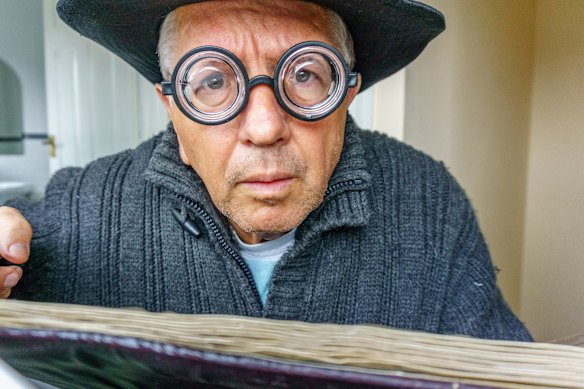
In Year 4, I began struggling with schoolwork. My teacher pulled me aside – what was wrong? Nothing Miss, the blackboard is just blurry. I was diagnosed as massively short-sighted and given hefty, black-rimmed prescription glasses. In one sense, it was relief – my learning difficulties weren’t intellectual, just optical. But I was suddenly burdened with a heavy, conspicuous accessory.
I’d assumed I’d wear glasses only in class, taking them off at recess and lunch to enjoy sport. I was crestfallen when the doctor explained I needed them all the time. For an active young boy, it felt like a kind of death. I kept playing sport and frequently broke my glasses. In 1984, glasses weren’t cheap. “Just stop playing sport,” my frustrated parents told me. That was never going to happen.
Glasses made me a target. I was teased as “four-eyes”, had the frames ripped from my face, sometimes forced to fight – half-blind – to get them back. Other times, I left them on my desk to avoid ridicule, only to return and find them hidden or stolen. A cruel game for a boy already self-conscious about his myopia.
High school brought different but equally painful challenges. No one wanted to date the pimple-faced kid with Coke-bottle glasses. Organised sport was out of reach – no coach picked me. Swimming and beach culture proved difficult; cool kids wore slim mirrored Oakleys, not chunky clear lenses. At minus 9 dioptres, I wasn’t legally blind – but without glasses, I functioned as if I were. As a rebellious youth, without sport to occupy me, I started attending heavy metal gigs, joining mosh pits and stage diving. You can imagine the chaos when my glasses were knocked onto darkened venue floors, crushed beneath stomping boots.
In 1997, a similarly blind friend convinced me to try disposable contact lenses. I struggled at first, unable to fit them onto my mutant-sized eyeballs. “Keep going,” he urged, “I want you to do this.” He was right. Once I managed them, things changed overnight. I joined my first competitive sporting team. I had my first long-term girlfriend. I carried myself with confidence. But contact lenses brought their own risks: chronic eye dryness, infections, strict rules about sleep. I often lost tiny lenses on bathroom floors and once convinced myself one had disappeared behind my eyeball.
My hideously elongated eyeballs had held me back long enough. The surgeon measured them at 28 millimetres, compared to the normal 23 millimetres. I wore scratchy contact lenses for 28 years, still relying on glasses at night. As I aged, my optical surface changed, making contacts increasingly difficult. My prescription was so severe that LASIK eye surgery was never an option. It had been over 40 years, and my formative years – which still carried the most trauma – had been forged through thickened security glass.
I couldn’t explain all this baggage to my calm anaesthetist on surgery day. But my surgeon understood at my post-op appointment, where I quickly became a blubbering but grateful mess. With my new IOLs, my distance and intermediate vision are now excellent. Near vision remains a work in progress – multifocal IOLs split light into multiple focal points, and the brain must learn to select the correct image. This neuroadaptation happens gradually over weeks and months. But I can already hug and play with my three young sons without fear of a stray elbow shattering my double-glazed windows. Exhausted from parenting, I’m free to accidentally fall asleep in their beds at bedtime.
What I didn’t expect was that this surgery would change more than my eyesight. It has quietly untethered me from decades of embarrassment, limitation, and vigilance. I’m learning – slowly – to trust my vision and release an old identity shaped by blur and compromise. I still automatically reach for my glasses when I wake up, and the screen remains fuzzy. But for the first time in my life, the future looks unmistakably clear and unencumbered.
Peter Papathanasiou is a Canberra-based writer.
The Opinion newsletter is a weekly wrap of views that will challenge, champion and inform your own. Sign up here.
 Peter Papathanasiou is a writer living on Ngunnawal land. His books have been published internationally and are now being adapted for the screen.
From our partners
Disclaimer : This story is auto aggregated by a computer programme and has not been created or edited by DOWNTHENEWS. Publisher: www.smh.com.au