TOKYO, Dec 11 (News On Japan) –
A new material known as metal-organic frameworks, or MOF, developed by Kyoto University’s special professor Susumu Kitagawa, 74, has been thrust into the global spotlight after Kitagawa was selected for this year’s Nobel Prize in Chemistry, drawing renewed attention to its potential applications across industry.
[embedded content]
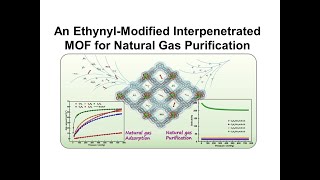
MOF is characterized by a jungle gym-like architecture filled with extremely small, countless pores capable of trapping large volumes of gas, making it a promising new material for a range of commercial uses. One company working to bring MOF into practical use is Atomis, a Kyoto University startup where Kitagawa serves as scientific adviser.
Atomis CEO Daisuke Asari said Kitagawa’s approachable personality has been essential to the company’s efforts, noting that he interacts with everyone without barriers, describing him as “just an easygoing old guy” who treats all colleagues equally.
For the past eight years, Atomis has been conducting experiments and verification trials aimed at commercializing MOF. Asari explained that while universities can only produce quantities in the milligram-to-gram range, the cost had been considered prohibitively high — with one kilogram estimated to cost tens of millions of yen to as much as 100 million yen. Bringing MOF into real-world use, he said, meant reducing the production cost to below 10,000 yen per kilogram.
MOF traditionally required high temperatures and high pressure for synthesis, resulting in very high production costs. After years of trial and error, however, the company achieved a breakthrough two years ago, enabling MOF to be produced by mixing powdered materials at room temperature and atmospheric pressure. The innovation made low-cost, large-scale production feasible for the first time.
Asari believes the Nobel recognition will serve as a powerful tailwind, spurring interest among companies that may consider incorporating MOF into their products. He noted that new materials are difficult to introduce into the market unless prices fall significantly, adding that broader public interest and growing demand among potential clients would accelerate adoption.
One such example is Ohara Palladium Chemical, a Kyoto-based chemical manufacturer that has developed a gas-adsorption agent using Atomis-produced MOF. In a demonstration involving a jar of cigarette butts emitting a strong odor, passing the gas through a filter containing MOF eliminated the smell completely by trapping odor-causing gases within its pores.
Executive managing director Masayoshi Ohara said that beyond simply removing odors, MOF has the potential to address deeper issues, such as improving workplace environments at factories where workers may quit due to hazardous gases. Using MOF-based materials to absorb such gases, he said, could contribute to solutions for broader social challenges.
The new material that formed the basis of the Nobel Chemistry Prize carries enormous potential, and its practical applications are only beginning to emerge.
Source: TBS
[embedded content]
Disclaimer : This story is auto aggregated by a computer programme and has not been created or edited by DOWNTHENEWS. Publisher: newsonjapan.com