North Korea is tightening import controls on detergents, soap and stationery as part of a broader push to promote domestic consumer goods, following the ninth congress of the Workers’ Party of Korea, which identified the modernization of local industrial factories and the localization of consumer goods as key priorities.
According to a Daily NK source in North Pyongan province, starting last month the Central Trade Guidance Bureau approved changes to order lists that trading companies send to Chinese trading partners, resulting in items such as shampoo, soap, detergents and stationery being significantly reduced or removed. Confectionery including cookies and candy, as well as beverages, have also been dropped from approved import categories.
Import curbs reflect self-sufficiency push
The tightening of controls appears focused primarily on everyday consumer goods and reflects the authorities’ longstanding emphasis on self-reliance and prioritizing domestically produced products.
In particular, North Korean authorities appear to be scaling back imports of daily necessities to reduce dependence on Chinese goods and expand the use of products made at newly built local industrial factories.
Trading agencies are currently maintaining or expanding imports of raw materials while sharply cutting imports of consumer goods outside of special categories. The Trade Guidance Bureau has been refusing to approve imports of daily necessities on the grounds that “our-style products can adequately meet demand.”
The source explained that cheap, high-quality Chinese goods are being restricted in order to expand consumption of products made at local industrial factories built across the country under the “Local Development 20×10 Policy.”
Detergents and soap, along with stationery, are subject to restrictions for the same reason. The source noted that following the ninth party congress report’s emphasis on expanding the supply of domestically produced school supplies as part of the “new generation education environment improvement” policy, Chinese stationery has effectively been excluded from approved import categories.
Imports of confectionery and beverages may continue shrinking as well, given the growing emphasis on expanding production at local industrial factories inside North Korea.
Concerns over price hikes and quality gap
These developments have prompted expressions of concern inside North Korea. The source said that “every time imports of consumer goods have been controlled in the past, market prices have only gone up,” adding that North Korean people who have grown accustomed to the quality of imported products “will not easily accept lower-quality domestic goods.”
In practice, North Korean authorities have long sought to restrict the circulation of imported goods in local markets under the banner of promoting domestic consumption, but simple crackdowns have proved insufficient to reduce market demand for imported goods. This time, authorities appear to be attempting to cut supply at the source by blocking imports outright, and critical reactions to this approach have already begun to emerge.
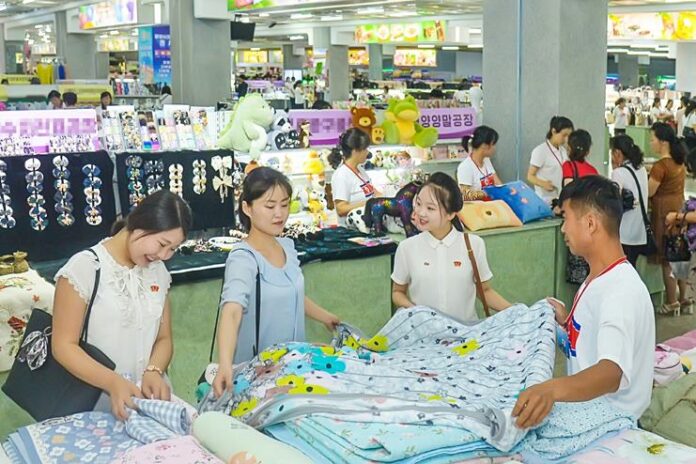
Meanwhile, major department stores and foreign currency shops in Pyongyang are still receiving steady supplies of high-priced imported daily necessities.
This has fueled resentment, with some questioning whether the restrictions are intended to prevent only ordinary North Korean people from accessing imported goods. The source noted that “while the state is controlling imports to boost local factory production and expand domestic consumption, people with money and connections still use expensive imported goods,” adding that “in the end, the import restrictions only reduce the choices available to ordinary people.”
A Note to Readers
Daily NK operates networks of sources inside North Korea who document events in real-time and transmit information through secure channels. Unlike reporting based on state media, satellite imagery, or defector accounts from years past, our journalism comes directly from people currently living under the regime.
We verify reports through multiple independent sources and cross-reference details before publication. Our sources remain anonymous because contact with foreign media is treated as a capital offense in North Korea—discovery means imprisonment or execution.
This network-based approach allows Daily NK to report on developments other outlets cannot access: market trends, policy implementation, public sentiment, and daily realities that never appear in official narratives. Maintaining these secure communication channels and protecting source identities requires specialized protocols and constant vigilance.
Daily NK serves as a bridge between North Koreans and the outside world, documenting what’s happening inside one of the world’s most closed societies.
Disclaimer : This story is auto aggregated by a computer programme and has not been created or edited by DOWNTHENEWS. Publisher: dailynk.com