A recent survey found that a whopping 40% of student loan borrowers say that their loans have negatively affected their ability to cover their basic needs, such as food, housing and transportation – a financial burden that becomes even more apparent around the holiday season.
At first glance, someone like Ben L should not be struggling financially. He attended Georgetown University and Columbia University for his undergraduate and graduate degrees, respectively, and now earns a six-figure salary working at a biotech company. Still, the 36-year-old is drowning in student debt.
“I have never once used all of my vacation days, because I cannot afford to go anywhere,” he said.
He has $95,000 in Sallie Mae loans (private, not federal) left to pay off from his master’s program, which he completed in 2018, along with the credit card debt that he has accrued over the past 15 years living in New York City. Around the holidays, Ben L is reminded of the debts keeping him from participating in the merriment and generosity of the season.
“It would be nice to participate in some sort of nominal gift-giving, but it’s just not possible. None of my friends expect that of me,” he said. “In fact, a lot of them are actively keeping me afloat financially.”
Ben’s monthly student loan payments come out to about $1,850 a month, he said. Tacking that onto the rent for his one-bedroom Hell’s Kitchen apartment and other expenses, including complicated medical bills, leaves little room for much else. “My life is not that spare – I live fine, I eat enough, and I’m fine – but there’s literally no extra for anything,” he said. “I essentially live paycheck to paycheck.”
Ben L’s story is far from unique. The recent survey, from the Institute for College Access & Success (TICAS) and Data for Progress, found that over a third of respondents said their loans negatively affected their ability to cover healthcare costs for themselves or their dependents; 52% of borrowers said their loans negatively affected their ability to save for retirement while 45% said their debt has negatively affected their housing plans.
“The most concerning thing for me is the percentage of borrowers that report making tradeoffs between covering basic needs and making student loan payments,” said Michele Zampini, associate vice-president of federal policy and advocacy at TICAS.
“It’s telling us that whatever kind of safeguards theoretically remain in the repayment system are not working properly to protect borrowers from [having to make] those tradeoffs.”
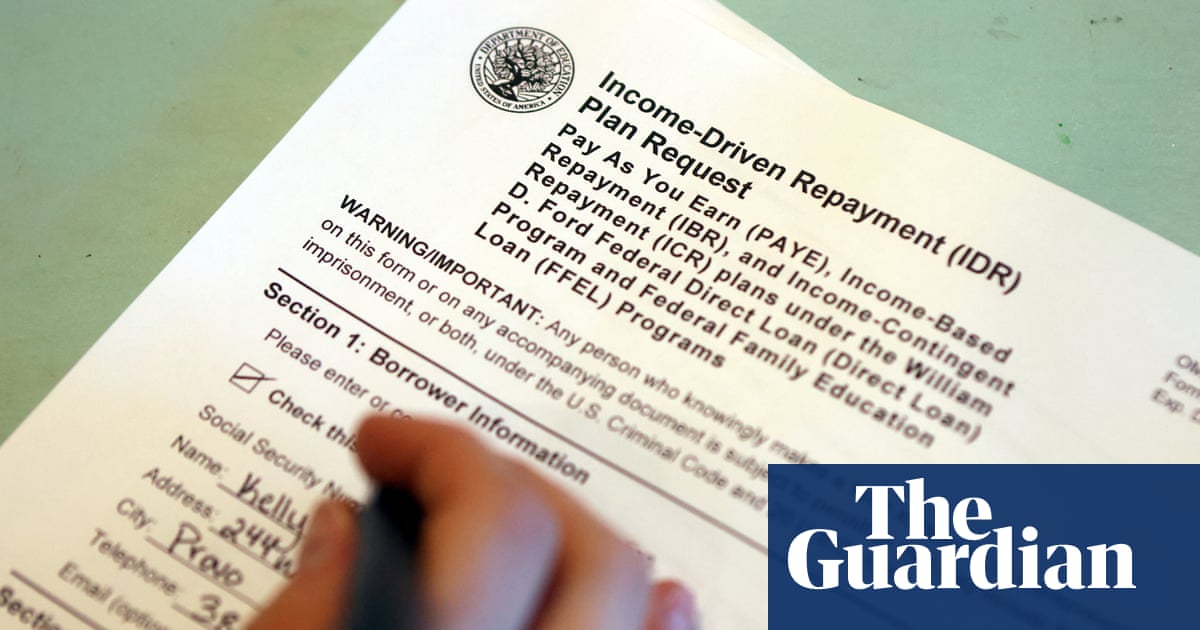
Those safeguards are becoming even more scarce with the recent announcement that the Trump administration is eliminating the Biden-era student loan repayment program. The Saving on a Valuable Education (Save) plan is an income-driven repayment program launched in 2023 with the goal of cutting undergraduate loans in half, bringing some borrowers’ monthly payments to $0, and offering early forgiveness for low-balance borrowers.
The Trump administration has argued that the Save program is illegal and an overreach of federal power. In a press release, the Department of Education stated that it will halt all new Save enrollments, deny any pending applications and move existing borrowers into alternative repayment plans.
Zampini expressed deep concern about the administration’s decision.
“All of those borrowers are going to see higher monthly payments than they otherwise would have,” she said. “And then on top of that, there’s not really a safety net for borrowers to access other affordable plans quickly, because they haven’t built [them] out.”
One of those borrowers is Erin O, a 31-year-old working in the non-profit sector. She is currently enrolled in the Save plan and anticipates that her monthly payments will be doubled, if not tripled, following the plan’s termination. She’s also enrolled in the Public Service Loan Forgiveness program, which faces an uncertain future due to the Trump administration’s plan to limit eligible organizations on ideological grounds.
“Nobody makes it easy for you to understand the information that you need to know,” she said.
Erin’s loans have been in forbearance while litigation has gone on regarding the Save plan, but she will soon have to start making payments on the $34,680 remaining debt from the federal loans she took out to fund her master’s program in international communications. She will be heading from Denver to Texas to be with her family for the holidays. They decided ahead of time that it will be a lean Christmas.
“In the last few years, especially with Covid, I definitely have downgraded my holiday spending to only immediate family and very close – like decades-long –friendships,” she said.
This year, the purse strings are getting even tighter, she said: “Everyone in my immediate family has agreed this is not really a gift-giving year.”
Disclaimer : This story is auto aggregated by a computer programme and has not been created or edited by DOWNTHENEWS. Publisher: theguardian.com